Starting your own business? Before you shake hands with your first customer, you've got to pick the right legal structure. Here's the thing: most new entrepreneurs wrestle with the same question—do I go solo proprietor, full corporation, or somewhere in between?
That "somewhere in between" usually means an LLC. Think of it this way: sole proprietorships are simple but scary (creditors can literally take your house). Corporations offer protection but drown you in paperwork—board meetings, minutes, resolutions for everything. An LLC? It's the Goldilocks option. You get protection without the bureaucratic nightmare.
I'm going to walk you through the entire process, start to finish. Name selection, paperwork, costs, timelines—and the mistakes that'll cost you thousands down the road if you're not careful.
What Is an LLC and Why Choose This Business Structure
Here's what an LLC actually does for you: it creates a legal wall between your personal stuff and your business debts. When your business gets sued or can't pay a vendor, the creditor goes after business assets. Your personal home, savings account, car? Generally off-limits. That wall—lawyers call it the "corporate veil"—holds up as long as you're not mixing business and personal money like ingredients in a blender.
The tax angle is where things get interesting. IRS treats single-owner LLCs like they don't even exist (they call it a "disregarded entity"). For tax purposes, you're basically a sole proprietor—income flows straight to your 1040. Multiple owners? The IRS sees a partnership. Either way, you're avoiding the double-taxation trap that C-corps fall into. And here's the kicker: you can elect S-corp or C-corp status later if it saves you money. Options stay open.
What about compliance headaches? Forget about them. No board of directors to assemble. No annual shareholder meetings with formal votes on every decision. No corporate minutes documenting who said what. The owners (called "members" in LLC-speak) run things directly or pick managers to handle day-to-day operations. That's why freelancers, landlords, online shop owners, and consultants gravitate toward LLCs.
The catch? If you're actively working in your LLC, you're paying self-employment tax on your share of profits. That's 15.3% on income up to $168,600 (2024 threshold). It covers Social Security and Medicare. Some corporate structures can reduce this bite, but unless you're clearing six figures annually, the tax savings rarely justify the extra complexity.
Steps to Form an LLC From Start to Finish
State requirements vary, but the basic playbook stays consistent coast to coast. Budget three to six weeks if you're handling everything yourself without paying for rush processing.
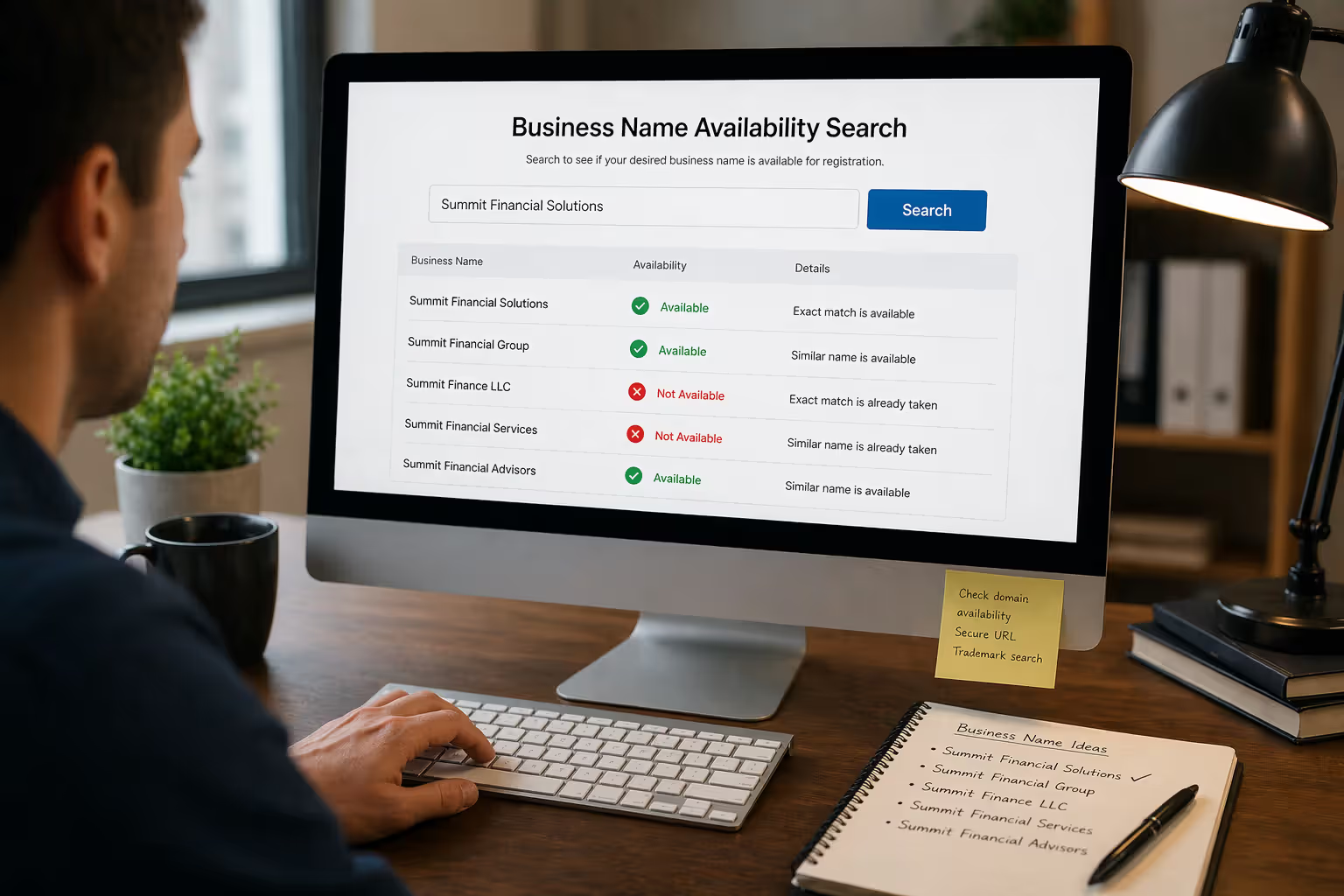
Choose Your LLC Name and Check Availability
Your state won't approve a name that's too similar to an existing business. "Summit Consulting LLC" might get rejected if "Summit Consultants LLC" already exists—depends on how strictly your state interprets "confusingly similar." Every Secretary of State runs a searchable business database. Use it before you get attached to any name.
Legal requirements: your name needs "Limited Liability Company," "LLC," or "L.L.C." somewhere in there. Want to market under something catchier? That's fine—file a DBA (doing business as). Just know your legal name still appears on contracts, lawsuits, and government forms.
Certain words trigger automatic scrutiny. Try including "bank," "insurance," "university," or "attorney" without the proper licenses, and you'll get a rejection letter. Generic descriptive names work fine ("Superior Landscaping LLC"), though they're harder to trademark later.
Not ready to file yet? Most states let you reserve names for 60-120 days. Costs around $10-$30. Prevents someone else from snatching your perfect name while you're getting your documents together.
Author: Andrew Bellamy;
Source: craftydeb.com
Appoint a Registered Agent
Every state requires a registered agent—someone available during normal business hours to receive legal documents, government mail, and official notices. Must be a person or company with a physical address in your formation state. P.O. boxes don't count.
You can serve as your own agent if you meet residency requirements. Downside? Your home or office address becomes public record, visible to anyone searching business registrations. Professional registered agent services cost $100-$300 yearly and keep your personal address private.
The real value shows up when you're operating in multiple states. Instead of tracking five different addresses and requirements, one service coordinates everything. Plus, they're always there to receive documents when you're traveling or between office locations.
File Articles of Organization
This document (sometimes called Certificate of Formation) legally creates your LLC. You're telling the state:
LLC's official name and primary address
Registered agent name and street address
Who's running things (members or managers)
Effective date
How long it'll exist (usually "perpetual")
Organizer's name and signature
Most states offer online filing through their Secretary of State website. Approval ranges from same-day to six weeks depending on state workload and whether you pay for expedited service. Filing fees run $40-$500, with most landing around $100-$150.
Watch out for publication requirements in Arizona, Nebraska, and New York. These states force you to announce your LLC in local newspapers, adding $200-$1,000 to your costs. They actually enforce this—skip it and your LLC gets administratively dissolved.
Create an LLC Operating Agreement
This internal contract spells out who owns what percentage, how profits get split, who handles what responsibilities, and what happens when someone wants out. States don't make you file it publicly, though many require keeping one in company records.
Single-member LLCs actually need this more than you'd think. When lawyers challenge your liability protection in court, they examine whether you treated the LLC as truly separate from yourself. A detailed operating agreement proves you did.
Cover these elements:
Each member's initial contribution and ownership percentage
Voting rights and approval thresholds for major decisions
Profit and loss distribution formula
Expected time commitments and assigned responsibilities
Buyout procedures when members exit
Dissolution triggers and winding-down process
Generic templates run $50-$200. Custom attorney-drafted agreements cost $500-$2,000, but they prevent expensive partnership blowups. Worth every penny when bringing on partners, courting investors, or dealing with unexpected ownership changes.
Obtain an EIN and Open a Business Bank Account
Think of an EIN as your business's Social Security number. IRS assigns these nine-digit tax identifiers for free through their online application—takes maybe ten minutes, and you get the number instantly.
You'll need this for business bank accounts, hiring employees, and filing tax forms. Technically, single-member LLCs without employees could use the owner's SSN instead. But why would you? An EIN keeps your Social Security number private and makes record-keeping cleaner. Every bank and vendor expects to see an EIN on your W-9 anyway.
Open a dedicated business bank account the moment your EIN arrives. Mixing personal and business transactions destroys liability protection and creates bookkeeping chaos at tax time. Compare banks on:
Monthly fees and minimum balance requirements
Mobile check deposit features
Integration with QuickBooks or similar software
Business credit card and loan availability
Payment processing for customer transactions
Schedule your appointment with copies of your Articles of Organization, EIN confirmation letter, operating agreement, and driver's license. Most banks also want a resolution from your LLC specifically authorizing bank accounts and naming who can sign.
Author: Andrew Bellamy;
Source: craftydeb.com
Register for State Taxes and Licenses
Formation paperwork is just step one. Most LLCs need additional state tax accounts depending on what you're selling:
Sales tax permits matter when you're selling physical products or certain services. Apply through your state's revenue department before making your first taxable sale. Processing usually takes a few days, no fee.
Employer accounts kick in when you hire your first employee. Register for state unemployment insurance and income tax withholding through your state's labor department. Free to register, but creates ongoing reporting duties.
Professional licenses vary wildly by industry. Contractors, realtors, healthcare providers, financial advisors—all face industry-specific licensing before legally operating. Contact your state licensing board early; some applications take months for background checks and exams.
Local business licenses come from city or county offices. Annual fees typically $25 to a few hundred depending on location and business type. Home-based businesses often get reduced rates or exemptions, but verify with your city clerk first.
LLC Formation Documents You Need to Prepare
Understanding what each document actually accomplishes keeps you from getting confused or filing the wrong paperwork.
Articles of Organization serve as your LLC's birth certificate. This publicly-filed document creates the legal entity and communicates basic structural info to the state. Government websites provide standard forms requiring 15-30 minutes to complete. Since this becomes public record, consider using your registered agent's address instead of your home if privacy matters.
Operating Agreement controls internal governance. This stays confidential—you're not sending it to government agencies. Keep copies for members, show banks and landlords when requested, share with potential investors. Unlike Articles of Organization, this agreement spells out the real details.
Author: Andrew Bellamy;
Source: craftydeb.com
Multi-owner LLCs should detail capital accounts (tracking each member's contributions and accumulated earnings), distribution timing (quarterly, annually, or when cash allows), and transfer restrictions (giving existing members first right to purchase before outside sales). Single-member agreements focus on proving entity separation and establishing succession plans.
EIN Application (Form SS-4) takes minutes through the IRS online portal. Provide formation date, business activities, number of members, and why you need the identifier. System generates your nine-digit number immediately when information's complete.
State tax forms differ dramatically between states. Some states run unified systems handling sales tax, employer withholding, and other obligations through one application. Others require separate submissions for each tax type. Set aside an hour for navigating unfamiliar government websites.
Initial Report or Statement of Information comes due in some states within 60-90 days after formation. Confirms current registered agent, office location, and member/manager identities. Usually $20-$100. Miss this early deadline and your brand-new LLC could face administrative dissolution.
How Much Does It Cost to Form an LLC
First-year total for most states: $500-$1,500, covering formation fees, registered agent, necessary licenses, and basic documents. Annual recurring costs run $100-$800 based on state requirements and operational complexity.
What You'll Pay to Set Up Your LLC by State
State
Initial Filing
Yearly State Fee
Processing Time
Agent Required
California
$70 filing
$20 statement + $800 franchise tax
10-15 days
Yes
Delaware
$90 filing
$300 tax annually
5-7 days
Yes
Florida
$125 filing
$138.75 report
7-10 days
Yes
Illinois
$150 filing
$75 report
10-15 days
Yes
Nevada
$425 filing
$350 + city business license
3-5 days
Yes
New York
$200 filing
$9 every two years
7-10 days
Yes
Ohio
$99 filing
None
3-5 days
Yes
Pennsylvania
$125 filing
None
5-7 days
Yes
Texas
$300 filing
None
3-5 days
Yes
Washington
$200 filing
$71 report
3-5 days
Yes
Wyoming
$100 filing
$60 + license fee
2-3 days
Yes
Plan for these extras beyond basic filing:
Registered agent services cost $100-$300 per year when you'd rather not serve as your own agent. Provides reliability and privacy, but adds ongoing expense.
Operating agreement preparation ranges from free templates to $2,000 for attorney customization. Sweet spot is $500-$1,000 for multi-owner LLCs or complex situations.
Publication requirements in Arizona, Nebraska, and New York add $200-$1,500 depending on county newspaper rates. Big cities charge more than rural areas for legal notices.
Permits and business licenses fluctuate by city and industry. General business licenses typically $25-$200. Specialized credentials for contractors, medical pros, or financial advisors can exceed $500, sometimes requiring insurance and bonding too.
Accounting and tax help falls outside direct formation but deserves budgeting. Figure $500-$2,000 yearly for software and professional tax prep. Multi-member LLCs or complex operations need expert help tracking capital accounts and generating partner K-1s.
How Long Does It Take to Form an LLC
Approval timelines span from same-day in Wyoming and Nevada to six weeks in slower states like California when they're swamped. Most states complete online filings within 5-10 business days.
What affects your timeline:
How you file makes a huge difference. Online submissions move faster than mailed forms. Some states still require paper for certain situations, adding 1-2 weeks.
Time of year matters. January through mid-February sees a rush of new businesses as people chase New Year's resolutions. Expect delays during these peak periods.
Expedited processing costs $25-$200 extra depending on state. Same-day or 24-hour approval helps when you've got lease deadlines, bank requirements, or contract obligations pressing. Worth paying $100 to eliminate three weeks of waiting when delay costs revenue.
Name problems cause the most common delays. When your name conflicts with existing registrations, the state bounces your application and you start over. Always search the database thoroughly and have backup names ready.
Incomplete applications get returned for corrections, resetting your place in line. Double-check you've answered everything, signed where needed, and submitted correct payment. States don't hold your spot while you fix mistakes.
You can typically start operating once you receive electronic approval, even before the official certificate arrives by mail. Open your business account, sign contracts, invoice customers using your LLC name the moment the state approves your Articles of Organization.
Some activities require additional waiting beyond formation approval. Sales tax permits, professional licenses, certain city permits—these need days or weeks of separate processing. Plan your launch around whichever approval takes longest.
Common Mistakes to Avoid When Forming an LLC
New LLC owners keep making the same preventable mistakes. Recognizing these patterns protects your wallet and your sanity.
Skipping the operating agreement creates the most expensive messes. Members who never formalize ownership splits, profit distributions, or exit procedures end up in litigation when conflicts arise. That $500 operating agreement prevents $50,000 in legal fees during disputes. Solo-member LLCs need them too—proving you maintained separation from personal affairs.
Mixing business and personal money destroys liability protection completely. Buying groceries with your business card or paying company bills from your personal account gives plaintiffs ammunition to pierce the corporate veil. Keep everything separate—every transaction through the right account.
Missing compliance deadlines leads to administrative dissolution and expensive reinstatement. Set calendar reminders for annual reports, franchise taxes, license renewals—well before due dates. States don't send friendly reminders before dissolving your LLC. You'll find out when clients check your status or you try filing taxes.
Forming in the wrong state wastes money on unnecessary fees. Delaware and Nevada market themselves as business havens, but their advantages serve large corporations or venture-backed startups. A freelance designer in Ohio gains nothing from Delaware formation except $300 yearly franchise tax plus registered agent costs with zero benefits.
Ignoring state-specific rules creates compliance headaches. Some states want annual reports, others biennial statements. Several require separate business licenses beyond LLC formation. Research your state's ongoing obligations before filing initial documents.
Underestimating taxes catches new owners off-guard. Self-employment tax on business income, quarterly estimated payments, potential state franchise taxes—these add up fast. Hire a CPA during formation to understand your tax picture and avoid underpayment penalties.
Operating without proper insurance leaves you vulnerable despite LLC protections. General liability policies cover claims outside your LLC's protection scope—professional errors, employee injuries, etc. The corporate veil shields personal assets from business debts but doesn't eliminate liability for your own negligent actions.
The operating agreement is where I see the most problems. Clients spend hundreds forming their LLC but skip the $500 operating agreement. Then they're shocked when a dispute costs $30,000 in legal fees because nothing was documented. Treat the operating agreement as essential insurance, not an optional extra
— Jennifer Martinez
Frequently Asked Questions About LLC Formation
Do I need a lawyer to form an LLC?
Nope, most people handle formation themselves successfully. State forms are pretty straightforward, and online resources explain everything step-by-step. Legal help becomes valuable when you've got multiple owners negotiating complicated terms, operate in heavily-regulated industries, or need customized operating agreement provisions for unusual situations. Full legal formation services run $1,000-$3,000 versus $100-$500 doing it yourself.
Can I form an LLC in a state where I don't live?
Sure, but it rarely makes financial sense for small businesses. You'll pay fees in your formation state, then register as a "foreign LLC" in your home state where you actually do business. This doubles expenses and compliance work. Delaware and Nevada provide no real advantages for typical small operations despite heavy marketing. Form your LLC where you live and operate unless specific legal or tax reasons justify another state.
What distinguishes Articles of Organization from an Operating Agreement?
Articles of Organization create your LLC's legal existence with the state. This public filing contains basic information—business name, registered agent, management structure. An Operating Agreement governs internal operations and defines member relationships. It's a private contract specifying ownership percentages, profit splits, decision-making rules. You file Articles of Organization with state authorities but keep your Operating Agreement in company files.
Does a single-member LLC really need an operating agreement?
Absolutely, even though no state legally requires it for solo-member LLCs. A written agreement demonstrates you're maintaining your LLC separately from personal activities, strengthening asset protection during lawsuits. The agreement also establishes procedures for adding future members and documents your initial capital contribution. Courts scrutinize single-member LLCs more carefully—they look favorably on comprehensive documentation proving separate entity treatment.
How do I maintain my LLC after formation?
File annual or biennial reports before deadlines (usually your formation anniversary or fixed dates like April 15). Pay all applicable taxes including quarterly estimates when profitable. Separate business and personal finances completely through dedicated accounts and cards. Keep organized financial records and generate annual statements. Update registered agent information promptly when moving or changing services. Keep licenses and permits current. Hold member meetings for significant decisions even when not legally required.
Can I convert my sole proprietorship to an LLC?
Yes, though procedures vary by state. You'll form a new LLC entity, transfer existing business assets and contracts to the LLC, and close your sole proprietorship tax accounts. Notify customers, suppliers, and banks about the structural change. Some contracts require counterparty approval before assignment to a different legal entity. Your business reputation and history continue unchanged, though the legal structure fundamentally shifts. Consult a CPA about tax implications—asset transfers can trigger taxable gains or deductible losses depending on your basis and asset types.
Forming an LLC builds the foundation for sustainable business growth. You're getting personal asset protection while preserving tax advantages and keeping administrative work manageable. Most owners complete formation in 2-4 weeks, investing $500-$1,500 based on their state and whether they hire professionals.
Long-term success requires treating formation as your starting point, not finish line. Your LLC needs ongoing attention—annual filings, tax compliance, financial separation, operating agreement updates as circumstances change. Set up tracking systems now for compliance monitoring, accounting workflows, and document storage.
This framework works for most small business situations, but complex scenarios benefit from expert help. Multi-member LLCs, businesses seeking outside investment, or companies in specialized regulatory environments should engage attorneys and CPAs during formation. Investing $2,000-$3,000 in professional guidance prevents expensive complications during growth.
Your state's Secretary of State website has current forms, fee schedules, and processing timeframes. Most sites feature searchable business databases for name verification and downloadable guides explaining state-specific rules. Start there, work systematically through the formation checklist, and you'll have LLC approval within weeks.
When you form a corporation or LLC, state law requires you to designate someone to accept legal papers on behalf of your company. That person or entity is your registered agent. Without one, you can't complete your business formation paperwork, and your company risks serious compliance issues down the line
Every US business must submit mandatory statutory filings to government agencies. Understand formation documents, annual reports, tax filings, and employment requirements by entity type—plus common mistakes that trigger penalties and systems to maintain year-round compliance
Every LLC must maintain a registered agent—a designated contact for legal documents and government correspondence. Learn what registered agents do, state-specific requirements, how to appoint or change your agent, and whether to hire a service or act as your own agent
A partnership LLC combines liability protection with partnership flexibility. Learn how multi-member LLCs work, default partnership taxation, operating agreement essentials, formation steps, and when this structure makes sense for your business
The content on this website is provided for general informational and educational purposes only. It is intended to explain concepts related to business and corporate law, contracts, compliance, disputes, M&A, and taxation for companies.
All information on this website, including articles, guides, and examples, is presented for general educational purposes. Legal outcomes may vary depending on jurisdiction, company structure, and individual circumstances.
This website does not provide legal advice, and the information presented should not be used as a substitute for consultation with qualified corporate attorneys or legal professionals.
The website and its authors are not responsible for any errors or omissions, or for any outcomes resulting from decisions made based on the information provided on this website.