Two businessmen in suits facing each other across a conference table with legal documents, tense corporate dispute atmosphere, panoramic city view through office windows
When a competitor spreads false claims that your product causes health problems, or a disgruntled former partner tells industry publications your services violate safety standards, your business faces more than just hurt feelings. These attacks can devastate revenue, destroy partnerships, and tank your market position. Unlike personal defamation that protects individual reputations, trade libel exists specifically to address false statements that harm commercial interests.
Understanding Trade Libel in Business Law
Trade libel—also called product disparagement or commercial disparagement—is a tort that provides legal recourse when someone publishes false statements about a business's goods, services, or property that cause measurable economic harm. The doctrine recognizes that businesses invest substantial resources building product credibility and market trust. False claims about quality, safety, performance, or legitimacy can obliterate that investment overnight.
This legal framework emerged from common law principles recognizing that commercial enterprises need protection beyond standard defamation rules. While personal defamation shields individual reputation, product disparagement tort addresses statements targeting what a business sells rather than the business entity itself.
Consider a software company that spent three years developing a cybersecurity platform. A competitor circulates white papers to potential clients falsely claiming the software contains backdoors that compromise user data. Even if the company's general reputation remains intact, sales evaporate because the specific product—the company's primary revenue source—has been poisoned in the marketplace.
Trade libel serves a dual purpose: it compensates businesses for quantifiable losses and deters competitors from gaining market advantage through falsehoods rather than superior products. The tort doesn't prohibit criticism or honest comparative advertising. Competitors can truthfully highlight their advantages. What they cannot do is fabricate defects, dangers, or deficiencies in rival products.
How Trade Libel Differs from Defamation
The distinction between trade libel vs defamation centers on what suffers harm and how plaintiffs must prove their case. Personal defamation (libel and slander) protects individual or corporate reputation generally. Commercial disparagement protects the economic value of specific products, services, or property rights.
When someone publishes that a restaurant owner was convicted of fraud, that's personal defamation—it attacks the person's character. When they falsely claim the restaurant's kitchen has a rat infestation, that's product disparagement—it attacks the business offering itself.
Business defamation law creates additional complexity because corporations can be defamation victims when statements harm their overall standing in the community. A false accusation that a company engages in money laundering constitutes corporate defamation. A false claim that the company's flagship product contains carcinogens constitutes trade libel. Sometimes statements blur these lines, implicating both torts.
Author: Marcus Ellwood;
Source: craftydeb.com
The proof requirements diverge significantly. In many personal defamation cases, plaintiffs can recover general damages for reputational harm without proving specific dollar losses. Courts presume that being called a thief or a fraud causes harm. Trade libel operates differently—plaintiffs must demonstrate actual economic losses with reasonable specificity. You need evidence that the false statement directly caused lost sales, canceled contracts, or other measurable financial damage.
The disparagement vs defamation distinction also affects who can sue. Only the business selling the disparaged product has standing for trade libel. If a false statement harms a distributor's sales of a manufacturer's product, the manufacturer sues for trade libel, but the distributor typically cannot unless they own rights to the product itself.
Public figure doctrine applies differently as well. Public figures suing for personal defamation must prove "actual malice"—that defendants knew statements were false or showed reckless disregard for truth. Trade libel plaintiffs generally must prove the defendant knew the statement was false or acted with reckless disregard regardless of public figure status, though requirements vary by jurisdiction.
Element
Trade Libel
Personal Defamation
Who is harmed
Business selling products/services
Individual or corporation's general reputation
What is harmed
Economic value of specific goods/services
Personal or corporate character/standing
Damages requirement
Must prove special damages (specific financial losses)
General damages often presumed for libel per se
Proof standard
False statement made with knowledge of falsity or reckless disregard
Negligence for private figures; actual malice for public figures
Common examples
"Their brake pads fail after 5,000 miles" (false claim)
"The CEO embezzled company funds" (false accusation)
Legal Elements Required to Prove Trade Libel
Winning a commercial disparagement claim requires satisfying multiple elements, each presenting distinct challenges. Courts scrutinize these cases carefully because legitimate comparative advertising and consumer advocacy depend on the freedom to criticize products truthfully.
False Statement About a Product or Service
The foundation of any trade libel elements analysis is a demonstrably false statement about the plaintiff's commercial offering. Truth provides absolute defense. If a competitor claims your industrial cleaner contains a hazardous chemical and laboratory analysis confirms that chemical's presence, no cause of action exists regardless of business harm.
The statement must address the product or service's quality, characteristics, or suitability for use. Vague opinions generally don't qualify. Saying "I think their customer service is terrible" expresses subjective dissatisfaction. Stating "Their technicians are not licensed to perform electrical work" makes a verifiable factual claim that, if false, could support a trade libel action if the business offers electrical services.
Puffery—exaggerated advertising claims no reasonable person would take literally—falls outside trade libel's scope. When a pizza chain claims "the best pizza in America," that's non-actionable puffery. When they claim a competitor's pizza "contains meat from diseased animals," that's a specific factual assertion that can be proven true or false.
Publication to Third Parties
The false statement about business must reach someone other than the plaintiff. Internal corporate communications don't count. If a competitor's employee emails colleagues saying your product is defective, but the email never leaves the company, no publication occurred.
Publication takes countless forms: social media posts, industry conference presentations, statements to journalists, testimony before regulatory bodies, communications with potential customers, or postings on review platforms. The key is third-party exposure that can influence purchasing decisions or business relationships.
Republication creates complications. When media outlets repeat false disparagement from a source, both the original speaker and the publisher may face liability, though journalists often invoke qualified privileges when reporting newsworthy business disputes. The original source typically bears primary responsibility.
Author: Marcus Ellwood;
Source: craftydeb.com
Proof of Special Damages
This element separates many viable claims from dismissed lawsuits. Trade libel plaintiffs must prove special damages—specific, quantifiable economic losses directly resulting from the false statement. Unlike defamation cases where reputational harm may be presumed, commercial disparagement requires concrete financial evidence.
Acceptable proof includes lost sales to identified customers who relied on the false statement, canceled contracts traceable to the disparagement, or diminished market value of the disparaged product. A manufacturer might present testimony from distributors who stopped carrying the product after hearing false safety claims, coupled with sales data showing the revenue decline.
Calculating damages demands precision. Courts reject speculation about potential future sales or vague assertions of market share erosion. You need documentation: correspondence showing why customers withdrew, sales records demonstrating the decline's timing relative to the false statement's publication, and expert analysis linking the statement to the losses.
This burden explains why many meritorious trade libel claims never reach court. A small business knowing a competitor's lies cost them sales may lack resources to retain forensic accountants and industry experts who can quantify damages with courtroom-ready specificity.
Common Examples of Product Disparagement
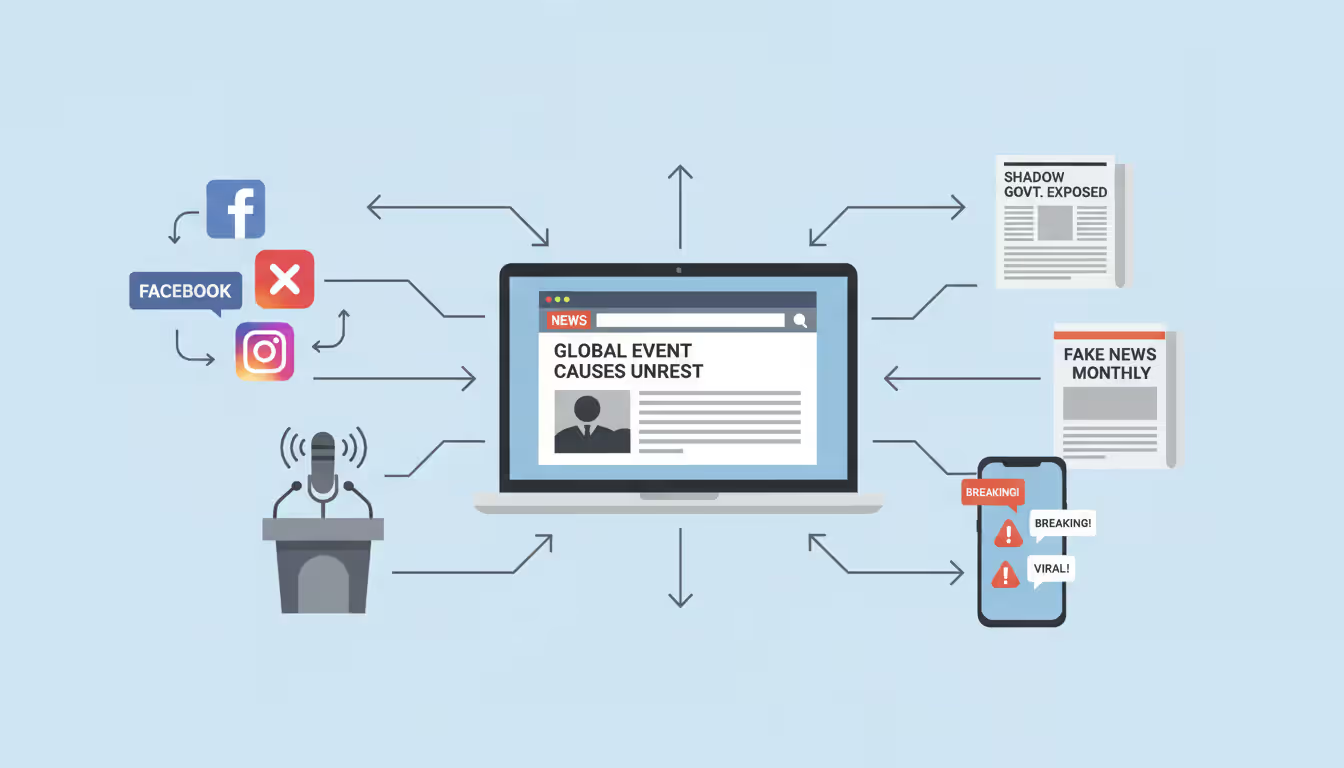
Product disparagement tort manifests across industries in predictable patterns. Competitor false claims represent the classic scenario. A pharmaceutical company might circulate studies falsely suggesting a rival's generic drug has lower efficacy than the name brand. An appliance manufacturer might tell retailers that a competitor's warranty doesn't cover specific failures when it actually does.
Online reviews create modern disparagement challenges. A genuine customer posting an honest negative experience enjoys broad protection. A business owner creating fake accounts to post false claims that a competitor's restaurant caused food poisoning commits trade libel. The line blurs when reviews contain factual errors—was the reviewer mistaken or deliberately lying?
Industry publications sometimes become disparagement vehicles. Trade associations, certification bodies, or testing organizations that publish false performance data, safety ratings, or compliance status can face trade libel claims from affected businesses. A testing lab that incorrectly reports a building material fails fire-resistance standards may be liable for the manufacturer's resulting losses.
Advertising attacks raise business reputation harm concerns when comparative ads cross from truthful comparison to false disparagement. Claiming "our battery lasts 20% longer" after legitimate testing is permissible. Claiming "their battery explodes under normal use" without factual basis invites litigation.
Former employees or business partners sometimes disparage products during disputes. An ex-salesperson telling customers the company's products are defective to justify their departure, or a former distributor falsely claiming products don't meet advertised specifications to explain lost business, may face trade libel claims.
Filing a Trade Libel Lawsuit
Pursuing a trade libel lawsuit begins with thorough damage documentation before contacting attorneys. Collect evidence of the false statement (screenshots, recordings, publications), proof of its falsity (test results, certifications, specifications), and financial impact records (sales data, canceled contracts, customer communications explaining their decisions).
Most jurisdictions apply a one-to-three-year statute of limitations for commercial disparagement claims, typically running from when the false statement was published or when the plaintiff discovered it. Some states treat ongoing publication (like a persistent website claim) as renewing the limitations period. Missing the deadline destroys otherwise valid claims, so prompt action matters.
The burden of proof rests entirely on the plaintiff. You must establish each element—falsity, publication, damages—by a preponderance of evidence. Defendants need only create reasonable doubt about one element to prevail. This asymmetry makes evidence quality critical.
Remedies in successful cases include compensatory damages for proven economic losses, and in some jurisdictions, punitive damages when defendants acted with malice or reckless disregard for truth. Courts may also issue injunctions ordering defendants to retract false statements and cease further disparagement. Injunctive relief can be more valuable than damages when ongoing falsehoods continue harming business.
Litigation costs present serious considerations. Trade libel cases require expert witnesses, extensive discovery, and sophisticated legal analysis. Cases can easily consume six figures in legal fees before trial. Many businesses pursue demand letters and settlement negotiations before filing suit, resolving disputes for a fraction of litigation costs.
Alternative dispute resolution—mediation or arbitration—offers faster, cheaper resolution when both parties acknowledge the dispute's uncertainty. A competitor might agree to retract statements and pay modest damages rather than risk a larger verdict, while plaintiffs avoid the expense and unpredictability of trial.
Protecting Your Business from Disparagement Claims
Author: Marcus Ellwood;
Source: craftydeb.com
Prevention starts with training employees and partners about permissible competitive speech. Sales teams can truthfully compare products based on verified data but must avoid fabricating competitor deficiencies. Marketing departments should document all comparative advertising claims with testing results, specifications, or other objective evidence.
Documentation practices create both offensive and defensive value. Maintain detailed records of product testing, quality control, customer feedback, and performance data. If someone falsely disparages your product, this documentation proves the statement's falsity. If you make comparative claims, it demonstrates you acted on factual grounds rather than reckless disregard for truth.
Response protocols matter when disparagement occurs. Immediate cease-and-desist letters sometimes resolve issues before significant damage accumulates. Public corrections or rebuttals may be necessary when false statements gain traction, though responses must avoid defaming the original speaker.
Monitor your market reputation actively. Set up alerts for your company and product names across social media, review sites, industry publications, and news outlets. Early detection of false disparagement enables faster response and limits damage.
Consider reputation insurance products that have emerged in recent years. Specialized policies cover investigation costs, legal fees, and sometimes damages related to disparagement claims. For businesses in highly competitive industries where product disparagement risks run high, insurance can make litigation economically feasible.
Trade libel doctrine balances the marketplace of ideas against marketplace competition. Businesses must be free to criticize rivals truthfully, but false statements that harm commercial interests deserve no more protection than lies about individuals. The special damages requirement ensures courts address real economic harm rather than mere competitive friction
— David Ardia
Frequently Asked Questions
Can a business sue for defamation like an individual can?
Yes, corporations and other business entities can sue for defamation when false statements harm their general reputation rather than specific products. A false accusation that a company engages in illegal practices, fraud, or unethical conduct constitutes corporate defamation. However, businesses face higher burdens in some jurisdictions and cannot claim emotional distress damages. When false statements target specific products or services rather than overall reputation, trade libel provides the appropriate cause of action.
What damages can I recover in a trade libel case?
Successful plaintiffs recover special damages—proven economic losses directly caused by the false statement. This includes lost sales to specific customers, canceled contracts, reduced market value of the disparaged product, and costs to counteract the disparagement through corrective advertising. Some jurisdictions permit punitive damages when defendants acted with actual malice or reckless disregard for truth. Unlike personal defamation, you cannot recover for general reputational harm without proving specific financial losses.
How long do I have to file a trade libel lawsuit?
Statutes of limitations for commercial disparagement claims typically range from one to three years depending on jurisdiction. The clock usually starts when the false statement is published, though some states apply a discovery rule where time begins when you knew or should have known about the disparagement. Ongoing publication on websites or in continuing advertising may extend or reset the limitations period. Consult an attorney promptly because missing the deadline permanently bars your claim.
Is a negative online review considered trade libel?
A negative review constitutes trade libel only if it contains false statements of fact that cause measurable economic harm. Honest opinions, even harsh ones, receive broad protection. A review stating "I hated this product" expresses protected opinion. A review falsely claiming "This product gave me a chemical burn" makes a factual assertion that, if false and damaging, could support a trade libel claim. Many online platforms provide immunity to the platform itself under Section 230 of the Communications Decency Act, though the reviewer remains potentially liable.
Do I need to prove the statement was intentionally false?
Most jurisdictions require proof that the defendant knew the statement was false or acted with reckless disregard for its truth or falsity. This standard—similar to the "actual malice" requirement in public figure defamation cases—applies regardless of whether the plaintiff is a public or private business. Simple negligence or honest mistakes typically don't suffice. You must show the defendant either had actual knowledge of falsity or entertained serious doubts about truthfulness yet published anyway.
What's the difference between slander of title and trade libel?
Slander of title is a related but distinct tort involving false statements that disparage someone's ownership or property rights. It typically applies to real estate or other titled property when someone falsely claims you don't own property, that liens exist against it, or that title is defective. Trade libel disparages the quality, characteristics, or value of goods and services you sell. Both require proof of falsity, publication, and special damages, but slander of title specifically addresses ownership rights while trade libel addresses product quality and marketability.
Trade libel fills a critical gap in business law, providing recourse when competitors, disgruntled associates, or others damage your commercial interests through false statements about your products or services. The tort recognizes that businesses invest heavily in developing quality offerings and building market trust—investments that malicious or reckless falsehoods can destroy.
The special damages requirement distinguishes trade libel from personal defamation and raises the evidentiary bar substantially. You cannot rely on presumed harm; you must quantify actual economic losses with specificity. This burden makes thorough documentation essential both before disputes arise and after disparagement occurs.
Understanding the boundaries between protected competitive speech and actionable disparagement helps businesses navigate aggressive markets without crossing legal lines. Truthful comparative advertising, honest criticism, and genuine customer feedback remain protected even when they harm competitors. What the law prohibits is gaining competitive advantage through fabricated defects, dangers, or deficiencies in rival products.
For businesses facing false disparagement, prompt action preserves both legal rights and market position. Statutes of limitations run quickly, and damage accumulates while you wait. For businesses engaged in competitive marketing, grounding all comparative claims in verifiable facts and avoiding false statements about competitors protects against costly litigation and reputational backlash.
The intersection of commercial competition and free speech will continue evolving as digital platforms create new disparagement vectors and courts refine doctrinal boundaries. Businesses that understand trade libel principles, document their practices carefully, and respond strategically to competitive threats position themselves to protect their most valuable assets—the products and services that generate revenue and sustain growth.
Securities fraud undermines capital markets through deceptive practices in securities transactions. This guide explains legal elements, common fraud types including insider trading and Ponzi schemes, SEC enforcement mechanisms, civil and criminal penalties, and how investors can file claims
Securities class actions allow investors to collectively sue companies for securities fraud. Learn how these lawsuits work, who qualifies, legal requirements under Rule 10b-5, the settlement process, and common mistakes investors make when participating in shareholder class actions
Franchise relationships can become strained when expectations diverge or contractual obligations go unmet. Understanding the legal mechanisms available for resolving conflicts—from mediation to arbitration to litigation—is essential before tensions escalate into costly legal battles
A derivative action allows shareholders to sue on behalf of a corporation when directors or officers harm the company but refuse to take action. This guide explains standing requirements, demand rules, the litigation process, and how derivative suits differ from direct shareholder claims
The content on this website is provided for general informational and educational purposes only. It is intended to explain concepts related to business and corporate law, contracts, compliance, disputes, M&A, and taxation for companies.
All information on this website, including articles, guides, and examples, is presented for general educational purposes. Legal outcomes may vary depending on jurisdiction, company structure, and individual circumstances.
This website does not provide legal advice, and the information presented should not be used as a substitute for consultation with qualified corporate attorneys or legal professionals.
The website and its authors are not responsible for any errors or omissions, or for any outcomes resulting from decisions made based on the information provided on this website.