Lawyers spend an estimated 50% of their billable hours reviewing, drafting, and managing contracts. Artificial intelligence now handles portions of this work in minutes rather than days, reshaping how legal teams approach everything from vendor agreements to complex mergers.
The shift isn't hypothetical. By 2026, most mid-sized and large law firms have integrated some form of AI into their contract workflows. The technology analyzes clause structures, flags inconsistencies, and generates first drafts based on parameters attorneys provide. But understanding where AI excels—and where it falls short—determines whether these tools save time or create new problems.
What Is Artificial Intelligence in Contract Work?
Artificial intelligence in contracts refers to software systems that automate tasks traditionally requiring human legal expertise. These systems rely on two core technologies: natural language processing and machine learning algorithms trained on thousands of legal documents.
Natural language processing in contracts enables software to parse legal language the same way humans do—identifying subjects, objects, obligations, and conditional clauses. The AI doesn't just search for keywords; it understands that "Seller shall deliver" creates a different obligation than "Seller may deliver at its discretion."
Machine learning in legal contracts works differently. Algorithms study patterns across contract databases, learning which clauses appear in specific agreement types, how terms correlate with dispute rates, and which language variations courts favor. A system trained on 10,000 employment agreements recognizes that non-compete clauses in California require different language than those in New York.
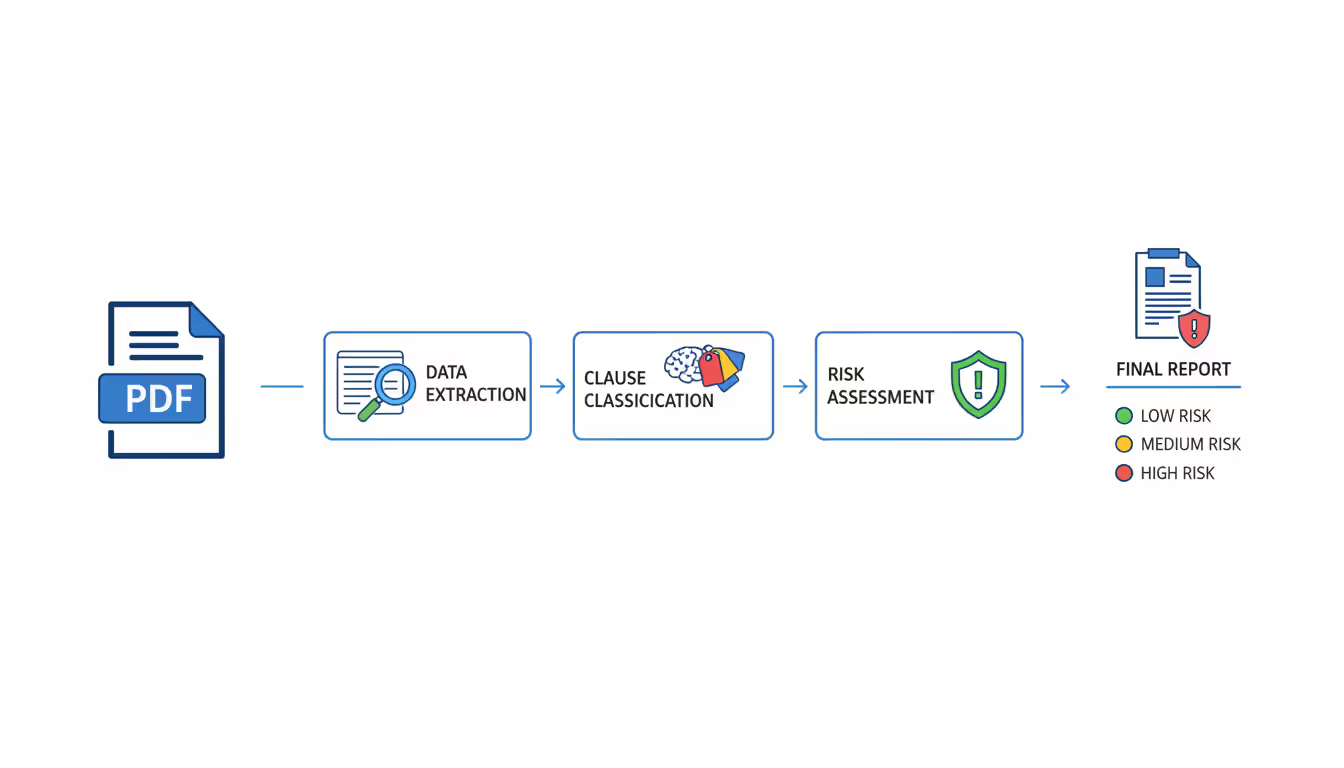
The processing happens in stages. First, the AI converts PDF or Word documents into structured data, identifying sections, parties, dates, and monetary values. Next, it maps clauses to predefined categories—confidentiality, indemnification, termination rights. Finally, it applies rules or predictive models to flag risks, suggest alternatives, or generate new text.
A corporate legal team uploading a supplier contract might see the AI highlight that the limitation of liability caps at $50,000 while the annual contract value reaches $2 million—a mismatch worth negotiating. The same system might note that the termination notice period of 90 days exceeds the company's standard 30-day requirement.
Author: Andrew Bellamy;
Source: craftydeb.com
How AI Contract Drafting Works
AI contract drafting starts with structured inputs rather than blank pages. An attorney selects a contract type—software license, real estate lease, consulting agreement—then answers questions about parties, scope, payment terms, and special conditions. The system generates a first draft by pulling pre-approved clauses from a library and adapting them to the specific transaction.
The clause libraries matter more than the AI itself. A well-maintained library contains hundreds of variations for common provisions, each tagged with metadata: jurisdiction, industry, risk level, negotiation history. When generating an indemnification clause, the AI doesn't write from scratch—it selects the version that matches the transaction profile and modifies party names, dates, and dollar amounts.
Template generation follows decision trees. If the user indicates the contract involves personal data, the AI includes GDPR or CCPA compliance language. If the jurisdiction is Delaware, it applies Delaware choice-of-law provisions. Each branch in the tree activates specific clauses and deactivates incompatible ones.
Speed improvements are substantial. A merger agreement that previously required 12-15 hours of attorney time for initial drafting now takes 45 minutes of input plus 2-3 hours of review and customization. But speed creates a trade-off: attorneys reviewing AI-generated drafts sometimes miss errors because they assume the baseline quality is higher than it actually is.
AI clause generation struggles with novel situations. The algorithms excel at standard commercial terms but falter when transactions involve unusual assets, complex earn-out formulas, or industry-specific regulatory requirements. A software licensing agreement for a medical device requires FDA compliance provisions that generic AI models won't include unless explicitly programmed.
The accuracy question depends on how you measure it. AI-generated contracts rarely contain typos or inconsistent cross-references—common human errors. But they may include legally valid clauses that don't match the client's business objectives, a subtler problem that requires experienced review.
AI Contract Review and Analysis Capabilities
Automated review processes analyze existing contracts against predefined playbooks. A playbook specifies acceptable and unacceptable terms: payment within 30 days is acceptable, 90 days requires escalation; indemnification capped at contract value is acceptable, uncapped liability triggers rejection.
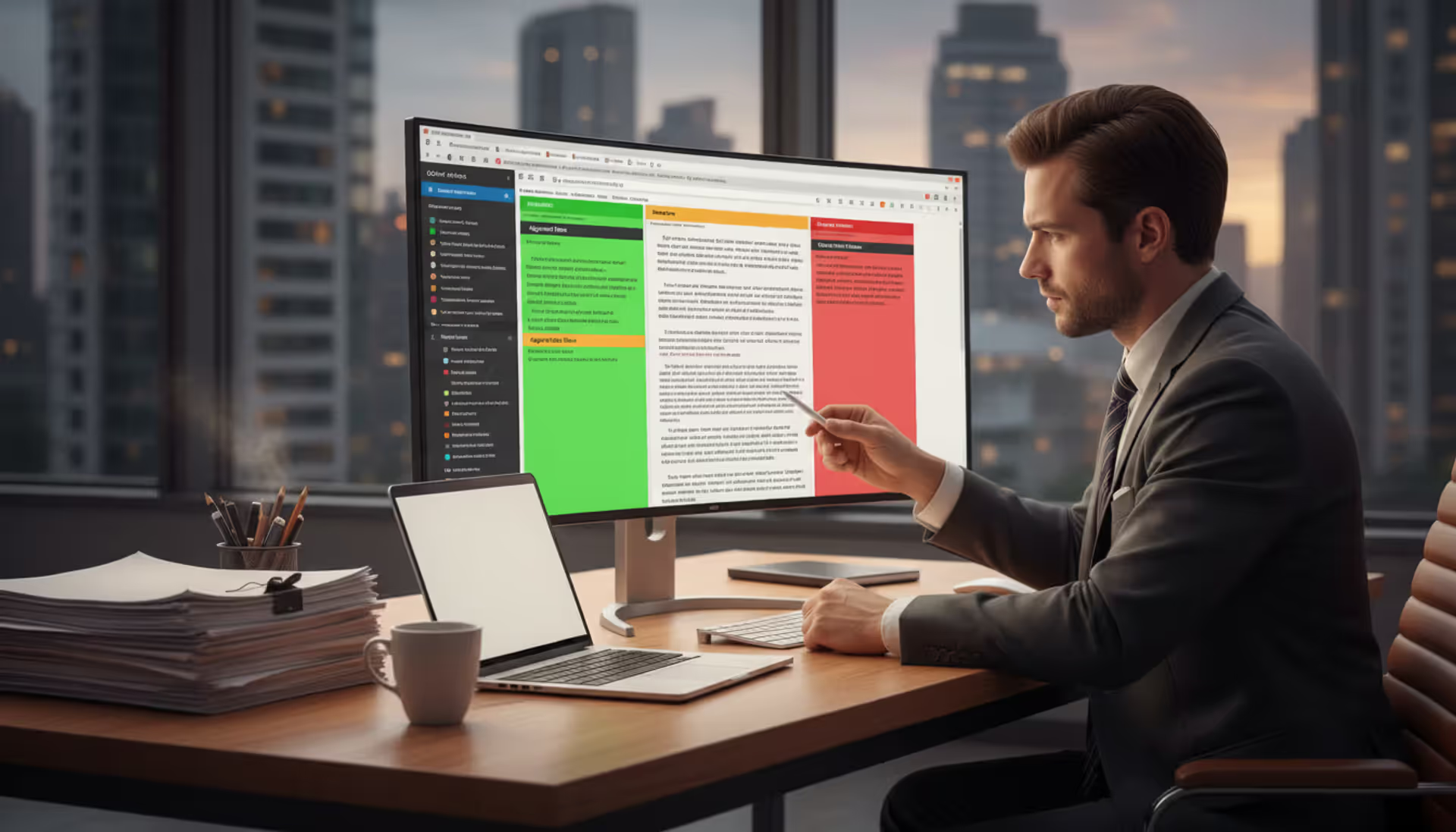
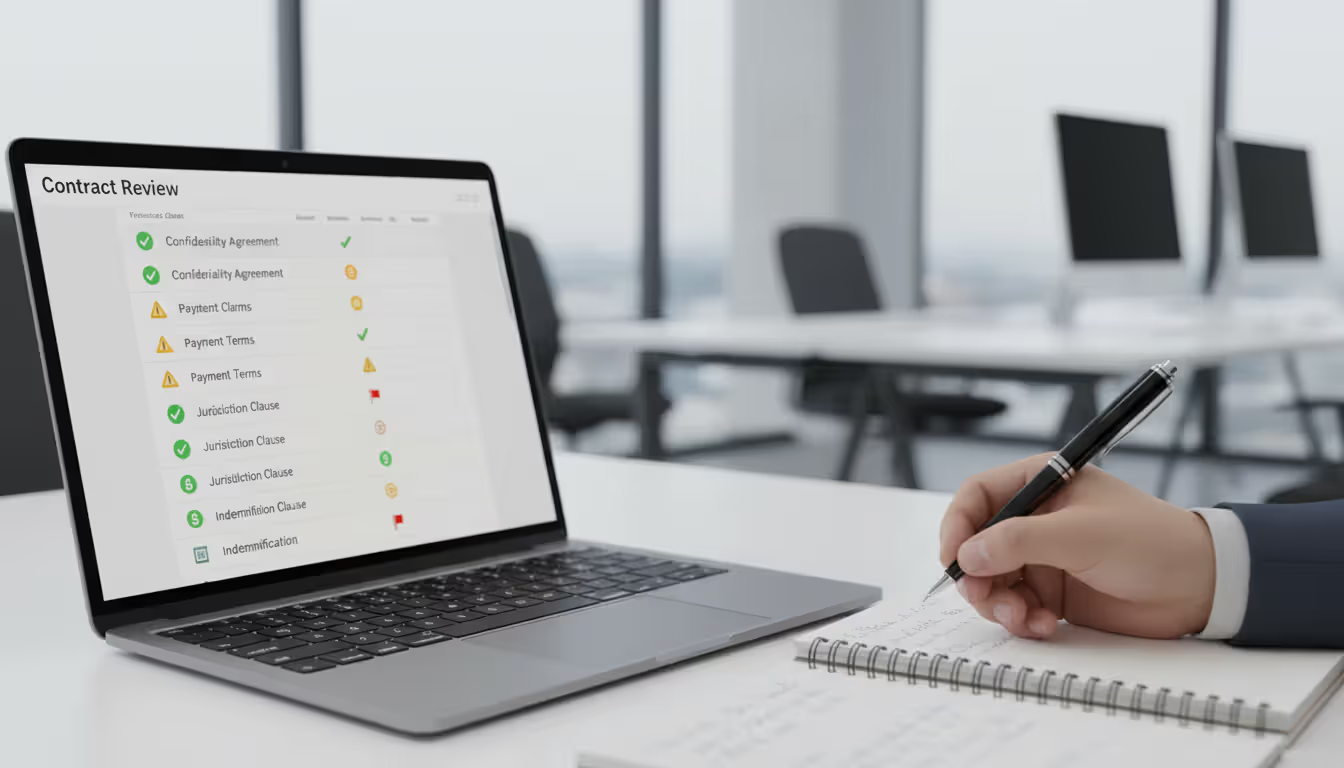
The AI compares each clause in the submitted contract against playbook rules, generating a report that categorizes issues by severity. Green items comply with standards. Yellow items fall into negotiable ranges. Red items violate mandatory requirements. A procurement team reviewing 200 supplier contracts can prioritize the 15 with red-flag issues rather than reading all 200 sequentially.
Risk identification extends beyond playbook compliance. Advanced systems flag unusual language patterns, missing standard protections, or clauses that create unexpected obligations. When reviewing a commercial lease, the AI might notice that the landlord's right to relocate the tenant appears in Section 12.4 without corresponding rent reduction provisions—a risk that doesn't violate any specific rule but creates business exposure.
Author: Andrew Bellamy;
Source: craftydeb.com
Compliance checking automates regulatory alignment. Financial services contracts get scanned for required disclosures, privacy agreements get checked against current data protection laws, and employment contracts get validated against wage-and-hour regulations. The AI maintains updated rule sets as regulations change, reducing the manual effort of tracking legal developments.
AI and contract review differs from manual review in coverage and depth. Human attorneys typically focus on high-risk provisions and skim standard boilerplate. AI reviews every clause with equal attention, catching issues in sections humans often skip. But humans better understand context—why a specific client needs stronger IP protections, or how a seemingly standard clause conflicts with the client's operational reality.
AI contract analysis also includes comparison functions. Upload five vendor proposals, and the system generates a side-by-side comparison of pricing terms, service levels, liability caps, and termination rights. This works well for objective terms but struggles with qualitative differences in scope-of-work descriptions.
AI in Contract Management Systems
Contract management extends beyond drafting and review to ongoing administration. AI in contract management tracks obligations, monitors deadlines, and alerts stakeholders when action is required.
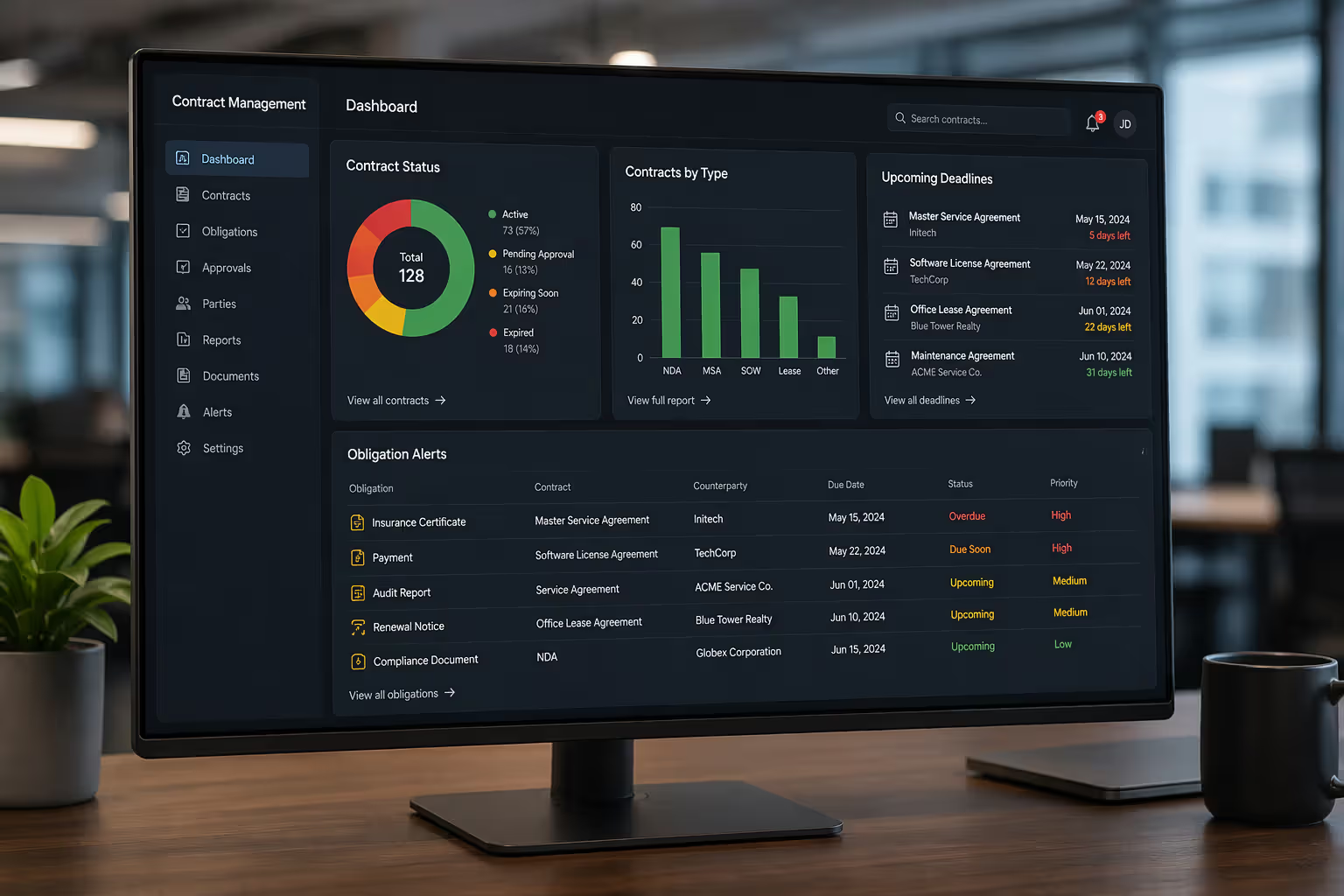
Obligation tracking starts during contract ingestion. The AI identifies every "shall," "must," and "will" statement, extracts the responsible party, deadline, and deliverable, then creates calendar entries. A construction contract might generate 40 separate obligation entries: submit insurance certificates by March 15, deliver progress reports monthly, complete substantial completion by October 1.
The system monitors these obligations against actual performance. If the insurance certificate doesn't upload by March 15, it escalates to the project manager. If monthly reports miss two consecutive deadlines, it triggers a contract compliance review.
Renewal alerts prevent automatic rollovers of unfavorable terms. Many contracts auto-renew unless one party provides notice 60 or 90 days before the anniversary date. AI calendaring systems flag these windows, giving legal and business teams time to decide whether to renew, renegotiate, or terminate.
Integration with existing workflows determines whether AI contract management actually gets used. The best systems connect to procurement platforms, financial systems, and project management tools. When a purchase order references a master services agreement, the system automatically links them, ensuring PO terms don't conflict with MSA provisions.
Lifecycle management dashboards provide visibility across the entire contract portfolio. General counsel can see that 23 contracts expire in Q2, 12 contain price increase clauses triggered by inflation metrics, and 8 require annual compliance certifications due next month. This portfolio view was nearly impossible to maintain manually when organizations managed hundreds or thousands of active agreements.
The use of ai in legal contracts for management purposes also includes spend analysis. By extracting pricing terms and payment schedules, the AI calculates total committed spend, identifies duplicate vendors, and flags opportunities for volume consolidation.
Author: Andrew Bellamy;
Source: craftydeb.com
Common AI Tools for Lawyers in Contract Work
AI tools for lawyers fall into several categories based on primary function. Point solutions focus on single tasks—contract review or obligation extraction. Platform solutions attempt to handle the full lifecycle from drafting through management.
When evaluating AI contract software, law firms should assess training data quality before features. A tool trained exclusively on UK contracts will struggle with US-specific provisions. A system trained on simple NDAs won't perform well on complex joint venture agreements. Vendors rarely disclose training data details, but asking about the size, jurisdiction, and document types in their corpus reveals capability boundaries.
Accuracy metrics matter, but vendors measure them inconsistently. One claims "95% accuracy" in clause identification, meaning it correctly categorizes 95% of clauses—but doesn't mention it misses 20% of clauses entirely. Another reports "92% accuracy" using stricter methodology that counts both identification and categorization errors. Request sample reports on contracts similar to your practice area rather than relying on aggregate statistics.
Adoption considerations extend beyond technology to change management. Partners accustomed to drafting from memory resist systems requiring structured inputs. Associates worry AI will eliminate their document review work. Successful implementations pair technology training with workflow redesign, showing attorneys how AI handles routine tasks while they focus on strategic advice.
Contract Negotiation Features
AI contract negotiation tools suggest counterproposals when reviewing third-party paper. If a vendor's limitation of liability clause caps damages at $10,000, the system might recommend: "Increase cap to $500,000 or annual contract value, whichever is greater, based on your standard playbook and similar transactions."
The suggestions come from analyzing negotiation history. If your firm previously accepted 30-day payment terms in 80% of cases but pushed back successfully to 45 days in 15% of cases, the AI learns that 45 days is achievable but requires justification. It might suggest: "Propose 45-day terms citing cash flow management, with precedent in [Contract XYZ]."
These features work best in high-volume, relatively standardized negotiations—vendor agreements, employment offers, routine licensing. They add less value in one-off strategic deals where relationship dynamics and business context outweigh historical patterns.
Clause Generation and Customization
Clause generation tools maintain libraries organized by provision type, jurisdiction, and risk profile. Need a force majeure clause for a Texas construction contract? The system offers three options: narrow (covers only traditional acts of God), moderate (adds labor disputes and supply chain disruptions), and broad (includes regulatory changes and economic hardship).
Customization happens through parameter adjustment rather than free-text editing. Change the contract value from $50,000 to $5 million, and the AI automatically adjusts insurance requirements, limitation of liability caps, and audit rights to match the higher-value transaction.
Advanced systems learn firm preferences over time. If Partner Smith consistently deletes the "including but not limited to" language from definition clauses, the AI stops including it in drafts for her matters. If the litigation team always adds a jury trial waiver to settlement agreements, that becomes the default.
Limitations and Risks of Using AI in Legal Contracts
AI has transformed our contract review capacity, but it's a power tool, not a replacement for expertise. We caught a major issue last month that our AI flagged as green—the language was technically compliant with our playbook, but it created a loophole our client's competitor could exploit. Technology finds patterns; lawyers understand implications
— Jennifer Martinez
Accuracy concerns persist despite improvements. AI systems trained on historical contracts perpetuate outdated language and occasionally generate clauses that contradict each other. A 2025 study of AI-drafted NDAs found that 8% contained internal inconsistencies—one section permitting disclosure to affiliates while another prohibited it without exception.
The use of ai in legal contracts raises ethical questions about competence and supervision. Bar associations increasingly address whether attorneys who fail to understand AI outputs meet their duty of competence. Simply accepting AI-generated language without review likely violates professional responsibility rules, but the required depth of review remains unclear.
Human review stays essential for several reasons. AI doesn't understand client business models well enough to spot when legally valid terms create operational problems. It doesn't grasp negotiation dynamics—when to hold firm on a point versus when to concede for relationship preservation. And it can't provide the judgment calls that define legal expertise: is this risk worth taking given the business opportunity?
Liability questions lack clear answers. If an AI-drafted contract contains an error that costs the client money, who bears responsibility—the law firm, the software vendor, or both? Most AI tool licenses disclaim liability for output accuracy, leaving law firms exposed. Malpractice carriers now ask specific questions about AI use, and some exclude AI-related claims or charge higher premiums.
Context blindness creates subtle risks. An AI reviewing a supply agreement might approve a standard "right to cure" provision without recognizing that this particular supplier has repeatedly failed to cure past breaches, making the provision a business problem even if legally standard.
The technology also struggles with ambiguity resolution. When contract language could reasonably be interpreted two ways, experienced attorneys consider which interpretation better serves the client's interests and draft accordingly. AI systems often default to the most common interpretation in their training data, which may not align with client needs.
Comparison of AI Contract Functions
Function
Primary Use Case
Time Savings
Accuracy Level
Human Oversight Required
Drafting
Generating first drafts from templates
60-80% reduction in initial drafting time
85-90% for standard provisions; lower for complex terms
Moderate to high; review all substantive provisions
Review
Analyzing third-party contracts against playbooks
70-85% reduction in review time for routine contracts
90-95% for objective compliance; 75-85% for risk assessment
Moderate; focus on flagged issues and business context
Management
Tracking obligations and deadlines
90%+ reduction in manual tracking effort
95%+ for deadline extraction; 85-90% for obligation identification
Low for tracking; high for deciding appropriate responses
Negotiation
Suggesting counterproposals based on history
40-60% reduction in research time for positions
80-85% for standard terms; not reliable for novel issues
High; AI suggests, humans decide strategy
FAQ: Artificial Intelligence in Contracts
Can AI completely replace lawyers in contract drafting?
No. AI handles template-based drafting for routine agreements but cannot replace legal judgment. Attorneys must still customize provisions for specific business contexts, negotiate strategic terms, and ensure the contract achieves client objectives beyond legal compliance. AI accelerates the drafting process but doesn't eliminate the need for expertise.
How accurate is AI contract analysis compared to human review?
AI accuracy for objective tasks—finding specific clauses, checking compliance with defined rules, extracting dates and dollar amounts—typically exceeds 90% and often surpasses human performance on high-volume repetitive work. For subjective analysis—assessing business risk, evaluating negotiation strategy, understanding client-specific concerns—human review remains significantly more reliable. The best results combine AI coverage with human judgment.
What types of contracts benefit most from AI tools?
High-volume, relatively standardized contracts show the strongest ROI: vendor agreements, employment offers, NDAs, standard licensing deals, and lease agreements. These contracts share common structures and provisions, allowing AI to learn patterns effectively. Unique, complex transactions—mergers and acquisitions, joint ventures, first-of-kind technology deals—benefit less because AI training data contains fewer comparable examples.
Is AI-generated contract language legally binding?
Yes, assuming the contract meets standard formation requirements (offer, acceptance, consideration, mutual assent). Courts don't distinguish between human-drafted and AI-drafted language. The enforceability question centers on whether the parties intended to be bound and whether terms are legally permissible, not on the drafting method. However, attorneys remain professionally responsible for any language they present to clients, regardless of its source.
How much do AI contract tools cost for law firms?
Pricing models vary widely. Point solutions for contract review start around $5,000-$15,000 annually for small firm licenses. Enterprise platforms handling drafting, review, and management range from $50,000 to $500,000+ annually depending on user count and contract volume. Many vendors now offer per-contract pricing ($10-$100 per contract analyzed) as an alternative to subscriptions. Calculate ROI based on attorney time saved rather than absolute cost—a $100,000 system that eliminates 500 hours of associate review at $300/hour generates clear value.
What are the security risks of using AI for confidential contracts?
Cloud-based AI tools process contracts on vendor servers, creating data exposure risks. Key concerns include: unauthorized access to sensitive business terms, inadvertent training of AI models on your confidential data (making your contract terms available to other users), and data breaches at the vendor. Mitigate risks by: confirming vendors don't use your data for model training without consent, verifying SOC 2 Type II or ISO 27001 certification, requiring data encryption in transit and at rest, and reviewing data retention and deletion policies. Some firms use on-premise AI solutions for the most sensitive matters despite higher costs.
Artificial intelligence in contracts delivers measurable efficiency gains when deployed thoughtfully. The technology handles pattern recognition, compliance checking, and routine drafting faster than human attorneys while maintaining consistent quality on defined tasks.
Success requires matching AI capabilities to appropriate use cases. Deploy it for high-volume contract review where speed and coverage matter. Use it to generate first drafts of standard agreements, freeing attorneys for customization and strategy. Implement it for obligation tracking and deadline management where manual processes create gaps.
Equally important is recognizing where AI falls short. Complex negotiations, novel transaction structures, and situations requiring business judgment still demand human expertise. The most effective approach treats AI as a force multiplier for attorney capabilities rather than a replacement.
Law firms and legal departments should start with narrow implementations—one contract type or one workflow stage—before expanding. This builds user confidence, reveals integration challenges, and generates metrics proving value to skeptical partners. As teams develop AI fluency, they can tackle more sophisticated applications.
The competitive landscape has shifted. Firms that master AI contract tools can handle higher volumes at lower costs while maintaining quality. Those that resist adoption will struggle to match the efficiency and pricing of AI-enabled competitors. The question for most legal teams is no longer whether to adopt AI, but how quickly they can do so effectively.
An LLC operating agreement is a legally binding document that outlines ownership structure, management procedures, and operational rules. While only some states require it, this internal document strengthens liability protection, prevents disputes, and satisfies banks and investors
Master Service Agreements establish reusable legal frameworks for ongoing vendor relationships. Discover how MSAs work, essential clauses, negotiation strategies, and when to use master agreements versus individual contracts for your business needs
A transition services agreement (TSA) is a contract where the seller provides operational services to the buyer post-closing. This guide covers TSA fundamentals, contract terms, duration, negotiation strategies, and post-merger management for successful M&A transitions
A side letter is a separate agreement that modifies or supplements a main contract, commonly used in private equity and investment funds. This guide explains side letter provisions, enforceability, negotiation tactics, and how they differ from primary agreements
The content on this website is provided for general informational and educational purposes only. It is intended to explain concepts related to business and corporate law, contracts, compliance, disputes, M&A, and taxation for companies.
All information on this website, including articles, guides, and examples, is presented for general educational purposes. Legal outcomes may vary depending on jurisdiction, company structure, and individual circumstances.
This website does not provide legal advice, and the information presented should not be used as a substitute for consultation with qualified corporate attorneys or legal professionals.
The website and its authors are not responsible for any errors or omissions, or for any outcomes resulting from decisions made based on the information provided on this website.