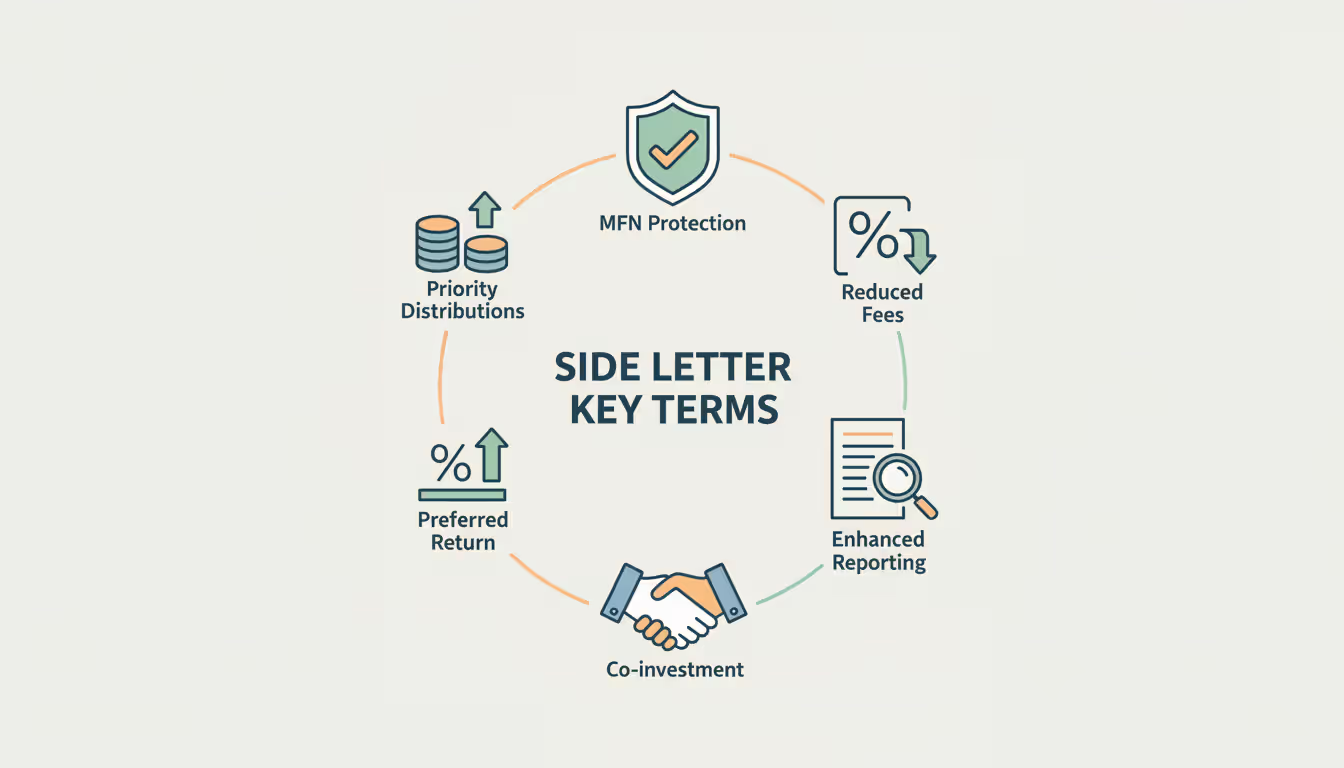
Think of a side letter as a private handshake agreement that sits alongside a main contract. It's a separate document that two or more parties sign to adjust, add to, or clarify specific terms in their primary agreement—without touching the original contract that everyone else signed.
Here's where you'll run into these most often: private equity funds, venture capital, hedge funds. Big institutional investors—we're talking pension funds dropping $500 million into a fund—use side letters to negotiate special terms. They get enhanced reporting, better fees, or other perks that smaller investors won't even know exist.
But side letters aren't just for Wall Street. Real estate deals use them. Employment contracts include them. Any complex business arrangement where one party needs something the standard contract doesn't provide? That's side letter territory.
The genius of this approach? A fund manager can close a deal with 50 different investors without creating 50 different versions of the core fund documents. The limited partnership agreement stays the same for everyone. The special sauce gets added through individual side letters negotiated with specific investors who have the leverage to demand better terms.
Side Letter Agreement Meaning and Purpose
A side letter agreement creates exceptions within standardized contracts. When you've got a main document designed to govern hundreds of relationships uniformly—like a fund's core partnership agreement—some participants will inevitably need terms reflecting their unique situations.
Fund managers grant preferential treatment to anchor investors who commit substantial capital early. A sovereign wealth fund putting in $400 million? They're getting fee discounts, co-investment rights, maybe a seat on the advisory board. Extending those same benefits to every investor would destroy the fund's economics. Side letters solve this problem.
Corporate deals rely on them too. During an acquisition, the buyer might execute a side letter with the target company's CEO covering retention bonuses, non-compete terms, or severance packages beyond what the public merger agreement discloses. This keeps sensitive compensation details private while maintaining clean transaction documents.
Author: Samantha Keene;
Source: craftydeb.com
Beyond granting special rights, side letters clarify muddy provisions in main agreements without triggering formal amendment processes requiring everyone's consent. They document verbal understandings from negotiations that never made it into the final draft. They address regulatory requirements hitting specific investors—think ERISA limitations for pension funds or statutory restrictions on sovereign capital.
The confidentiality cuts both ways. Parties appreciate privacy around negotiated terms that might trigger demands from others if they leaked out. But this same secrecy raises fairness questions, particularly in investment funds where one investor's preferential treatment can harm others who don't even know about the disparity.
Commercial contexts treat side letters differently than fund contexts, though. A lease side letter addressing tenant improvements involves two parties who both know it exists. A fund side letter? That might be one of fifteen different side letters with varying terms, and most investors have no clue what anyone else negotiated.
How Side Letters Work in Different Contexts
Side Letters in Private Equity and Investment Funds
Private equity has turned side letter negotiations into standard operating procedure for institutional investors cutting big checks. The typical fund operates under one limited partnership agreement applying to all investors—but the largest limited partners routinely negotiate side letters addressing their specific concerns.
Investment fund side letters commonly include most-favored-nations clauses (MFN provisions in industry speak). These guarantee that if the manager later grants better economic terms to anyone else, those same improvements automatically flow to the MFN holder. A university endowment might lock in this protection, ensuring it receives any fee reductions, lower carry percentages, or better liquidity terms granted to other institutions.
Transparency drives another major category. Public pension funds often operate under sunshine laws requiring investment disclosure. Their side letters secure quarterly reporting instead of annual statements, detailed portfolio company data, and sometimes attendance rights at annual meetings or spots on advisory committees.
Fee structures frequently live in side letters rather than main fund documents. A $200 million commitment might justify dropping the management fee from 2% to 1.75%—that's a million dollars saved annually. These economic concessions stay confidential to prevent triggering MFN clauses or pressure campaigns from other investors demanding equal treatment.
Regulatory accommodations create another negotiation category. ERISA-governed pension funds need specific representations about plan asset regulations and prohibited transactions. Non-U.S. investors require tax provisions addressing withholding, information reporting, or treaty benefits. Each specialized term gets documented in individual side letters instead of cluttering the core partnership agreement with provisions irrelevant to 95% of investors.
Side Letters in Commercial Contracts
Outside investment funds, side letters serve similar customization purposes but operate in simpler contexts. Commercial lease agreements sometimes spawn side letters addressing tenant improvement allowances, renewal options, or rent abatement periods negotiated after the main lease was executed. This avoids circulating amendments through multiple approval layers when only landlord and tenant need to document their understanding.
Employment situations use side letters to supplement offer letters with provisions employers prefer keeping confidential. A recruited executive might negotiate a side letter guaranteeing minimum year-one bonuses, relocation reimbursement up to $150,000, or accelerated equity vesting if the company gets acquired within two years. These terms stay separate from the standard employment template used for other hires.
Author: Samantha Keene;
Source: craftydeb.com
Supply agreements occasionally generate side letters when parties agree to pricing adjustments, volume commitments, or exclusivity terms applying only temporarily or under specific conditions. A manufacturer might execute a side letter with its largest distributor—volume rebates kick in at certain quarterly targets, but smaller distributors operating under the standard distribution agreement never see those better prices.
The key difference? A fund might have 50 limited partners and ten side letters with varying terms. A commercial contract typically involves just two parties who both know their side letter exists, even if specific terms stay confidential from third parties.
Side Letter vs Main Agreement: Key Differences
Understanding how these documents relate requires examining their structural and functional distinctions:
Feature
Main Agreement
Side Letter
Coverage
Every signatory to the transaction or fund; establishes baseline terms applying uniformly
Usually just two parties (manager and specific investor, or contract subset); creates exceptions or additional provisions
Privacy Level
Generally disclosed to all parties; sometimes publicly filed in certain transaction types
Usually confidential; other parties often don't know it exists or what terms it contains
Amendment Requirements
Typically needs consent from all parties or supermajority vote; formal procedures govern changes
Only the side letter parties negotiate and sign; much faster process
Legal Priority
Primary governing document; controls unless side letter explicitly contradicts specific provisions
Enforceable between side letter parties; effectiveness depends on subordination language and conflict resolution terms
Standard Content
Core economic terms, governance framework, fundamental rights and duties, dispute mechanisms
Fee adjustments, enhanced information access, MFN clauses, regulatory accommodations, specific representations
Transparency Duties
Must be provided to all parties; regulatory filing sometimes required
Disclosure obligations differ widely; certain jurisdictions or fund types demand transparency to other investors
The hierarchical relationship between these documents creates potential friction. Well-drafted side letters include explicit language: if conflict arises, the side letter governs as between its parties, while the main agreement continues controlling relationships with everyone else. This prevents side letters from accidentally modifying core contracts for those who didn't negotiate special terms.
Timing differs too. Main agreements typically get negotiated, finalized, and executed first—establishing the foundational relationship. Side letters often emerge later, sometimes even after the main agreement takes effect. An investor might sign a limited partnership agreement on the final closing date while simultaneously executing a side letter negotiated during the preceding weeks.
Drafting standards vary as well. Main agreements receive extensive review, multiple negotiation rounds, and careful vetting by all parties' counsel. Side letters sometimes get drafted quickly, with less formality, particularly when addressing straightforward requests like additional reporting. This efficiency advantage carries risk—poorly drafted side letters create ambiguity about whether they actually modify the main agreement or simply restate existing rights.
Common Side Letter Provisions and Terms
Certain provisions appear repeatedly in side letters across different contexts, though specific terms vary based on negotiating leverage and investor needs.
Fee modifications top most investors' wish lists. Management fee reductions, lower carry percentages, or caps on organizational expenses directly impact returns. A pension fund committing $300 million might negotiate cutting the management fee from 2% to 1.5%—saving $1.5 million every single year. These fee modifications typically come bundled with MFN protection, ensuring the investor receives any better fee terms granted later to others.
Most-favored-nations provisions themselves rank among the most negotiated side letter terms. MFN clauses come in several flavors. Economic MFN covers fees, carry, and other financial terms. Information MFN ensures the investor receives any enhanced reporting or transparency granted to others. Broad MFN sweeps in all material terms. Narrow versions apply only to specifically enumerated provisions like management fees and carried interest percentages.
Enhanced information access frequently exceeds what main fund documents provide. Standard limited partnership agreements might require only annual audited financials and quarterly unaudited statements. Large institutional investors often negotiate monthly reporting, granular portfolio company performance metrics, exposure reports by sector or geography, and quarterly calls with the fund's CFO. Public pension funds may demand disclosure of political contributions, ESG performance data, or workforce diversity statistics.
Co-investment opportunities give certain limited partners the chance to invest directly in portfolio companies alongside the fund—typically without paying management fees or carried interest on those direct investments. These rights might be structured as first refusal on all deals exceeding $50 million, guaranteed allocation up to 10% of each transaction, or simply a commitment to offer co-investment when available (with no guarantee of allocation).
Withdrawal and transfer flexibility addresses investors' needs for liquidity beyond standard fund terms. Most private equity funds lock up capital for ten-plus years, but side letters might grant specific investors withdrawal rights after a minimum holding period, the ability to transfer interests to affiliates without general partner consent, or participation in secondary market sales under specified conditions.
Regulatory representations accommodate investors' legal and compliance mandates. ERISA investors need specific representations about plan asset treatment and prohibited transactions. Non-U.S. investors require tax provisions. Public entities might need representations about conflicts of interest, political contributions, or sanctions compliance.
Opt-out rights let investors exclude specific investments violating their internal policies. A university endowment might negotiate opting out of tobacco or weapons manufacturers. A sovereign fund might require the ability to avoid companies operating in certain countries. These provisions typically reduce the investor's capital commitment proportionally—if they sit out 5% of deals, their commitment drops 5%, and they don't participate in those investments' returns.
Enhanced key person terms sometimes exceed what main fund agreements provide. An investor might negotiate suspending capital commitments if two named investment professionals depart, rather than the three departures triggering key person provisions for all limited partners.
Author: Samantha Keene;
Source: craftydeb.com
Side Letter Enforceability and Legal Considerations
Whether courts will enforce a side letter depends on several factors that parties should address explicitly during drafting.
The relationship between side letter and main agreement largely determines enforceability. Courts generally uphold side letters as valid contracts when properly executed, supported by consideration, and not violating public policy. But if a side letter directly contradicts the main agreement in ways undermining the contract's fundamental purpose? Enforceability gets murky.
Well-drafted side letters include integration clauses specifying interaction with the primary agreement. A typical provision reads: "This Side Letter supplements the Limited Partnership Agreement. If any conflict arises between this Side Letter and the LPA, as between parties to this Side Letter, this Side Letter controls." This establishes clear priority without purporting to modify the main agreement for other parties.
Regulatory oversight of side letters has intensified dramatically in recent years, especially for investment funds. The SEC has brought enforcement actions against fund managers failing to disclose side letters granting preferential terms to certain investors—viewing such non-disclosure as breaching fiduciary duty to other limited partners. This regulatory pressure has pushed managers toward greater transparency. Some fund managers now include in their main documents a commitment to disclose the existence and general nature of side letter terms to all investors.
Disclosure obligations surrounding side letters differ by jurisdiction and investor type. Public pension funds investing in private equity must often disclose their side letters under freedom of information laws—making true confidentiality impossible. Some limited partnership agreements now require sharing side letters with advisory committees or making them available to all investors upon request. The confidentiality that once characterized these arrangements? It's eroding.
Conflicts between side letters and main agreements create litigation risk when not properly addressed. Suppose a side letter grants an investor quarterly redemption rights, but the main fund agreement prohibits any redemptions before year five. Which provision wins? The answer depends on specific language in both documents, the jurisdiction's contract interpretation rules, and whether the side letter included a clear priority statement.
Timing of side letter execution matters for enforceability. Side letters signed simultaneously with the main agreement generally face fewer challenges than those executed months or years later. Late-stage side letters might raise questions about whether the party had authority to grant the terms, whether adequate consideration supported new obligations, or whether modifications required consent from other parties under the main agreement.
Side letters accomplish legitimate business objectives, but they also introduce potential conflicts and fairness issues that fund managers must navigate carefully. The critical factor is guaranteeing that preferential terms extended to some investors don't materially harm others, and that all side letter arrangements get properly disclosed consistent with fiduciary responsibilities
— Margaret Foster
Fund managers face particular enforceability challenges when side letters grant rights potentially impacting other investors. A side letter giving one investor distribution priority might violate the main agreement's waterfall provisions promising pro-rata treatment. Courts might refuse enforcing such provisions. Other limited partners might have standing challenging them as breaching the implied covenant of good faith and fair dealing.
Negotiating a Side Letter: What Investors and Parties Should Know
Side letter negotiation demands strategic thinking about leverage, timing, and priorities—plus knowing when to walk away.
Timing drives everything. You've got maximum leverage before committing capital, particularly if you're an anchor investor whose participation signals credibility to other potential limited partners. Fund managers are most willing negotiating side letters during initial fundraising when they need commitments reaching first close thresholds. Wait until after signing subscription documents? You've eliminated most negotiating leverage. They've got your money—why would they give you anything?
Negotiations typically begin with the investor submitting a side letter request outlining desired terms. Sophisticated institutional investors maintain standard templates their legal teams developed based on prior fund investments. These templates address regulatory requirements, internal policies, and governance preferences. First-time investors without templates should engage counsel experienced in fund investments to identify relevant provisions.
Author: Samantha Keene;
Source: craftydeb.com
You can't ask for everything. Fund managers won't agree to every request, so distinguish between must-have provisions driven by legal or regulatory requirements and nice-to-have terms that would be beneficial but aren't essential. An ERISA-governed pension fund must obtain certain plan asset representations—that's non-negotiable. Enhanced reporting or fee discounts? Those are preferences depending on your leverage.
Commitment size equals negotiating power. An investor committing $250 million to a $2 billion fund has substantially more leverage than one committing $10 million. Fund managers will grant meaningful economic concessions and governance rights to secure large anchor commitments. Smaller investors might obtain only regulatory accommodations or modest information enhancements.
Market conditions affect side letter negotiations dramatically. When capital is abundant and funds are oversubscribed? Managers can resist side letter requests and maintain standard terms. When fundraising is brutal and managers struggle reaching target fund sizes? Investors gain leverage negotiating more favorable provisions.
Watch for red flags during negotiations. Managers refusing to discuss any modifications to standard terms—even for regulatory accommodations—signal either inexperience or extensive side letters already granted to other investors (they can't offer additional concessions without triggering MFN clauses). Be wary of side letters purporting to grant rights the manager clearly can't deliver: guaranteed returns, priority violating the fund's structural provisions, or other terms conflicting with core fund economics.
Documentation formality should match the main agreement. Side letters should be drafted by qualified counsel, reviewed carefully by both parties, and executed with the same signature authority required for primary documents. Don't rely on informal email exchanges or unsigned term sheets—they don't create enforceable obligations and leave both parties exposed to disputes about what was actually agreed.
MFN clause negotiation deserves special attention. Push for broad MFN provisions covering all economic terms and material governance rights. Fund managers prefer narrow MFN clauses limited to specific provisions like management fees, arguing that broad MFNs create administrative burdens and complicate future negotiations with other investors. The typical compromise? Economic MFN protection with carve-outs for certain non-economic terms.
Consider negotiating for transparency about other side letters. Some investors request representation that they're receiving terms at least as favorable as those granted to any other limited partner. Alternatively, ask for disclosure of general categories of provisions in other side letters. This transparency helps assess whether you're being treated fairly relative to peers.
Get professional counsel involved—both sides. Fund managers should have experienced fund formation lawyers draft and negotiate side letters ensuring consistency with main fund documents and avoiding unintended conflicts. Investors need counsel familiar with private equity investments to identify market-standard provisions, spot problematic terms, and negotiate effectively.
Negotiations typically involve multiple revision rounds. The investor submits an initial request. The fund manager responds with markup indicating acceptable and unacceptable provisions. Parties negotiate through several iterations until reaching agreement or determining their positions are too far apart. This process can take weeks or months—another reason starting early is crucial.
Frequently Asked Questions About Side Letters
Are side letters legally binding?
Yes—side letters create legally binding obligations when properly executed with appropriate authority and consideration. They function as enforceable contracts between signing parties, just like any other agreement. However, enforceability hinges on several factors. Was it drafted to avoid conflicts with the main agreement? Did authorized representatives sign it? Does it comply with applicable legal requirements?
Courts generally uphold properly executed side letters as valid agreements, particularly when they supplement rather than contradict primary contracts. But here's the catch: the binding nature applies only to parties who signed the side letter. It doesn't create rights or obligations for other parties to the main agreement unless the side letter explicitly states otherwise or the main agreement requires disclosure and consent from all parties.
Can side letters override the main agreement?
They can—but only as between the parties who signed the side letter, and only if the side letter explicitly states it supersedes conflicting provisions in the primary contract. Most well-drafted side letters include priority language like: "to the extent any provision of this Side Letter conflicts with the Limited Partnership Agreement, this Side Letter shall control as between the parties hereto."
This language clarifies that the side letter modifies how the main agreement applies to specific parties, without purporting to change the main agreement for everyone else. But there are limits. Side letters can't override provisions fundamental to the transaction's structure or materially harming other parties' rights. For example, a side letter couldn't grant one investor distribution priority that would violate waterfall provisions governing all other limited partners—or if it tried, courts likely wouldn't enforce that provision.
Who typically requests a side letter in private equity deals?
Large institutional investors drive most side letter requests in private equity. This includes public and corporate pension funds, sovereign wealth funds, endowments, foundations, insurance companies, and family offices committing substantial capital. These investors possess negotiating leverage (based on commitment size) and sophisticated legal teams capable of identifying and negotiating favorable terms.
Pension funds often need side letters addressing ERISA compliance. Non-U.S. sovereign investors require tax provisions. Anchor investors committing early in fundraising have the most leverage negotiating extensive side letters covering fees, governance, and information rights. What about smaller investors? They typically lack leverage obtaining meaningful side letter provisions beyond basic regulatory accommodations. A $5 million commitment isn't moving the needle for a $2 billion fund—the manager has little incentive granting special terms.
Do side letters need to be disclosed to other investors?
It depends—disclosure requirements vary based on jurisdiction, fund type, and specific terms in the main fund documents. In the U.S., SEC regulations require registered investment advisers to disclose material side letter terms that could disadvantage other investors. The SEC views such disclosure as part of fiduciary duty owed to all clients.
Many limited partnership agreements now include provisions requiring general partners to disclose side letter existence and general nature to all limited partners or advisory committees. Public pension funds investing in private equity often must disclose their side letters under state freedom of information laws. However, purely private arrangements between private parties may not require disclosure unless the main agreement mandates it. The trend? Moving toward greater transparency. Many fund managers voluntarily disclose side letter provisions to avoid allegations of unfair treatment or breach of fiduciary duty.
What happens if a side letter conflicts with fund documents?
When side letter provisions conflict with main fund documents, resolution depends on specific language in both documents and applicable contract law. Well-drafted side letters include explicit provisions addressing potential conflicts—typically stating the side letter controls as between its parties while main fund documents continue governing all other relationships.
If the side letter lacks such language? Courts apply standard contract interpretation principles, examining parties' intent, document timing, and provision specificity. A specific provision in a later-executed side letter generally prevails over a general provision in the earlier main agreement. However, if the conflict is fundamental—such as a side letter provision materially impairing other investors' rights under fund documents—courts might refuse enforcing the conflicting side letter provision. Other limited partners might have standing to challenge it as breaching the general partner's fiduciary duties.
When should you negotiate a side letter?
Before signing the main agreement and committing capital—that's when you hold maximum leverage. For private equity fund investments, side letter negotiations typically occur during the fundraising period, often simultaneously with subscription document negotiations. Anchor investors committing early in fundraising have the most leverage and can negotiate the most favorable terms.
Once you've signed the subscription agreement and funded your commitment? You've lost essentially all negotiating power. The fund manager has little incentive granting additional concessions—they've already got your money locked up for the next decade. In commercial contract contexts, side letter negotiations usually happen when parties identify needs for specific terms not addressed in the main agreement—either during final negotiations before signing or shortly after execution when circumstances reveal the need for clarification or modification. The key? Recognize early in the process which terms matter to you and raise them before you've committed to the transaction.
Side letters function as essential customization tools within standardized agreements, particularly in private equity and investment fund contexts. They let fund managers accommodate diverse investor requirements without creating multiple versions of core fund documents. They enable investors to secure terms reflecting unique circumstances, regulatory constraints, and negotiating leverage.
Strategic use of side letters demands careful attention to drafting, disclosure obligations, and potential conflicts with main agreements. Engage experienced counsel to negotiate and document side letter provisions—ensuring enforceability while avoiding unintended consequences. As regulatory scrutiny increases and transparency expectations evolve, side letter practice continues developing, with greater emphasis on disclosure and fair treatment of all investors.
Understanding side letters—their purpose, common provisions, enforceability considerations, and negotiation dynamics—empowers investors and contracting parties to protect their interests while maintaining flexibility that makes complex transactions possible. Whether you're a pension fund investing in a multi-billion dollar buyout fund or a company negotiating a commercial agreement, knowing when and how to deploy side letters effectively can significantly impact your rights, obligations, and ultimate outcomes.
An LLC operating agreement is a legally binding document that outlines ownership structure, management procedures, and operational rules. While only some states require it, this internal document strengthens liability protection, prevents disputes, and satisfies banks and investors
Master Service Agreements establish reusable legal frameworks for ongoing vendor relationships. Discover how MSAs work, essential clauses, negotiation strategies, and when to use master agreements versus individual contracts for your business needs
A transition services agreement (TSA) is a contract where the seller provides operational services to the buyer post-closing. This guide covers TSA fundamentals, contract terms, duration, negotiation strategies, and post-merger management for successful M&A transitions
A PSA agreement is a legally binding contract between buyer and seller outlining terms for transferring property or assets. This comprehensive guide explains how purchase and sale agreements work, essential clauses, negotiation strategies, and the differences between PSAs and asset purchase agreements
The content on this website is provided for general informational and educational purposes only. It is intended to explain concepts related to business and corporate law, contracts, compliance, disputes, M&A, and taxation for companies.
All information on this website, including articles, guides, and examples, is presented for general educational purposes. Legal outcomes may vary depending on jurisdiction, company structure, and individual circumstances.
This website does not provide legal advice, and the information presented should not be used as a substitute for consultation with qualified corporate attorneys or legal professionals.
The website and its authors are not responsible for any errors or omissions, or for any outcomes resulting from decisions made based on the information provided on this website.