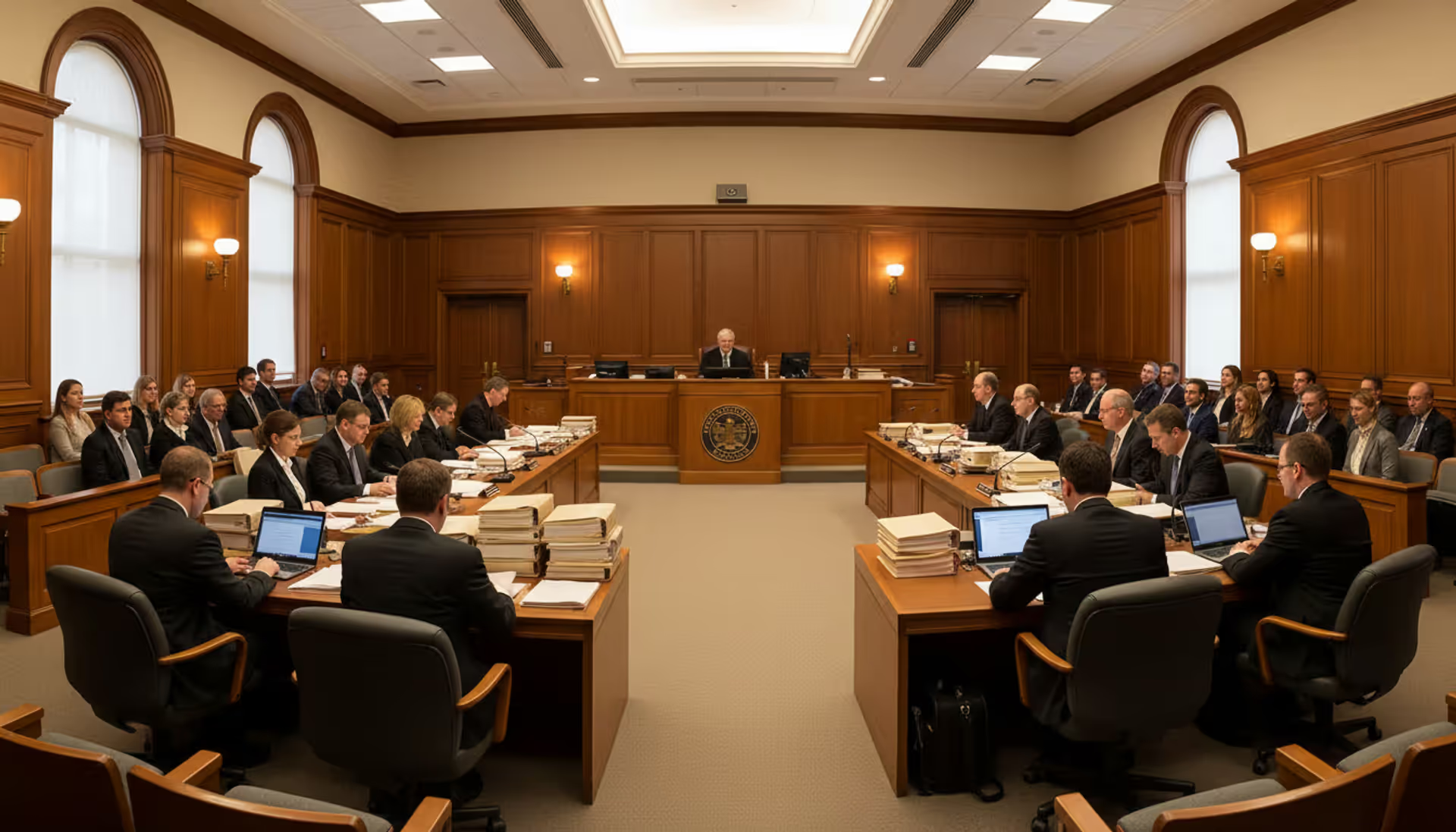
When a contract falls apart, a partner acts in bad faith, or a competitor crosses the line, business owners face a critical choice: pursue legal action or walk away. Business litigation represents the formal court process companies use to resolve disputes that negotiations and informal methods cannot settle. Unlike criminal cases where the government prosecutes wrongdoing, business litigation involves private parties seeking remedies—usually monetary damages or specific performance—through the civil court system.
The stakes run high. A poorly handled lawsuit can drain resources, distract leadership, and damage market position. Yet ignoring valid claims or failing to defend against baseless ones carries equal risk. Understanding how commercial litigation works, what it costs, and when alternatives make more sense helps executives make informed decisions when conflict erupts.
What Is Business Litigation?
Business litigation encompasses legal disputes involving commercial entities, their owners, employees, vendors, customers, or competitors. This category of civil litigation addresses conflicts arising from business operations, transactions, and relationships. The term "commercial litigation" often appears interchangeably with business litigation, though some practitioners use "commercial" to describe larger-scale disputes between corporations.
Civil litigation for businesses differs fundamentally from regulatory enforcement actions or criminal prosecutions. When the Securities and Exchange Commission investigates accounting fraud, that's a regulatory matter. When prosecutors charge executives with wire fraud, that's criminal law. Business litigation occurs when one private party sues another for breach of contract, fraud, unfair competition, or similar claims seeking compensation or court orders.
The dividing line matters because civil litigation follows different rules, carries different penalties, and requires different proof standards. Criminal cases demand proof beyond reasonable reasonable doubt; civil business cases require only a preponderance of evidence—more likely than not. Business litigation cannot result in jail time, only monetary judgments, injunctions, or declaratory relief.
Most business litigation unfolds in state courts, though cases involving parties from different states with amounts exceeding $75,000 may qualify for federal diversity jurisdiction. Federal courts also handle cases involving federal statutes like antitrust laws, securities regulations, or patent disputes.
Most business litigation cases settle before trial, but only after significant discovery costs have been incurred.Companies that engage experienced counsel early—before positions harden—often resolve disputes at a fraction of the cost and preserve business relationships that would otherwise be destroyed through protracted court battles
— Patricia Hernandez
Common Types of Business Lawsuits
Contract disputes represent the most frequent category of business litigation. When one party claims another failed to perform obligations under a written or oral agreement, breach of contract litigation follows. These cases span purchase agreements, service contracts, leases, loan documents, and employment agreements. A manufacturer sues a supplier for delivering defective components. A landlord pursues a tenant for unpaid rent. A software company claims a client breached licensing terms.
Partnership and shareholder disputes tear companies apart from within. Business partners may disagree about profit distribution, management decisions, or fiduciary duties. Minority shareholders sometimes allege that majority owners engaged in oppressive conduct or self-dealing. These cases often involve dissolution proceedings, buyout negotiations, or derivative actions where shareholders sue on behalf of the corporation.
Intellectual property claims protect competitive advantages. Trademark infringement cases arise when competitors use confusingly similar branding. Copyright litigation addresses unauthorized use of creative works. Trade secret misappropriation occurs when employees or business partners steal confidential information. Patent disputes, though less common, involve allegations that products infringe protected inventions.
Employment-related litigation spans wrongful termination claims, discrimination allegations, wage disputes, and non-compete enforcement. While individual employees often bring these cases, businesses also initiate litigation to enforce restrictive covenants or recover damages from employees who violated duties.
Fraud and misrepresentation cases involve allegations that one party made false statements inducing another to enter a transaction. A buyer claims the seller concealed material defects. An investor alleges the company misrepresented financial performance. These cases often seek rescission of the transaction plus damages for losses incurred.
Unfair competition and business tort claims address improper competitive practices. Tortious interference occurs when a third party deliberately disrupts contractual relationships. Defamation cases arise from false statements damaging business reputation. Conversion claims address unauthorized use of business property.
Author: Olivia Farnsworth;
Source: craftydeb.com
The Business Litigation Process Step-by-Step
Filing and Pre-Trial Procedures
Business litigation begins when a plaintiff files a complaint in the appropriate court, outlining claims and requested relief. The defendant receives formal service and has a limited time—typically 21 to 30 days—to respond. The answer addresses each allegation and raises affirmative defenses.
Defendants often file motions to dismiss arguing the complaint fails to state a valid legal claim or that the court lacks jurisdiction. If the judge denies dismissal, the case proceeds to discovery. Some defendants file counterclaims against the plaintiff or cross-claims against co-defendants, expanding the litigation's scope.
Courts issue scheduling orders establishing deadlines for discovery completion, expert disclosures, and dispositive motions. These orders create the litigation timeline and rarely allow extensions without compelling reasons.
Discovery and Evidence Gathering
Discovery consumes the bulk of litigation time and expense. Parties exchange relevant documents through requests for production. In complex commercial cases, document production can involve millions of pages of emails, contracts, financial records, and internal communications.
Depositions allow attorneys to question witnesses under oath before trial. Key employees, experts, and parties spend hours—sometimes days—answering questions that attorneys use to assess case strength, lock in testimony, and find inconsistencies.
Interrogatories pose written questions requiring written answers under oath. Requests for admission ask parties to confirm or deny specific facts, narrowing disputed issues.
Electronic discovery (e-discovery) has transformed business litigation. Companies must preserve and produce electronically stored information from servers, computers, phones, and cloud storage. Failure to preserve evidence can result in sanctions, including adverse inference instructions telling juries to assume destroyed evidence was unfavorable.
Expert witnesses provide specialized knowledge on technical, financial, or industry-specific issues. Accountants calculate damages. Engineers assess product defects. Industry experts opine on standard practices. Each side typically retains competing experts, leading to battles over methodology and conclusions.
Settlement Negotiations and Trial
Most business litigation settles before trial. Settlement discussions occur throughout the case, intensifying as trial approaches and costs mount. Parties may engage in formal mediation where a neutral third party facilitates negotiations, or conduct direct settlement talks through counsel.
Settlement offers strategic advantages: certainty of outcome, cost control, confidentiality, and relationship preservation. Trials introduce unpredictable jury decisions, appeal risks, and public disclosure of sensitive information.
If settlement fails, the case proceeds to trial. Business cases may be tried before a judge (bench trial) or jury, depending on the claims and parties' preferences. Trials involve opening statements, witness testimony, cross-examination, exhibit presentation, and closing arguments.
The judge or jury renders a verdict. The prevailing party submits a proposed judgment, which the court enters as a final order. Post-trial motions may challenge the verdict or seek fee awards. Dissatisfied parties can appeal, extending the process another year or more.
Litigation vs. Arbitration and Mediation for Businesses
Many business contracts include alternative dispute resolution (ADR) clauses requiring parties to attempt resolution outside court. Understanding the differences between litigation, arbitration, and mediation helps businesses choose appropriate dispute resolution methods.
Factor
Litigation
Arbitration
Mediation
Cost
$100,000–$500,000+ for complex cases
$50,000–$300,000+ including arbitrator fees
$5,000–$50,000 depending on mediator and time
Timeline
18–36 months average
8–18 months typical
Days to weeks for sessions
Formality
Strict procedural rules, formal court setting
Flexible procedures, less formal than court
Informal, collaborative process
Appealability
Full appellate rights
Extremely limited appeal grounds
Not applicable (non-binding)
Privacy
Public proceedings and records
Private proceedings, confidential
Confidential discussions
Binding Nature
Binding judgment enforceable by courts
Binding award enforceable like judgment
Non-binding unless parties agree
Litigation provides comprehensive discovery, formal procedures, and full appeal rights. Courts follow established evidence rules and procedural requirements that protect parties' rights. Public proceedings create transparency but expose sensitive business information. The process takes years and costs escalate with case complexity.
Arbitration offers faster resolution through a private decision-maker selected by the parties. Arbitrators often have industry expertise that judges lack. Limited discovery reduces costs but may prevent parties from obtaining crucial evidence. Arbitration awards are nearly impossible to appeal—even when the arbitrator makes legal errors. Some view this finality as an advantage; others see it as risky.
The Federal Arbitration Act and most state laws strongly favor enforcing arbitration agreements. Courts routinely compel arbitration when valid agreements exist, even if parties later prefer litigation.
Mediation involves a neutral facilitator helping parties negotiate settlement. Unlike arbitrators or judges, mediators don't impose decisions. Mediation succeeds only if parties reach voluntary agreement. The process costs far less than litigation or arbitration and preserves business relationships through collaborative problem-solving.
Many contracts require mediation before arbitration or litigation, creating a stepped dispute resolution process. This approach encourages early settlement while preserving formal options if negotiations fail.
Corporate litigation vs arbitration debates often center on predictability, cost control, and expertise. Industries with specialized issues—construction, securities, franchising—frequently prefer arbitration with expert decision-makers. Companies concerned about precedent-setting issues or needing extensive discovery may favor litigation despite higher costs.
Author: Olivia Farnsworth;
Source: craftydeb.com
How Much Does Business Litigation Cost?
Business litigation costs vary dramatically based on case complexity, stakes involved, and how far the case proceeds before resolution. Small commercial disputes may settle for $15,000 to $50,000 in legal fees. Complex cases involving multiple parties, extensive discovery, and trial can exceed $1 million.
Attorney fees represent the largest expense. Business litigators typically charge $300 to $800 per hour depending on experience, geographic location, and firm size. Associates handle research and document review at lower rates; senior partners conduct depositions and court appearances at premium rates. A moderately complex case might require 200 to 500 attorney hours from filing through settlement.
Court costs include filing fees ($400–$500 for federal court), service of process fees, deposition transcripts, and court reporter charges. These expenses seem minor compared to attorney fees but accumulate to $10,000 or more in active litigation.
Expert witness fees add substantial costs. Experts charge for report preparation, deposition time, and trial testimony. Forensic accountants, industry specialists, and technical experts often bill $400 to $600 per hour. A single expert can cost $30,000 to $100,000 depending on case complexity.
E-discovery expenses have become major cost drivers. Collecting, reviewing, and producing electronic documents requires specialized software and vendors. Document review attorneys charge $50 to $150 per hour to analyze materials for relevance and privilege. Large cases with millions of documents can incur $100,000+ in e-discovery costs.
Hidden expenses include employee time diverted to litigation, business disruption, and opportunity costs. Executives spend hours in depositions, document collection, and strategy sessions rather than running the business.
Several factors influence total costs. Case complexity directly correlates with expense—simple breach of contract cases cost far less than multi-party fraud litigation. Discovery scope matters enormously; broad document requests and numerous depositions multiply costs. Opponent's approach affects expenses; an aggressive adversary forces defensive spending. Trial preparation and trial itself represent the most expensive phase, often doubling total costs.
Cost-saving strategies include early case assessment to evaluate settlement prospects before spending heavily on discovery. Focused discovery targeting truly necessary information reduces document review expenses. Alternative fee arrangements like flat fees, caps, or contingency arrangements align attorney and client interests. Some insurers offer litigation expense coverage, though policies often exclude certain claim types.
Author: Olivia Farnsworth;
Source: craftydeb.com
How to Defend Your Business in a Lawsuit
Receiving a lawsuit triggers immediate obligations and strategic decisions. The summons and complaint establish a deadline to respond—missing it results in default judgment against your company. Contact legal counsel immediately, even if the claims seem baseless.
Document preservation becomes legally mandatory once litigation is reasonably anticipated. Companies must issue litigation holds instructing employees to preserve relevant documents, emails, and electronic files. Destroying evidence after litigation begins can result in severe sanctions, including dismissal of defenses or adverse jury instructions.
Choosing legal representation requires evaluating experience with similar cases, industry knowledge, and resource availability. Large firms offer deep benches for document-intensive cases but charge premium rates. Smaller firms may provide partner-level attention at lower cost but lack resources for massive cases. Verify that counsel has actual trial experience—many litigators settle every case because they can't effectively try cases.
Building your defense starts with gathering facts. Identify witnesses, locate relevant documents, and develop a timeline of disputed events. Be honest with counsel about weaknesses; attorneys can't effectively defend cases when surprised by damaging facts.
Evaluate the plaintiff's claims objectively. Some lawsuits have merit and warrant settlement discussions. Others are baseless and deserve vigorous defense. Calculate the business impact of various outcomes. Would settling for $100,000 make more sense than spending $200,000 to win at trial?
Communication protocols protect attorney-client privilege and prevent damaging admissions. Employees should not discuss the case with opposing parties or their attorneys. Internal communications about litigation should include counsel to maintain privilege. Avoid creating new documents that could be discovered and used against the company.
Consider counterclaims if the plaintiff's conduct caused your company damages. Counterclaims create settlement leverage and may offset potential liability. Some defendants file third-party claims bringing in other responsible parties to share liability.
Insurance coverage deserves immediate attention. Commercial general liability policies, errors and omissions insurance, and directors and officers policies may cover claims and defense costs. Notify insurers promptly—delays can jeopardize coverage. Insurers may provide defense counsel, though conflicts sometimes arise between insurer and insured interests.
How Long Does Business Litigation Take?
The business litigation timeline stretches longer than most executives expect. Simple cases resolved through early settlement may conclude in six to twelve months. Cases proceeding through discovery and summary judgment typically take eighteen to thirty-six months. Complex multi-party litigation or cases going to trial can extend three to five years.
Several stages consume time. Initial pleadings and motions to dismiss occupy the first three to six months. Discovery typically runs six to eighteen months depending on scope and cooperation levels. Motion practice addressing discovery disputes, summary judgment, and other issues adds months. Trial preparation requires three to six months after discovery closes. Trials themselves last days to weeks. Post-trial motions and appeals can add another year or more.
Multiple factors extend litigation duration. Discovery disputes require court intervention, delaying progress while judges resolve objections. Crowded court dockets mean scheduling hearings and trials months in advance. Complex facts requiring extensive expert analysis slow preparation. Multiple parties create coordination challenges and conflicting interests. Uncooperative opponents use delay tactics, forcing motions to compel and sanctions requests.
Some factors accelerate resolution. Motivated parties willing to compromise settle faster. Strong cases with clear liability encourage early settlement. Judges who actively manage cases and enforce deadlines prevent unnecessary delays. Limited discovery needs allow faster progression to resolution.
Jurisdiction affects timeline significantly. Federal courts generally move faster than state courts, though this varies by district. Some state courts have specialized business litigation dockets with expedited procedures. Others face massive backlogs extending trial dates years into the future.
Parties can sometimes agree to expedited procedures, condensing timelines through limited discovery and faster motion practice. This approach works when both sides want quick resolution and the case doesn't require extensive investigation.
Realistic timeline expectations help businesses plan. A company sued in early 2026 should expect resolution in late 2027 or 2028 for a typical case. Budget accordingly for legal fees spanning multiple years. Plan for key employees' time commitments to depositions and trial preparation. Consider how prolonged uncertainty affects business operations and strategic planning.
FAQ
Can business litigation be avoided?
Many business disputes can be avoided through clear contracts, regular communication, and proactive problem-solving. Well-drafted agreements with specific performance obligations, dispute resolution procedures, and remedies reduce ambiguity that leads to litigation. When conflicts arise, addressing them promptly through negotiation or mediation often prevents formal lawsuits. However, some litigation is unavoidable when parties have fundamentally opposed interests or when one party acts in bad faith.
What damages can be recovered in business litigation?
Successful plaintiffs typically recover compensatory damages—the actual financial losses caused by the defendant's conduct. This includes lost profits, out-of-pocket expenses, and diminished business value. Contract cases may award expectation damages placing the plaintiff in the position they would have occupied if the contract had been performed. Some cases allow punitive damages punishing particularly egregious conduct, though these remain rare in pure contract disputes. Equitable remedies like injunctions or specific performance may be available when money damages are inadequate.
Do I need a specialized business litigation attorney?
Business litigation requires understanding commercial law, industry practices, and complex financial issues that general practice attorneys may lack. Specialized business litigators bring experience with discovery in corporate cases, knowledge of business torts and contract principles, and relationships with expert witnesses. For significant disputes, specialized counsel justifies the investment. Smaller cases may not require premium specialists, but attorneys should have relevant commercial experience rather than focusing primarily on personal injury or criminal defense.
What is the difference between state and federal business litigation?
Federal courts handle cases involving federal laws (securities, antitrust, patents) or diversity jurisdiction where parties are from different states and the amount exceeds $75,000. State courts hear cases involving state law claims or parties from the same state. Federal courts generally move faster, follow uniform procedural rules, and have more predictable practices. State courts vary widely by jurisdiction in speed, procedures, and business litigation sophistication. Some state courts have specialized business divisions rivaling federal courts in expertise and efficiency.
Can business litigation affect my company's reputation?
Court proceedings are generally public, meaning complaints, motions, and trial testimony become accessible to competitors, customers, and media. Lawsuits alleging fraud, discrimination, or unfair practices can damage reputation even if ultimately dismissed. However, confidentiality agreements, sealed filings, and settlements with non-disclosure provisions can limit public exposure. The reputational impact depends on the nature of allegations, media interest, and how the company responds publicly. Some businesses suffer more from appearing to hide wrongdoing than from transparent acknowledgment and correction.
When should I consider settling vs. going to trial?
Settlement makes sense when the cost and risk of trial exceed the settlement amount, when preserving business relationships matters, when confidentiality is valuable, or when quick resolution allows focusing on business operations. Trial may be appropriate when the settlement demand is unreasonable, when establishing a legal precedent benefits the company, when the case is strong and trial costs are justified, or when principle matters more than pure economics. Calculate expected value by multiplying potential judgment by probability of losing, then compare to settlement offers plus remaining litigation costs.
Business litigation represents a significant commitment of resources, time, and management attention. Understanding the process—from initial filing through discovery, motion practice, and potential trial—helps executives make informed decisions when disputes arise. The costs extend beyond attorney fees to include expert witnesses, e-discovery, and business disruption that can total hundreds of thousands or millions of dollars.
Smart businesses approach litigation strategically rather than emotionally. Early case assessment, realistic evaluation of strengths and weaknesses, and openness to settlement when appropriate often produce better outcomes than stubborn insistence on vindication through trial. Alternative dispute resolution options like arbitration and mediation deserve serious consideration, particularly when contracts require them or when preserving business relationships matters.
The litigation timeline typically spans years, not months. Companies facing lawsuits should plan for prolonged uncertainty and budget accordingly. Engaging experienced business litigation counsel early—ideally before disputes escalate to formal litigation—provides the best opportunity for favorable resolution at controlled cost.
Ultimately, the goal is not winning litigation but protecting business interests. Sometimes that means aggressive defense of meritless claims. Other times it means pragmatic settlement of disputes that distract from core operations. The key is making informed choices based on realistic assessment of legal position, financial exposure, and business priorities rather than reacting emotionally to the stress of being sued.
Trade libel protects businesses when false statements harm their products or services. Unlike personal defamation, commercial disparagement requires proving specific economic losses. Understand the legal elements, filing process, and protection strategies for your business.
Securities fraud undermines capital markets through deceptive practices in securities transactions. This guide explains legal elements, common fraud types including insider trading and Ponzi schemes, SEC enforcement mechanisms, civil and criminal penalties, and how investors can file claims
Securities class actions allow investors to collectively sue companies for securities fraud. Learn how these lawsuits work, who qualifies, legal requirements under Rule 10b-5, the settlement process, and common mistakes investors make when participating in shareholder class actions
Franchise relationships can become strained when expectations diverge or contractual obligations go unmet. Understanding the legal mechanisms available for resolving conflicts—from mediation to arbitration to litigation—is essential before tensions escalate into costly legal battles
The content on this website is provided for general informational and educational purposes only. It is intended to explain concepts related to business and corporate law, contracts, compliance, disputes, M&A, and taxation for companies.
All information on this website, including articles, guides, and examples, is presented for general educational purposes. Legal outcomes may vary depending on jurisdiction, company structure, and individual circumstances.
This website does not provide legal advice, and the information presented should not be used as a substitute for consultation with qualified corporate attorneys or legal professionals.
The website and its authors are not responsible for any errors or omissions, or for any outcomes resulting from decisions made based on the information provided on this website.