You've negotiated the deal, hammered out every detail, and everyone's ready to move forward. But here's where things get real: execution turns those promises into legally binding commitments. And it's shockingly easy to mess up.
Most people think "sign on the dotted line" covers it. Not quite. Depending on what you're dealing with—a standard NDA, a property deed, or a corporate merger—the formalities range from simple to surprisingly complex. Miss a step, and you might find yourself holding a worthless piece of paper when you need enforcement most.
Understanding Contract Execution Basics
When lawyers talk about "execution," they mean something specific: completing every formality required to make your agreement legally enforceable. Here's the distinction that trips people up constantly—signing just means you've put your name on paper. Execution? That's the whole nine yards.
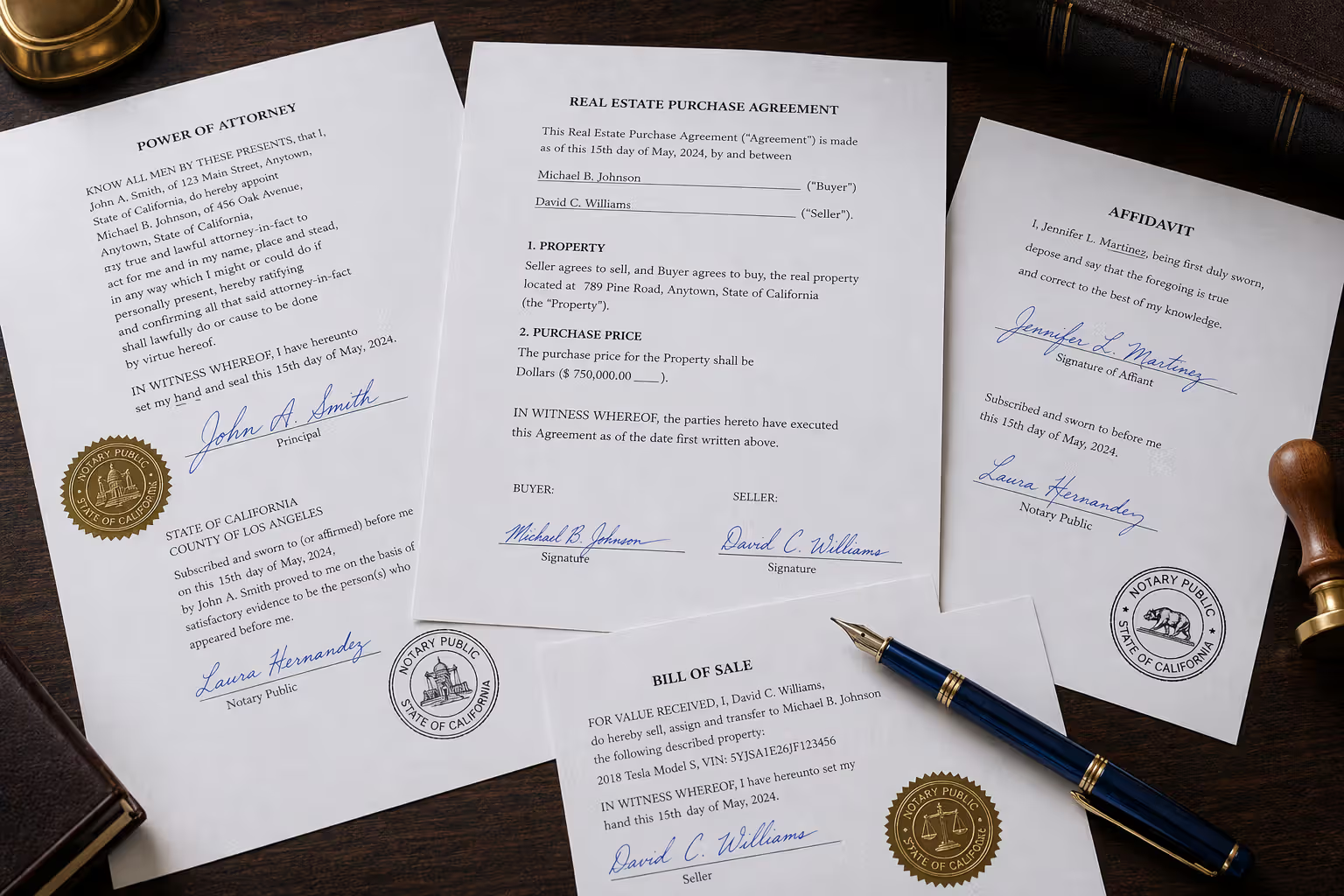
Think of signing as one ingredient in a recipe. You might also need witnesses watching you sign, a notary verifying your identity, specific dates recorded, and physical delivery of the document. Skip the notary on a deed, and you haven't executed it—even with ten signatures.
So when does your contract actually become binding? For straightforward commercial agreements—say, a consulting contract or equipment lease—you're typically good once everyone signs. The moment that last necessary signature hits the page, you've got an enforceable deal.
More formal documents play by different rules. A real estate deed isn't worth the paper it's printed on until you've signed it, had it notarized, AND physically delivered it to the recipient. Just signing it and sticking it in your desk drawer? Legally, nothing's happened.
Here's something that confuses even experienced business owners: execution dates matter enormously. Let's say you're signing a contract on May 20th. That date determines when your obligations kick in, when payment deadlines start counting, and when the clock starts ticking on statutes of limitations.
But here's the twist—you can specify a different "effective date" than your signing date. Maybe you sign that contract on May 20th but write in "effective as of May 1st" because you've already been performing under the terms. Courts generally respect these backdated effective dates as long as you're not committing fraud or trying to dodge legal requirements.
What if everyone signs on different days? Let's say you sign May 15th, but your counterparty doesn't get around to it until May 22nd. The execution date is May 22nd—when the last required signature landed. Before that, you've got what lawyers call a "partially executed" agreement, which often isn't enforceable against anyone.
Legal Requirements for Executing a Contract
The formalities you'll need depend heavily on what type of document you're dealing with. There's no one-size-fits-all approach, and that's where people run into trouble.
Signature Requirements by Contract Type
Your standard business agreements—think service contracts, purchase orders, employment offers—keep things refreshingly simple. Get signatures from everyone who has authority to bind their respective parties. Done. No witnesses, no notaries, no special procedures.
Real estate purchase agreements step up the complexity. Every state's Statute of Frauds requires these in writing with signatures from anyone holding ownership rights in the property. In my state, that's enough. In yours? You might need witnesses or notarization too. It varies wildly, which is why checking local requirements beats making assumptions.
Deeds take formality to another level entirely. The person transferring property (the grantor) must sign. Then, in 47 states, you need a notary. But wait—some states throw in witness requirements too. Florida wants two witnesses. Georgia wants one. California doesn't require witnesses at all. And unlike regular contracts, you're not done until you physically hand over that deed or record it at the county office.
Wills and estate documents? Now you're in territory where getting execution wrong means your final wishes might get ignored. Most states want two witnesses watching you sign your will. Some want notarization on top of that. For trusts, requirements vary based on whether they're revocable or irrevocable, testamentary or living.
Corporate resolutions and board actions come with their own rulebook written in your company's bylaws. Routine business decisions might need just the CEO's signature. Selling substantial company assets? You'll probably need documented board approval with signatures from multiple directors or officers confirming the vote.
Author: Olivia Farnsworth;
Source: craftydeb.com
Who Can Execute a Contract on Behalf of a Company
Two separate questions need answering: Does this person have the mental and legal capacity to sign anything? And does this person have authorization to bind this particular party?
Capacity covers the basics—you need to be at least 18 years old (19 in Alabama and Nebraska, 21 for alcohol-related contracts) and mentally competent to understand what you're agreeing to. Minors can sign contracts, but they can also void them later, which makes those agreements risky for the other party.
Authority gets trickier, especially with business entities. A corporation's CEO or president can typically execute ordinary business contracts without asking permission—that authority comes with the title. But if your CEO wants to merge the company or sell off a major division? Better get board approval first, documented in a resolution with signatures from directors confirming their vote.
I've seen deals fall apart because someone assumed the person across the table had authority. That enthusiastic sales manager who signed a huge contract? Turns out he needed VP approval for anything over $50,000. The contract wasn't worth the toner it used. Always request a corporate resolution or secretary's certificate confirming signing authority for significant transactions.
LLCs operate according to their operating agreements, which vary dramatically. Some give every member signing authority. Others designate one manager who handles all contracts. Some require unanimous consent for major decisions. You can't assume—you need to actually review the operating agreement or get written confirmation of authority from the members.
Partnerships create interesting situations. General partners usually have authority to bind the partnership in regular business dealings—that's part of being a general partner. Limited partners? They generally can't bind the partnership at all. But here's the catch: partnership agreements can restrict even general partner authority, and those restrictions only protect you if the other party knows about them.
When someone signs as an agent or representative, the way they sign matters enormously. Write "John Smith, as attorney-in-fact for Mary Jones" and you're clearly acting as an agent. Just write "John Smith" on a contract that should bind Mary Jones? You might end up personally liable instead of (or in addition to) Mary.
How to Execute a Contract Step by Step
Let me walk you through execution the right way, because skipping steps creates headaches you don't want.
First step: Read everything right before signing. Not the draft from last week. Not the version you negotiated. The actual, final document sitting in front of you, right now. I cannot count how many times I've caught last-minute changes, filled-in blanks that weren't supposed to be filled that way, or terms that mysteriously morphed from what everyone agreed on. Check names, dates, dollar amounts, addresses—details that seem minor until they're wrong.
Second: Verify who's signing. If you're dealing with someone you don't personally know, ask for government-issued ID. For company representatives, especially anyone below C-suite level, request written proof they have authority to sign. A corporate resolution, a secretary's certificate, or authorization from the board. This feels awkward, but it's standard practice for good reason.
Third: Follow any required signing sequence. Some documents care about order. For example, deeds typically require the grantor's signature before witnesses or notaries can do their part. If your contract specifies an order, stick to it. When order doesn't matter, just coordinate so everyone executes within a reasonable window—you don't want signatures scattered across three months.
Fourth: Sign correctly and consistently. Put your signature on every designated line. If you're signing multiple identical originals (common for major agreements), use the same signature on each. Companies require the signer's title under their name: "John Smith, Chief Financial Officer" or "Sarah Johnson, Manager." Agents and fiduciaries need to clearly show their representative capacity to avoid personal liability.
Fifth: Use real dates. Write the actual date you're signing. Not yesterday's date because you meant to sign yesterday. Not next week's date because that's when you want the contract to start. Unless the contract specifically calls for a different effective date, use today's date. Intentionally falsifying dates can constitute fraud, and courts don't take kindly to it.
Sixth: Handle formalities properly. Need witnesses? They must watch you sign. Not "I signed it this morning, can you witness it now?" Witnesses observe the actual signing, verify your identity, and confirm you're signing voluntarily. For notarization, appear before the notary in person with acceptable ID, acknowledge you signed voluntarily, and let them complete their certificate. The recent rise of remote online notarization creates new options but also new ways to mess up—make sure your notary is properly commissioned for RON in your state.
Seventh: Exchange executed copies. Execution isn't finished until everyone has their fully signed copy. For standard contracts, this means swapping PDFs or mailing counterparts. For deeds and documents where delivery affects legal rights, you need actual physical transfer—handing over the document or recording it with the county.
Eighth: Store these documents like they're valuable. Because they are. Set up a system—whether that's a fireproof safe for originals, a secure cloud storage system for scans, or both. Create a simple spreadsheet tracking what contracts you've executed, with whom, when, and where you've stored them. When you need that contract in three years, you'll thank yourself.
Author: Olivia Farnsworth;
Source: craftydeb.com
Electronic vs Traditional Contract Execution
Digital signatures have moved from "is this really legal?" to standard practice for most business contracts. The 2000 federal ESIGN Act, combined with UETA (which 47 states have adopted—looking at you, Illinois, New York, and Washington who have their own versions), put electronic and handwritten signatures on equal legal footing for most purposes.
But "most purposes" doesn't mean all purposes. And knowing when to use each method matters.
Table 1: Comparison of Electronic vs Traditional Contract Execution
Method
Legal Validity
Speed
Cost
Best Use Cases
Limitations
Electronic signature
Fully valid under federal ESIGN and state UETA laws for commercial transactions
Usually completed within hours; parties can sign from anywhere
Platforms like DocuSign run $10-60 monthly depending on volume
Routine business contracts, NDAs, employment agreements, sales orders, service contracts, B2B transactions
Wills prohibited in most states; real estate deeds restricted in some jurisdictions; certain court documents still need wet signatures
Traditional wet signature
Accepted everywhere without question
Takes days to weeks depending on mail or courier delivery
Higher costs for printing, shipping, physical storage space
Property deeds, wills, documents for countries not recognizing e-signatures, high-stakes deals where parties prefer traditional formality
Requires physical presence or postal delivery; storage demands; easier to lose or damage originals
Electronic signatures come in different flavors. Simple e-signatures capture a typed name, uploaded image of your signature, or mouse-drawn scribble. They're easy but offer minimal security. Advanced electronic signatures use cryptography to verify the signer's identity and detect any tampering after signing. Digital signatures take it further with certificate authorities and public key infrastructure—these provide the highest confidence level but require more setup.
For an electronic signature to hold up legally, three elements must be present: the signer intended to sign (not just testing the system), the signer consented to transacting business electronically, and the signer receives a copy of what they signed. Reputable platforms handle these requirements automatically, but if you're rolling your own system, make sure you're covering these bases.
Traditional wet signatures still own certain territories. Many real estate transactions involve title companies and lenders with established procedures built around physical documents with original signatures. They'll accept e-signatures, but often prefer wet ink. Plus, county recorders in some jurisdictions still want original documents for recording deeds, though this is changing.
Wills almost universally require handwritten signatures under state law. Courts want to see original testamentary documents with wet signatures and witness attestations. While some states have started recognizing electronic wills, most haven't caught up yet.
International deals sometimes require wet signatures because your counterparty's country doesn't have e-signature laws equivalent to ESIGN and UETA. Even when technically legal, cultural preferences in some countries still favor traditional execution formalities.
For electronic execution, use established platforms—DocuSign, Adobe Sign, PandaDoc, or similar services that maintain detailed audit trails showing who signed what and when. These platforms encrypt documents during transmission, require authentication before anyone can sign, timestamp every action, and store executed contracts securely with automatic backups.
For traditional execution, use permanent blue or black ink (blue helps distinguish originals from photocopies). Execute multiple originals when you need multiple parties holding originals. Have signers initial any corrections or changes made by hand. Store originals in fireproof, waterproof containers—a safe deposit box isn't overkill for critical documents like deeds or major commercial agreements.
Deed Execution vs Agreement Execution
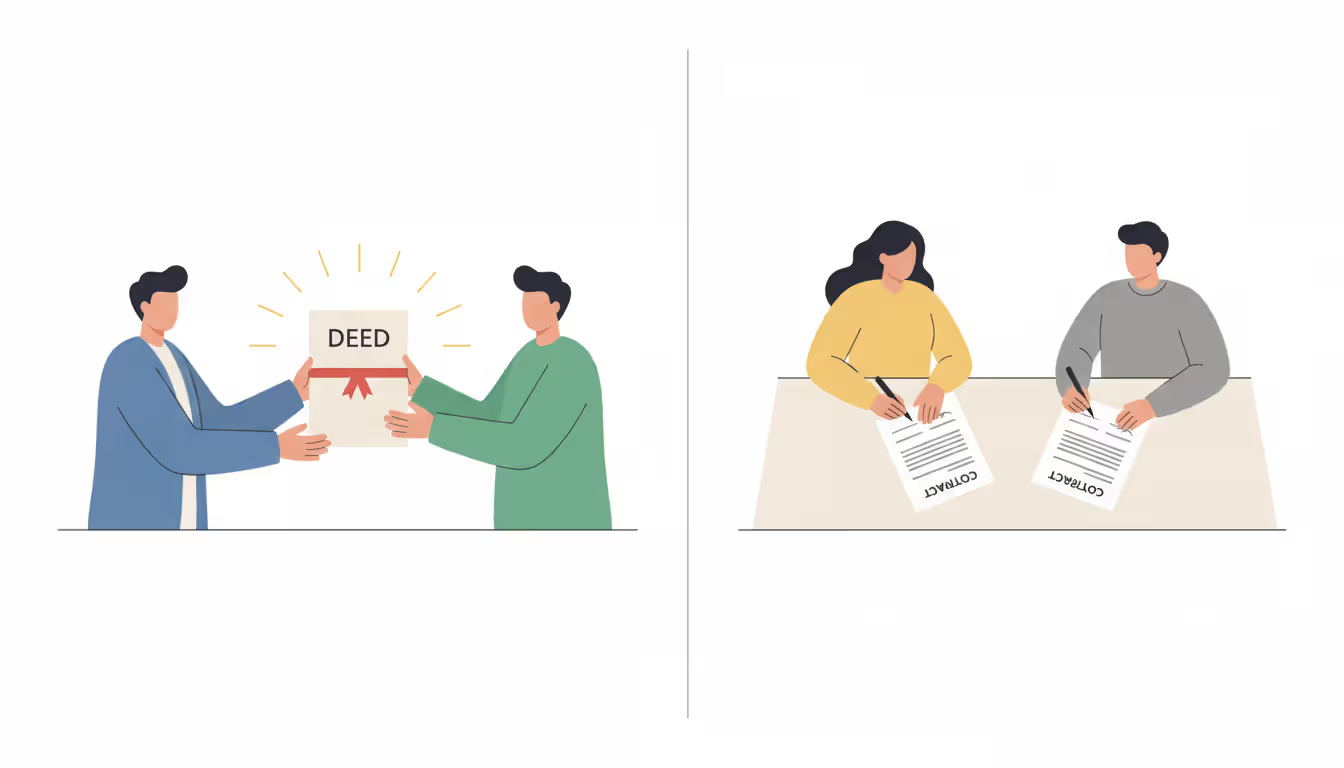
Deeds and regular contracts might look similar—they're both legal documents with signature lines—but they operate under fundamentally different principles and require different execution formalities.
Table 2: Deed vs Agreement Execution Requirements
Feature
Deed Execution
Agreement Execution
Who must sign
Only the grantor (person transferring property) needs to sign; recipient's signature not necessary
All parties involved must sign to create mutual obligations
Witness requirements
Many states require one witness (Georgia, South Carolina) or two witnesses (Florida, Louisiana); some states require none
Witnesses rarely needed unless statute specifically requires them (like Statute of Frauds for certain contracts)
Delivery formalities
Must physically or constructively deliver to recipient before transfer occurs; deed recorded at county office
Delivery assumed when signed; no separate delivery requirement for effectiveness
Consideration necessity
Works without consideration—you can gift property via deed
Requires consideration (something of value exchanged) unless executed under seal or statutory exception
Deeds transfer current ownership interests in real property. Their one-sided nature—only the grantor signs—reflects that they're grants, not bargained exchanges. You're giving property, not trading promises.
In 47 states, deeds require notarization. Beyond that, witness requirements vary dramatically by jurisdiction. If you're executing a deed in Florida, get two disinterested witnesses. In Georgia or South Carolina, you need one. In California or Texas, witnesses aren't required at all. These aren't suggestions—miss a required witness and your deed may be invalid.
Delivery separates deed execution from ordinary contract execution in a critical way. You can sign a deed, have it notarized, witnessed by the Pope himself, and it still doesn't transfer property until you deliver it. Delivery means physically handing it to the recipient or their agent, or recording it at the county recorder's office. Intent matters too—you must intend to make a present transfer. A signed deed sitting in your desk drawer, even if you plan to deliver it eventually? No transfer has occurred.
Regular agreements work differently because they involve mutual promises. I'll pay you $50,000; you'll deliver equipment. Both sides must sign to create enforceable obligations on both sides. This bilateral nature means we need signatures from everyone who's making promises.
Witnesses and notaries generally aren't necessary for regular contracts unless required by specific statutes. The Statute of Frauds requires certain contracts in writing (real estate sales, agreements not performable within one year, promises to pay someone else's debt), but writing doesn't necessarily mean notarization or witnesses—just signatures from the parties.
Consideration—the value exchanged that makes a contract a bargain—is essential for contract enforceability. Without consideration, you generally don't have an enforceable contract (exceptions exist for contracts under seal or promissory estoppel situations). Deeds don't need consideration. You can deed your house to your daughter for no payment at all, and it's perfectly valid. Deeds typically recite nominal consideration like "for ten dollars and other valuable consideration," but that's a formality, not a requirement.
Statutes of limitations highlight another major difference. Challenge a contract for breach and you typically have 3-6 years from the breach date, depending on your state. Challenge a deed's validity? Some states allow 20-30 years. Others have no statute of limitations for certain deed defects. This extended or unlimited timeframe reflects how seriously the law treats property transfers.
Author: Olivia Farnsworth;
Source: craftydeb.com
Common Contract Execution Mistakes to Avoid
I've seen experienced business owners make these errors repeatedly. Knowing the pitfalls helps you sidestep them.
Backdating or misdating documents ranks as the most common execution mistake. Someone misses a deadline, so they write last week's date on a signature to make it look timely. That's fraud. Others use inconsistent future dates, creating confusion about when obligations actually begin. A better approach: sign with today's date and include a separate "effective date" clause in the contract itself if you need the agreement to take effect on a different date. Courts generally honor explicitly stated effective dates, but they don't appreciate falsified signing dates.
Incomplete signature pages happen more often than you'd think. Multi-party agreements circulate through five different companies, and somehow Party Number Three never signs. Or someone signs page 12 of a 10-page document because signature pages got mixed up from different versions. Before filing that executed contract, verify every required signature actually appears on the correct document.
Unauthorized signers create voidable contracts that fall apart when you need them. An enthusiastic sales representative signs a major contract without authority. A single LLC member signs when the operating agreement requires all members to approve. One spouse signs a contract purporting to sell community property without the other spouse's consent. Always verify authority before treating a signature as binding your counterparty.
Witness mistakes invalidate documents requiring witnesses. The most common error: someone signs a document alone, then asks a colleague to "witness" it afterward. Witnesses must observe the actual signing—that's the entire point. Another mistake: using interested witnesses. If you're executing a will leaving $100,000 to your nephew, your nephew can't be a witness. Many states require disinterested witnesses who don't benefit from the document.
Notarization failures come in several varieties. Notaries who don't verify identity through acceptable government-issued ID. Notaries who weren't physically present when they notarized (fraud). Notaries whose commissions had expired. Remote online notarization has added new potential errors—using notaries not commissioned for RON in your state, technology failures during the process, or inadequate identity verification. Make sure your notary is properly commissioned, present (physically or via approved RON technology), and completing all required elements of their notarial certificate.
Wrong party execution creates confusion about who's actually bound. John Smith signs a contract, but the contract should bind Smith Enterprises LLC, not John personally. Now John has personal liability he never intended. Always verify the correct legal entity is named as a party in the contract and that signatures reflect who's actually bound. If you're signing for a company, make that crystal clear: "Smith Enterprises LLC, by John Smith, President."
Losing executed contracts seems ridiculous until it happens to you. Contracts stuffed in random desk drawers, saved to an old computer that crashed, filed in boxes without any organization system. When you need to enforce rights or check obligations three years later, you can't find the document. Implement a storage system from day one—either physical filing with an index, digital storage with backups, or ideally both.
Failing to exchange copies leaves parties without proof of what they agreed to. Each party should hold a fully executed original or counterpart. For critical agreements, exchange copies simultaneously so nobody has temporary leverage from holding the only signed copy.
I see parties treating execution as a rubber-stamp formality rather than recognizing it as the critical legal step that actually creates enforceable rights.Missing signatures, unauthorized signers, or skipped formalities create something worse than having no contract at all—they generate false confidence that you're protected when you're actually exposed. Spending fifteen focused minutes on proper execution prevents spending fifteen months in litigation trying to prove your contract is valid
— Rebecca Martinez
Frequently Asked Questions
What is the difference between signing and executing a contract?
Signing means you've placed your signature on the document. Execution encompasses every formality necessary to make that contract legally binding—which might include signing, but could also require witnesses, notarization, dating, and delivery depending on the document type. You can sign something without executing it if additional formalities remain incomplete.
Can a contract be executed without a date?
Most contracts remain technically valid without dates, but you're creating unnecessary problems. How do you determine when obligations begin? When do deadlines start counting? When does the statute of limitations start running? Courts can examine external evidence to determine when an undated contract was executed, but you're inviting disputes and uncertainty. Always date your contracts.
Is an electronic signature legally valid for contract execution?
Electronic signatures carry the same legal weight as handwritten signatures for most commercial contracts under the federal ESIGN Act and state UETA laws. You can use them confidently for employment agreements, NDAs, service contracts, sales orders, and most business-to-business transactions. Exceptions include wills (prohibited in most states), certain real estate documents in some jurisdictions, and specific court filings. The signer must intend to sign electronically and consent to doing business that way.
What happens if someone without authority executes a contract?
Contracts signed by unauthorized individuals are typically voidable by the party whose unauthorized agent signed. The company or principal can choose to ratify the contract (accept it as binding) or reject it entirely. The person who signed without authority may face personal liability to the other party for breach of warranty of authority—they represented they could bind their principal when they couldn't. Sometimes apparent authority doctrine binds the principal anyway if they created reasonable appearances that the signer had authority.
How long should executed contracts be retained?
Keep most commercial contracts for at least six years after they expire or terminate—that matches the statute of limitations for breach of contract claims in most states. Real estate deeds? Keep those permanently. Employment-related documents typically need retention for 3-7 years post-employment. Tax-related contracts should stick around for seven years. Some industries have specific regulatory retention requirements that override these general guidelines.
Does a contract need to be notarized to be executed?
The vast majority of contracts don't require notarization for legal validity. Notarization is required for deeds in most states, powers of attorney in many jurisdictions, and specific other documents. Even when not legally required, notarization offers advantages: it creates a legal presumption that the signature is authentic, deters fraud, and makes the document self-authenticating in court (admissible without calling witnesses to verify genuineness).
Execution transforms negotiated agreements from aspirational promises into legally enforceable commitments—but only when you complete the process correctly. This requires more than scribbling signatures on paper. You need attention to who has authority, what formalities your specific document requires, proper timing, and organized record-keeping.
Electronic execution has simplified many transactions while maintaining legal validity, but traditional wet signatures still serve important purposes for certain documents. Understanding which method fits your situation, following the appropriate formalities, and maintaining accessible records of what you've executed protects your interests when enforcement becomes necessary.
Proper execution isn't bureaucratic busywork—it's the foundation that makes your contract rights enforceable. The fifteen minutes you invest in executing correctly on the front end can prevent fifteen months of litigation trying to prove what you agreed to. Get it right the first time.
An LLC operating agreement is a legally binding document that outlines ownership structure, management procedures, and operational rules. While only some states require it, this internal document strengthens liability protection, prevents disputes, and satisfies banks and investors
Master Service Agreements establish reusable legal frameworks for ongoing vendor relationships. Discover how MSAs work, essential clauses, negotiation strategies, and when to use master agreements versus individual contracts for your business needs
A transition services agreement (TSA) is a contract where the seller provides operational services to the buyer post-closing. This guide covers TSA fundamentals, contract terms, duration, negotiation strategies, and post-merger management for successful M&A transitions
A side letter is a separate agreement that modifies or supplements a main contract, commonly used in private equity and investment funds. This guide explains side letter provisions, enforceability, negotiation tactics, and how they differ from primary agreements
The content on this website is provided for general informational and educational purposes only. It is intended to explain concepts related to business and corporate law, contracts, compliance, disputes, M&A, and taxation for companies.
All information on this website, including articles, guides, and examples, is presented for general educational purposes. Legal outcomes may vary depending on jurisdiction, company structure, and individual circumstances.
This website does not provide legal advice, and the information presented should not be used as a substitute for consultation with qualified corporate attorneys or legal professionals.
The website and its authors are not responsible for any errors or omissions, or for any outcomes resulting from decisions made based on the information provided on this website.