Two business professionals shaking hands across a conference table in a modern office, symbolizing an agency agreement, with city skyline visible through panoramic windows
The law of agency governs one of the most fundamental relationships in commerce: when one party acts on behalf of another. An agency relationship in business exists when a principal grants an agent authority to act for them, creating legal consequences that bind the principal as if they had acted personally.
Three elements must converge to establish a principal agent relationship. First, the principal must consent—explicitly or implicitly—to the agent representing them. Second, the agent must act subject to the principal's control and on their behalf. Third, the agent must consent to the arrangement. Unlike employment or independent contractor arrangements, agency specifically involves the agent's power to alter the principal's legal relations with third parties.
Consider a sales representative negotiating contracts for a manufacturer. When that representative signs a purchase agreement within their granted authority, the manufacturer becomes legally bound to deliver goods and accept payment—even if the principal never met the customer. This power to bind another party distinguishes agency from mere service relationships.
The principal-agent relationship creates a fiduciary bond, meaning the agent must place the principal's interests above their own. This distinguishes agency from arm's-length business dealings where each party pursues their own advantage. A real estate broker searching for properties owes their client-principal loyalty and candor that wouldn't exist in a typical buyer-seller transaction.
Agency permeates modern business. Corporate officers act as agents for their companies. Partners in a partnership serve as agents for each other. Even a receptionist scheduling appointments may create binding commitments for their employer. Understanding what is law of agency means recognizing how authority flows through organizations and when those exercising it create enforceable obligations.
How Agency Relationships Are Created
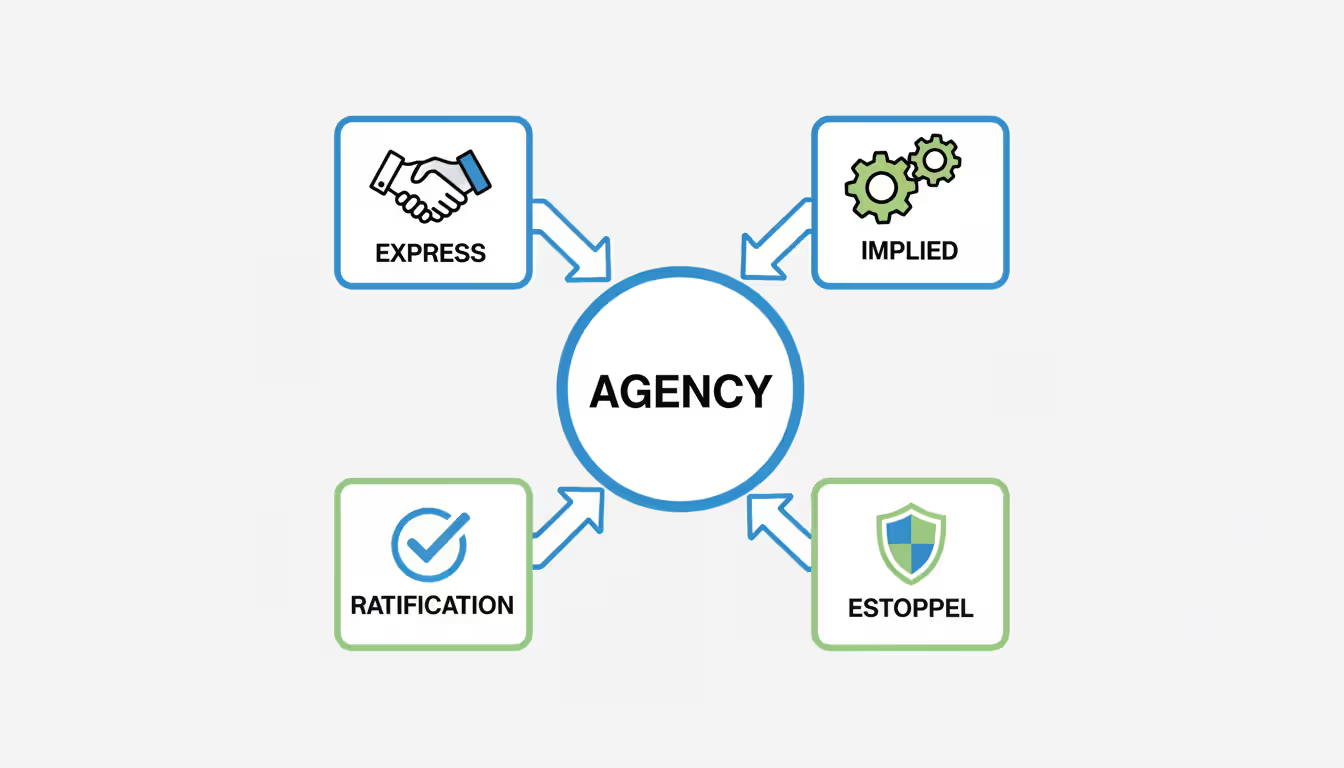
Agency springs from multiple sources, not all requiring formal documentation. Express agency arises through clear communication—written or oral—where the principal directly authorizes the agent to act. A company appointing a purchasing manager with written authority to buy supplies under $50,000 creates express agency.
Implied agency emerges from conduct and circumstances rather than explicit words. When a business allows an employee to regularly perform certain tasks—like a store manager accepting deliveries and signing receipts—the pattern of behavior creates implied authority even without formal delegation. Courts examine the principal's actions: did they knowingly permit the agent to act in ways that reasonably suggested authority?
Author: Marcus Ellwood;
Source: craftydeb.com
Ratification occurs when a principal affirms an unauthorized act after the fact. If an employee exceeds their authority by ordering expensive equipment, but the company accepts delivery, pays the invoice, and uses the equipment, they've ratified the transaction. The principal cannot selectively enjoy benefits while disclaiming the obligations. Ratification requires the principal to have full knowledge of material facts and must encompass the entire transaction—you cannot ratify favorable terms while rejecting unfavorable ones.
Agency by estoppel protects third parties who reasonably rely on apparent authority. When a principal's words or conduct lead others to believe someone is their agent, the principal may be estopped from denying the agency. A company that allows someone to use their business cards and office space cannot later claim "they weren't really our agent" when convenient. The test focuses on the third party's reasonable perception based on the principal's manifestations.
Types of Authority Granted to Agents
Authority determines the scope of an agent's power to bind the principal. Three categories—actual, apparent, and implied—often overlap but have distinct legal foundations.
Actual authority flows directly from the principal to the agent through words or conduct. It includes express authority (explicitly granted) and implied authority (reasonably necessary to execute express authority). A property manager given express authority to maintain a building has implied authority to hire plumbers for emergency repairs, even without specific authorization for each vendor.
Apparent authority exists in the perception of third parties based on the principal's manifestations. The principal's conduct—not the agent's representations—creates this authority. When a company gives someone the title "Regional Sales Director" and provides them with company resources, third parties reasonably believe that person can negotiate sales contracts, even if internal corporate policies restrict their actual authority.
Implied authority fills gaps in express grants. It encompasses acts reasonably necessary to accomplish authorized tasks, customary in similar positions, or previously acquiesced to by the principal. An office manager authorized to "run daily operations" has implied authority to order standard supplies, even without explicit permission for each purchase.
Actual Authority vs Apparent Authority
The distinction between actual and apparent authority determines whether the principal intended to grant power versus whether they created reasonable appearances of power.
Type of Authority
Source/How Created
Principal's Liability
Example Scenario
Actual Authority
Principal's manifestations directly to agent (words, conduct, written delegation)
Principal bound; agent acted within scope of granted power
CEO appoints CFO with written authority to sign contracts under $1M; CFO signs $800K vendor agreement
Apparent Authority
Principal's manifestations to third parties creating reasonable belief in agent's authority
Principal bound if third party reasonably relied on appearances
Company allows employee to use "VP Sales" title and company email; client reasonably believes VP can finalize sales terms
Implied Authority
Reasonably inferred from actual authority, custom, or necessity to perform authorized duties
Principal bound; authority flows from actual authority granted
Store manager hired to "manage operations" has implied authority to set employee schedules, though not explicitly stated
When Apparent Authority Binds the Principal
Apparent authority explained: it protects third parties who reasonably rely on signals the principal sends about an agent's power. Three elements must align. First, the principal must make manifestations—through words, actions, or allowing circumstances to persist—that suggest the agent has authority. Second, a third party must actually and reasonably believe the agent possesses that authority. Third, the third party must change their position in reliance on that belief.
A manufacturing company allowed a former employee to retain their company email and phone extension for months after termination. When that person ordered materials from a long-time supplier, the supplier reasonably relied on the continuing business relationship. The manufacturer remained bound despite the employee lacking actual authority, because the company's failure to cut off access created apparent authority.
The principal's silence can create apparent authority when they know someone is acting as their agent and fail to correct third-party perceptions. A business owner who learns their spouse is negotiating deals using the company name but takes no steps to notify customers cannot later disclaim those transactions.
Legal Duties Between Principals and Agents
The agency relationship imposes reciprocal obligations rooted in trust and mutual benefit.
Agent Duties to Principal:
Loyalty stands paramount among agent duties to principal. Agents cannot compete with their principal, usurp business opportunities, or profit secretly from the relationship. A purchasing agent who accepts kickbacks from suppliers violates this duty even if they negotiated favorable prices. The duty extends beyond avoiding conflicts; agents must disclose any personal interest in transactions they conduct for the principal.
Obedience requires agents to follow lawful instructions within the scope of their authority. An agent who disregards explicit directions—even if they believe their approach is superior—breaches this duty. The exception: agents need not obey illegal or unethical instructions.
Care and skill demand agents perform with the competence expected in their role. Professionals like attorneys or accountants owe higher standards reflecting their expertise. A real estate agent must understand local market conditions and disclosure requirements; ignorance provides no defense.
Accounting obligates agents to maintain clear records and segregate the principal's property from their own. Commingling funds—even without fraudulent intent—violates this duty. An agent collecting payments must track and remit them promptly.
Disclosure requires agents to communicate all material information related to their agency. An agent learning that a property the principal wants to buy has hidden defects must reveal this, even if it kills the deal.
Principal Duties to Agent:
Compensation must be paid according to agreement or, if unspecified, the reasonable value of services rendered. Principals cannot accept an agent's benefits while refusing to pay.
Reimbursement covers reasonable expenses incurred while executing agency duties. An agent who travels for business or pays filing fees on the principal's behalf can demand repayment.
Indemnification protects agents from losses suffered while acting within their authority and without fault. If an agent is sued for actions taken on the principal's proper instructions, the principal must cover legal costs and judgments.
Agent Duties to Principal
Principal Duties to Agent
Loyalty – Avoid conflicts of interest; no secret profits; disclose personal interests
Compensation – Pay agreed or reasonable value for services
Obedience – Follow lawful instructions within scope of authority
Reimbursement – Cover reasonable expenses incurred in agency duties
Care – Perform with reasonable competence; professionals held to higher standards
Indemnification – Protect agent from losses when acting properly within authority
Accounting – Keep accurate records; segregate principal's property
Cooperation – Provide necessary information and resources
Disclosure – Communicate all material information affecting the agency
Safe Working Conditions – (when agent is employee) Maintain reasonably safe environment
Types of Agency in Business Law
Agency classifications reflect the scope of authority granted and the breadth of matters the agent can handle.
A universal agent possesses extremely broad authority to act in all matters the principal could handle personally. This typically requires a general power of attorney and is uncommon in business contexts. An individual granted universal agency for an incapacitated business owner could sell assets, enter contracts, hire employees, and make virtually any business decision.
A general agent has continuing authority to conduct a series of transactions within a defined area. A store manager running daily operations, a corporate treasurer managing finances, or a plant supervisor overseeing production all serve as general agents. Their authority extends to the full range of activities within their domain but doesn't cover matters outside it. The store manager cannot commit the company to a merger.
A special agent is authorized for a single transaction or limited purpose. A homeowner hiring a real estate broker to sell one property creates special agency. An attorney retained solely to file a trademark application serves as a special agent for that specific task. Once the designated transaction concludes, the agency terminates.
A subagent is appointed by an agent to help perform the principal's business, with the principal's consent. The subagent owes duties to both the principal and the appointing agent. In real estate, when a listing broker works with a cooperating broker to find a buyer, subagency may exist depending on jurisdiction and agreement terms. Principals remain liable for subagent actions within the scope of authority, as if they were direct agents.
Types of agency in business law matter because they determine the extent of authority third parties can reasonably assume an agent possesses. A general agent has broader implied authority than a special agent. Someone dealing with a known special agent should verify that the specific transaction falls within their limited mandate.
Vicarious Liability and Agency Law
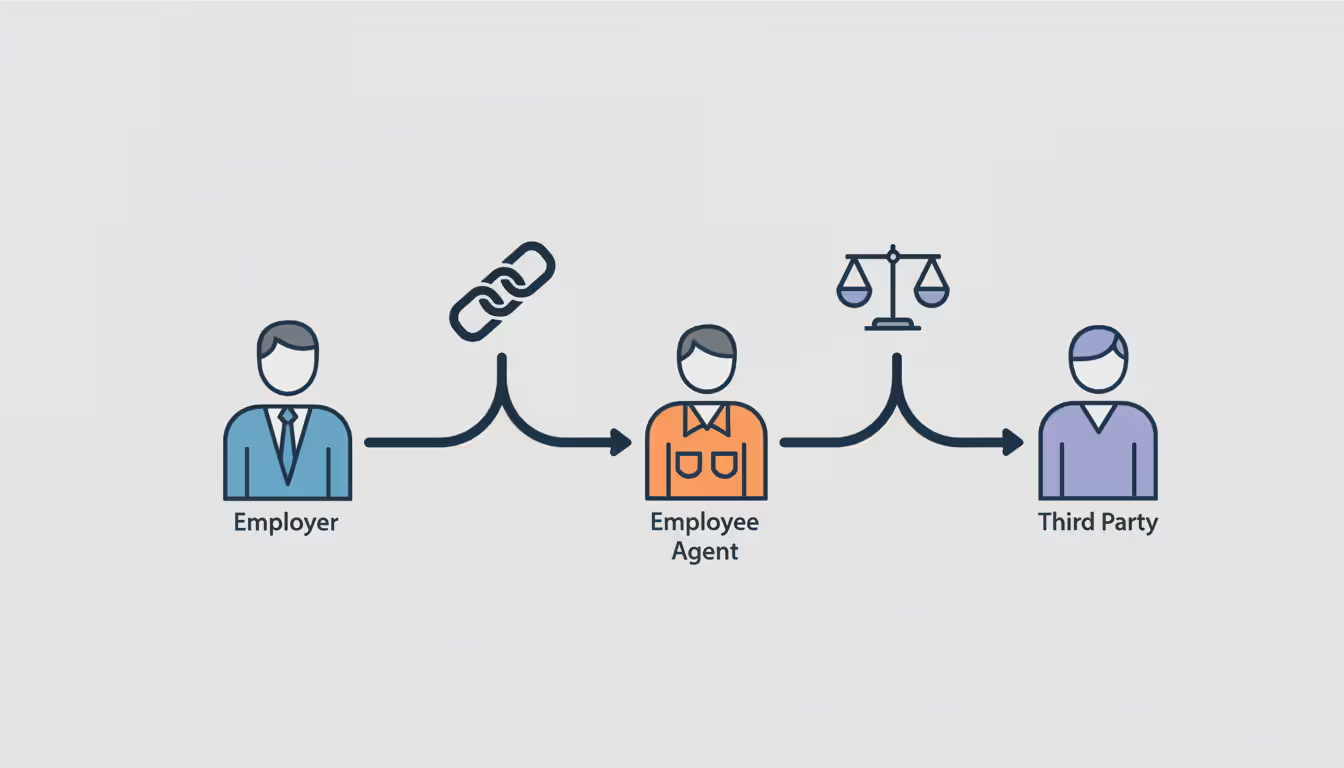
Vicarious liability agency principles hold principals responsible for their agents' torts committed within the scope of employment or authority. This doctrine serves multiple policies: it places liability on the party best able to absorb costs and prevent harm, ensures injured parties can recover from solvent defendants, and incentivizes principals to supervise agents carefully.
The respondeat superior doctrine—"let the master answer"—makes employers liable for employee torts committed in the course and scope of employment. A delivery driver who causes an accident while making deliveries creates liability for their employer, even if the employer did nothing wrong. The employer's vicarious liability stems from the employment relationship and the tort occurring during work activities.
Scope of employment analysis asks whether the agent's conduct was the kind they were hired to perform, occurred substantially within authorized time and space limits, and was motivated at least partly by serving the principal. An employee who detours briefly for coffee while making deliveries remains within the scope; an employee who drives two hours off-route for personal errands has likely departed from it.
Author: Marcus Ellwood;
Source: craftydeb.com
Intentional torts complicate vicarious liability. Principals typically aren't liable for agents' intentional wrongdoing unless it was foreseeable given the nature of the work or the agent purported to act for the principal. A bar owner may face liability when a bouncer uses excessive force removing a patron because such confrontations are inherent in the job. A principal generally won't be liable when an employee assaults someone over a purely personal dispute unrelated to work.
Independent contractors present a crucial distinction. Principals who hire independent contractors—parties who control the manner and means of their work—generally aren't vicariously liable for the contractor's torts. The key factor is control: does the principal direct only the result, or do they control how the work is performed? A company hiring a janitorial service (independent contractor) has less exposure than if janitors were direct employees. Exceptions exist for non-delegable duties and inherently dangerous activities.
Principals can also face direct liability—distinct from vicarious liability—for their own negligence in selecting, training, or supervising agents. Hiring someone with a known history of violence for a security position creates direct liability risk if they harm someone. This liability stems from the principal's own fault, not the agency relationship.
How Agency Relationships Terminate
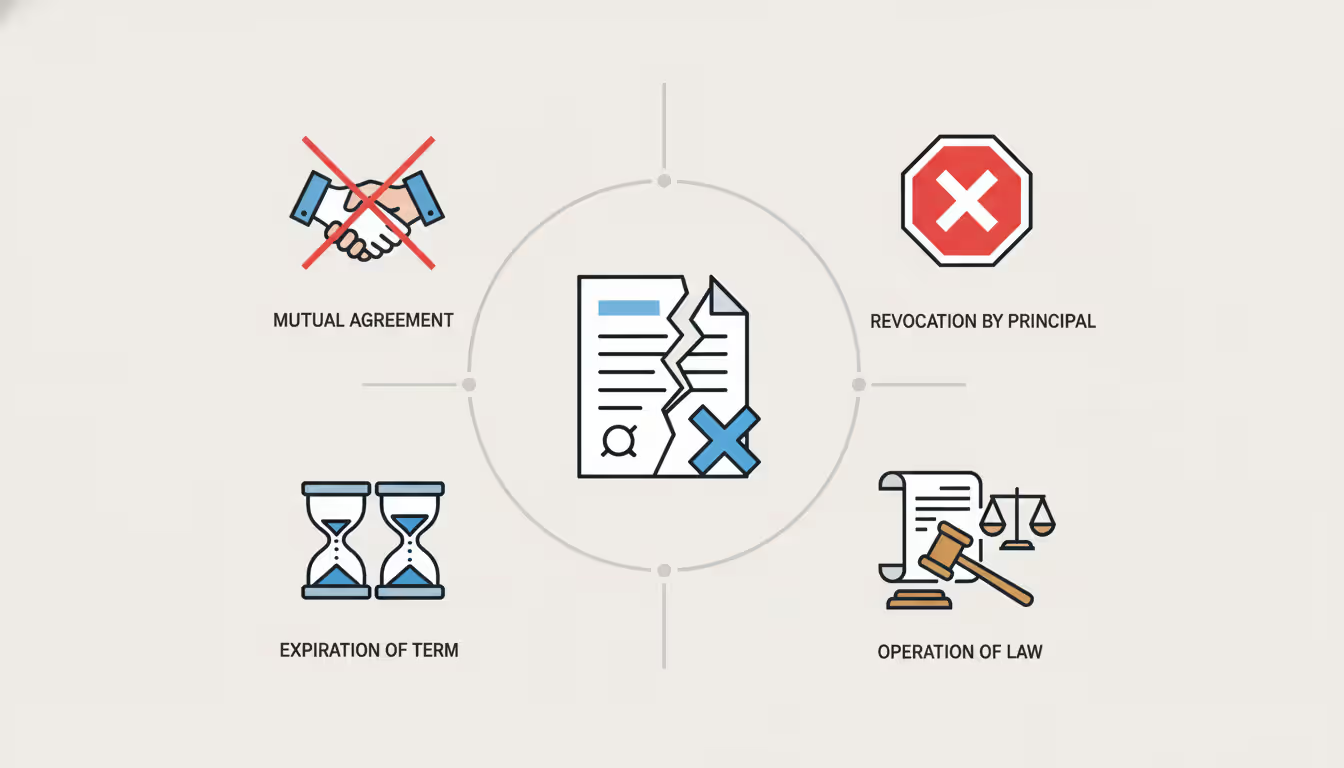
Termination of agency relationship occurs through acts of the parties or by operation of law, but ending the relationship doesn't always end apparent authority.
Termination by act of parties includes mutual agreement, completion of the agency's purpose, or unilateral revocation by either party. Most agency relationships are terminable at will, meaning either party can end it anytime. An important exception: when the agent has a "power coupled with an interest"—authority granted to protect the agent's own legal interest in the subject matter—the principal cannot revoke unilaterally. A lender given authority to sell collateral if a loan defaults holds such a power.
Revocation by the principal must be communicated to the agent to be effective. Simply deciding internally to terminate doesn't cut off the agent's actual authority. For agents with apparent authority, the principal must also notify third parties who dealt with the agent or reasonably might rely on the relationship's continuation. A general notice (publication in trade journals, for instance) may suffice for parties who haven't previously dealt with the agent, but direct notice is prudent for established relationships.
Author: Marcus Ellwood;
Source: craftydeb.com
Renunciation by the agent—their decision to quit—also terminates actual authority. However, an agent who breaches a contract by wrongfully renouncing may face damages for breach, even though the agency ends.
Termination by operation of law happens automatically in certain circumstances:
Death of either principal or agent immediately terminates the agency, even if the survivor doesn't know about the death. This can create harsh results when an agent contracts on behalf of a principal who has died—the contract may be voidable even though the agent acted in good faith.
Incapacity of the principal (bankruptcy for financial matters, mental incompetence generally) terminates authority, though modern statutes sometimes protect agents and third parties who act without knowledge of the incapacity.
Changed circumstances that frustrate the agency's purpose end the relationship. If an agent is hired to sell a building and it burns down, the agency terminates. Illegality—when the agency's subject matter becomes illegal—also terminates automatically.
War between the principal's and agent's countries, destruction of the subject matter, or bankruptcy (for agencies involving credit or financial affairs) all trigger automatic termination.
Notice requirements create practical complications. While actual authority ends upon termination, apparent authority persists until third parties receive notice. Former customers and others who dealt with the agent need direct notification. Potential customers who knew of the agency but never dealt with the agent may be covered by constructive notice (public announcement). Principals who fail to provide adequate notice remain bound by the former agent's apparent authority.
Agency Law in Corporate and Business Contexts
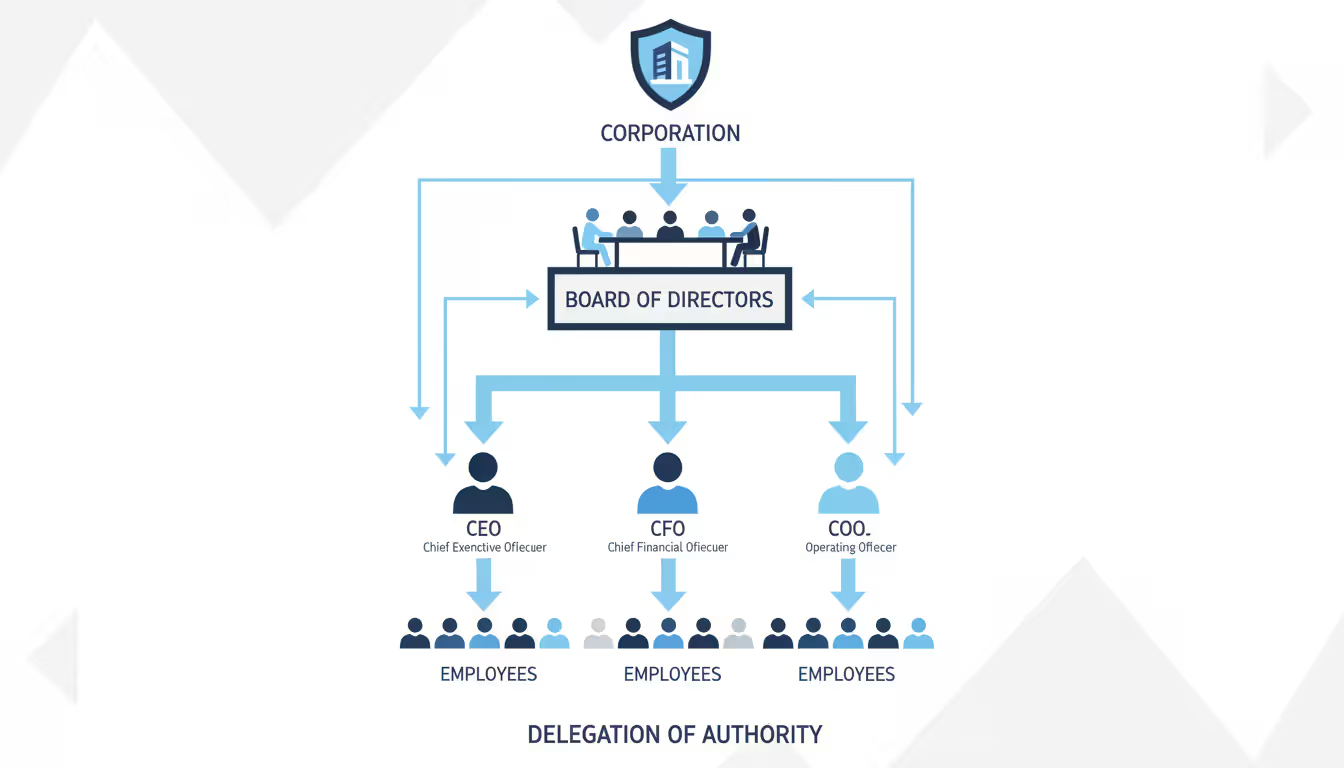
Agency law in corporate context operates through multiple layers. Corporations, as legal fictions, can only act through agents—officers, directors, and employees who exercise authority on the entity's behalf.
Corporate officers (CEO, CFO, secretary) typically hold actual authority defined by bylaws, board resolutions, and statutory provisions. A CEO generally has broad implied authority to bind the corporation in ordinary business transactions without board approval for each action. Extraordinary matters—mergers, major asset sales, fundamental changes—typically require board authorization.
Author: Marcus Ellwood;
Source: craftydeb.com
The board of directors itself acts as an agent of the corporation, though directors have unique fiduciary duties. Board authority is collective; individual directors cannot bind the corporation unless separately appointed as officers or granted specific authority. A single director's promise means nothing without board approval.
Apparent authority problems frequently arise when corporations allow individuals to use titles or conduct business in ways that suggest broader authority than actually granted. A corporation that gives someone the title "Vice President" creates apparent authority to act in ways typical for that position, even if internal resolutions limit their power. Third parties can rely on customary authority associated with corporate titles.
Partnerships present distinct agency dynamics. Each partner in a general partnership is an agent of the partnership for carrying on ordinary business. Partners can bind the partnership through acts in the ordinary course of business unless the partner lacked authority and the third party knew it. This mutual agency makes partnership selection crucial—each partner's actions create liability for all.
Limited liability companies blend corporate and partnership features. Member-managed LLCs operate similarly to partnerships, with each member holding agency authority. Manager-managed LLCs concentrate authority in designated managers, while non-manager members lack inherent authority to bind the LLC.
Practical applications include signature authority policies, delegation frameworks, and third-party verification procedures. Well-managed businesses maintain clear documentation of who can commit the company to what types of transactions and what approval thresholds require escalation. Financial institutions often require corporate resolutions identifying authorized signers before opening accounts or extending credit.
Agency is the fiduciary relationship that arises when one person (a 'principal') manifests assent to another person (an 'agent') that the agent shall act on the principal's behalf and subject to the principal's control, and the agent manifests assent or otherwise consents so to act
— Marcus Chen
This foundational definition emphasizes consent, control, and the fiduciary nature of the relationship—elements that remain constant whether the principal is an individual, corporation, or other entity.
Common Agency Law Questions (FAQ)
Can an agent bind a principal without written authorization?
Yes. Agency relationships and authority can be created orally or through conduct. While written documentation provides clear evidence and is required for certain transactions (like real estate transfers under the statute of frauds), most agency authority doesn't require writing. Express oral authorization, implied authority from a pattern of conduct, or apparent authority based on the principal's manifestations can all create binding power without written documentation. However, prudent businesses document authority grants to avoid disputes about scope.
What happens if an agent exceeds their authority?
When an agent exceeds actual authority, the principal isn't bound unless apparent authority existed or the principal ratifies the unauthorized act. The agent may face personal liability to the third party for breach of implied warranty of authority—essentially, the agent implicitly represents they possess authority to act, and if they don't, they're liable for the third party's resulting losses. The principal can also sue the agent for breaching their duty of obedience. If the transaction benefits the principal, they might ratify it by accepting its benefits with knowledge of the material facts.
Is a principal liable for an agent's fraudulent acts?
It depends on whether the fraud occurred within the scope of the agent's employment or apparent authority. Under respondeat superior, principals are liable for agent torts, including fraud, committed in the course and scope of employment. If an agent defrauds a customer while purporting to act for the principal in a transaction within the agent's authority, the principal typically faces liability even if they didn't authorize or know about the fraud. The principal's recourse is to sue the agent for indemnification. However, if the agent acts purely for personal benefit in a matter completely outside their employment, the principal may escape liability.
How does agency differ from an independent contractor relationship?
The key distinction is control. Principals control both the results and the manner/means of an agent-employee's work, while those hiring independent contractors control only the desired outcome, not how the contractor accomplishes it. This affects vicarious liability—principals generally aren't liable for independent contractor torts but are liable for employee-agent torts within the scope of employment. Tax treatment, benefits, and regulatory compliance also differ. The label parties use matters less than the actual relationship; courts examine factors like who supplies tools, the permanence of the relationship, the skill required, and the degree of supervision.
Can agency relationships be terminated at will?
Most agency relationships are terminable at will by either party, meaning both principal and agent can end the relationship anytime. However, termination at will doesn't mean without consequences. If the agency is also a contract (employment agreement, broker listing), wrongful termination may breach the contract and create damages liability, even though it effectively ends the agency. The exception to at-will termination is an "agency coupled with an interest," where the agent has their own legal interest in the subject matter; these require the agent's consent to terminate. Additionally, while actual authority ends upon termination, apparent authority continues until third parties receive adequate notice.
Do verbal agency agreements hold legal weight?
Yes, oral agency agreements are generally enforceable and create valid agency relationships. The statute of frauds doesn't require agency agreements themselves to be written (with limited exceptions in some states for real estate broker agreements). However, if the agent will enter into contracts that must be in writing—like real estate sales or agreements that can't be performed within one year—practical problems arise. While the agency itself may be valid, proving its scope and terms becomes difficult without documentation. Best practice uses written agency agreements specifying authority, duties, compensation, and termination provisions, even when not legally required.
The law of agency provides the legal infrastructure for modern commerce, enabling individuals and entities to extend their reach through authorized representatives. Principals gain the ability to conduct business beyond their personal capacity, while third parties receive protections ensuring they can rely on agents acting within their authority.
Successful navigation of agency law requires attention to how relationships are created, the scope of authority granted, the duties owed by each party, and the potential for vicarious liability. Businesses benefit from clearly documenting agency relationships, defining authority limits, training agents on their responsibilities, and implementing controls that prevent unauthorized commitments.
Whether you're a business owner delegating authority, an agent acting on another's behalf, or a third party dealing with someone claiming to represent another, understanding these principles helps you recognize when binding obligations arise, what duties apply, and how to protect your interests in agency relationships.
An LLC operating agreement is a legally binding document that outlines ownership structure, management procedures, and operational rules. While only some states require it, this internal document strengthens liability protection, prevents disputes, and satisfies banks and investors
Master Service Agreements establish reusable legal frameworks for ongoing vendor relationships. Discover how MSAs work, essential clauses, negotiation strategies, and when to use master agreements versus individual contracts for your business needs
A transition services agreement (TSA) is a contract where the seller provides operational services to the buyer post-closing. This guide covers TSA fundamentals, contract terms, duration, negotiation strategies, and post-merger management for successful M&A transitions
A side letter is a separate agreement that modifies or supplements a main contract, commonly used in private equity and investment funds. This guide explains side letter provisions, enforceability, negotiation tactics, and how they differ from primary agreements
The content on this website is provided for general informational and educational purposes only. It is intended to explain concepts related to business and corporate law, contracts, compliance, disputes, M&A, and taxation for companies.
All information on this website, including articles, guides, and examples, is presented for general educational purposes. Legal outcomes may vary depending on jurisdiction, company structure, and individual circumstances.
This website does not provide legal advice, and the information presented should not be used as a substitute for consultation with qualified corporate attorneys or legal professionals.
The website and its authors are not responsible for any errors or omissions, or for any outcomes resulting from decisions made based on the information provided on this website.