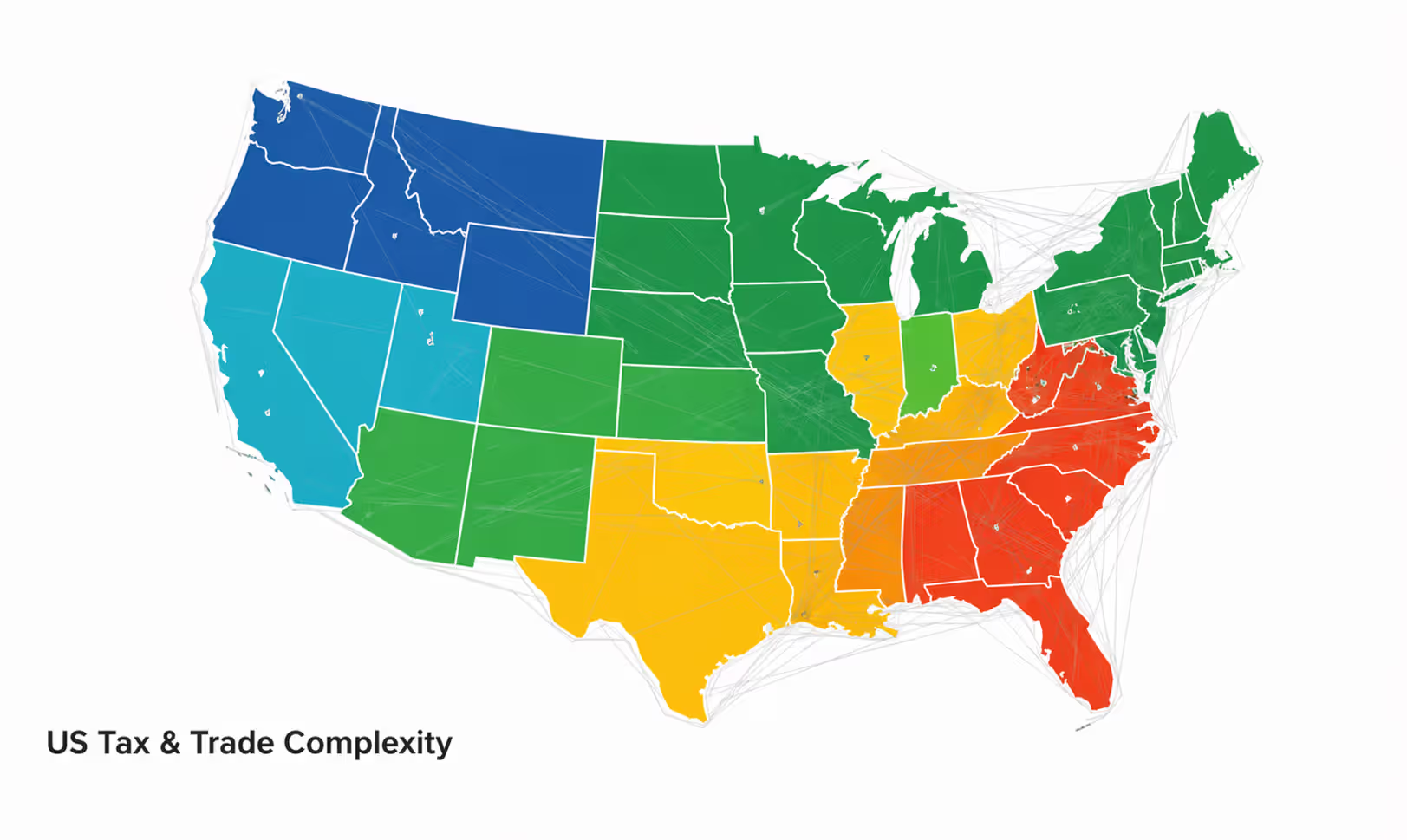
If you're selling products online in the United States, you've probably realized there's more to it than just setting up a Shopify store and waiting for orders to roll in. The truth is, you're operating in a space where federal agencies, state governments, and even local authorities all have something to say about how you do business.
Here's what catches most new sellers off guard: the rules you need to follow depend on what you sell, where your customers live, and how you market your products. Miss something important? You might face penalties that make your profit margins look like a joke. We're talking fines that can hit six or seven figures for serious violations.
The wild west days of ecommerce are long gone. Today's online marketplace operates under layer upon layer of federal laws, state-specific privacy requirements, and tax rules that change based on where you ship. Let's break down what you actually need to know.
Understanding Federal Ecommerce Compliance Requirements
Several government agencies want a piece of your attention. The FTC watches how you advertise and whether you're playing fair with customers. FDA folks care about anything health-related you might sell. Got alcohol, tobacco, or firearms in your catalog? That's ATF territory. Selling physical products means the CPSC has safety standards you'll need to meet.
Digital commerce regulations at the federal level really boil down to one principle: don't lie to people and don't put them at risk. Sounds simple, right? The FTC Act makes deceptive business practices illegal, and that broad language gives regulators plenty of room to come after businesses that mislead customers about anything from shipping times to product capabilities.
Take email marketing. The CAN-SPAM Act isn't just a suggestion—it's the law. Your emails need accurate sender information, you can't use deceptive subject lines, and every message must include a working unsubscribe link. Break these rules and you're looking at fines of $51,744 per email. Yes, per email.
The Telemarketing Sales Rule extends beyond phone calls. It impacts how you handle subscriptions and recurring billing on your website. If you're using negative option billing (where customers get charged unless they actively cancel), you need crystal-clear disclosures and easy cancellation methods.
Something many online sellers don't see coming: ADA lawsuits over website accessibility. Courts have increasingly ruled that ecommerce sites count as public accommodations, meaning they need to work for people with disabilities. While the Justice Department hasn't published specific technical standards yet, businesses face real litigation exposure if their websites don't play nice with screen readers and other assistive technology.
Consumer Protection Laws Every Online Store Must Follow
FTC Advertising and Marketing Rules
Every claim you make needs to be honest, backed by evidence, and not misleading. Sounds straightforward until you start thinking about the implications. Say your anti-aging cream "reduces fine lines"? You'd better have actual scientific studies proving that. Customer testimonials showing dramatic results? You need to disclose whether those results are typical, or state clearly that they're not.
Influencer partnerships have become an FTC enforcement priority. If you send free products to Instagram influencers, pay for TikTok videos, or have any business relationship with someone promoting your stuff, that connection must be obvious to viewers. "Sponsored," "Ad," or "Paid Partnership" labels need to appear prominently—not buried where nobody will see them. The FTC can pursue both the influencer and your company for undisclosed sponsorships.
Native advertising presents another minefield. Content that looks like articles or reviews but is actually paid promotion needs clear labeling. Sticking "Promoted" in tiny text at the bottom doesn't cut it. Make it unmistakable that people are looking at an advertisement.
Product Disclosure and Refund Requirements
Before someone clicks "buy," they need to know the full price including all fees and shipping, what limitations the product has, warranty details, and your return policy. Online selling legal requirements don't give you wiggle room on this stuff.
The Mail Order Rule (which applies to internet orders despite its name) requires shipping within your advertised timeframe. No timeframe stated? You've got 30 days max. Can't ship on time? You must notify customers and offer them the chance to cancel for a full refund. First-time sellers often underestimate how strictly this rule gets enforced.
Free trials that convert to paid subscriptions have generated massive FTC enforcement actions. If you're running this type of offer, you need upfront disclosure of all terms, simple cancellation (not some maze of "cancel your account" pages), and explicit customer consent before charging anything. Making people call during business hours to cancel? That's asking for trouble.
Author: Samantha Keene;
Source: craftydeb.com
Privacy and Data Protection Requirements for Ecommerce
Privacy laws in the US look like someone dropped a puzzle and only put back half the pieces. You've got federal rules for specific situations and a growing patchwork of state laws.
COPPA regulates sites aimed at kids under 13 or that knowingly gather information from children in that age group. If your site falls under COPPA, you need to get verified permission from parents before you collect, use, or share any personal information about their children.
California created the toughest state privacy framework with the CCPA (later strengthened by the CPRA). These laws give California residents the right to see what data you collect about them, demand deletion, stop you from selling it, and limit how you use sensitive information. Your business might have to comply even if you're based in Florida—thresholds include businesses making over $25 million annually, handling data on 100,000+ people, or earning half their revenue from selling personal data.
Virginia, Colorado, Connecticut, Utah, and more states have rolled out their own privacy laws. Each one has its own quirks. Montana includes special rules for biometric data. Oregon uses different thresholds for who needs to comply. It's a compliance headache.
Cookie tracking and similar technologies require attention even though we don't have federal cookie legislation like Europe's GDPR. State privacy laws restrict certain tracking practices. You need a privacy policy that accurately describes what you collect, and many states require letting people opt out of specific tracking. Smart businesses use cookie consent banners that let visitors accept, reject, or customize their tracking preferences.
Your privacy policy can't be some generic template you copied from the internet. It needs to accurately reflect what you actually do. Saying you don't sell data while running advertising pixels that share customer information with third parties? That's a discrepancy that creates serious legal problems.
Sales Tax Compliance for Online Sellers
Author: Samantha Keene;
Source: craftydeb.com
The Supreme Court's 2018 Wayfair decision changed everything for online sellers. Before that, you only collected sales tax in states where you had a physical presence. Now? States can require tax collection based purely on your sales volume into their state.
This concept—called economic nexus—means you might need to register, collect, and submit sales tax in dozens of states even if you've never set foot in them. All 45 states with sales tax now have economic nexus rules. Most use $100,000 in annual sales or 200 transactions as their threshold, though some states have moved to revenue-only thresholds.
Marketplace facilitator laws shift the burden to platforms for sales happening through their systems. When you sell on Amazon or Etsy, they typically handle sales tax collection. But you're still on the hook for sales through your own website or other channels. This creates a tracking nightmare—you need to monitor where each sale happens and ensure proper tax collection for each channel.
What gets taxed varies wildly by state. Clothing is tax-free in some places, fully taxed in others. Digital products? Some states tax them as goods, others don't tax them at all. SaaS products might generate tax liability in one jurisdiction while being completely exempt in the next. Food, supplements, and medical devices each have special rules that differ depending on the state.
Handling multiple states manually becomes impossible pretty quickly. Once you're collecting tax in more than a handful of states, you need either specialized software or professional help. Sales tax automation platforms connect to your ecommerce system and calculate correct rates, track nexus, and prepare filing reports. Expect to pay anywhere from $20 to several hundred monthly depending on your transaction volume.
Required Legal Pages and Terms for Your Online Store
Your online store needs several specific legal documents. These aren't optional extras—they're binding contracts that define your relationship with customers and protect you from liability.
Terms and conditions lay out the ground rules for using your site and buying your products. Cover topics like account creation requirements, what users can't do on your site, who owns the intellectual property, warranty disclaimers, liability limits, how disputes get resolved, and which state's laws apply. Lots of businesses include arbitration clauses to dodge class-action lawsuits, though enforceability varies by state.
How you present your ecommerce terms and conditions matters legally. You need what's called a "clickwrap" agreement—users must actively check a box or click "I agree" before completing their purchase. Just posting terms somewhere on your website without requiring acknowledgment creates a "browsewrap" agreement that courts often won't enforce.
Privacy policies are legally mandatory in most states and must honestly describe your data practices. The FTC has gone after companies for misrepresenting privacy practices, treating it as deceptive conduct under the FTC Act.
Shipping and delivery policies should spell out how long processing takes, which carriers you use, what shipping costs, whether you ship internationally, and what happens with lost or damaged packages. These policies become part of your customer contract and you must honor them as written.
Return and refund policies need careful attention. Federal law doesn't force you to accept returns (except for that 30-day unshipped item rule), but state laws and payment processor rules often effectively require reasonable return policies. Spell out your return window, what condition items must be in, how you process refunds, and who pays return shipping. You can charge restocking fees, but only if you clearly disclose them upfront.
Accessibility statements aren't legally required, but they show you're making good-faith efforts to comply with the ADA. Include a description of your site's accessibility features, acknowledge any current limitations, and provide contact information for users who run into barriers.
Industry-Specific Regulations and Licensing
Certain products bring extra online business legal requirements beyond the baseline ecommerce regulations. Food and beverage sales might require state health department permits, FDA facility registration, and compliance with detailed labeling rules. The Food Safety Modernization Act created preventive control and traceability obligations for many food businesses.
Dietary supplements fall under FDA oversight through the Dietary Supplement Health and Education Act. You can't claim your product treats or cures diseases without going through the drug approval process—that's a non-starter for most supplement sellers. Structure-function claims like "supports healthy joints" are allowed with proper substantiation and required disclaimers. The FTC actively pursues supplement companies making health claims they can't back up.
Cosmetics must meet FDA rules on labeling, ingredient safety, and manufacturing. Color additives need pre-approval. Market your product with drug-type claims like "treats acne" or "prevents wrinkles"? Congratulations, you're now selling a drug in the FDA's eyes, which means different (and much stricter) requirements.
Alcohol sales operate under a three-tier system separating producers, distributors, and retailers, with licensing at each level. Direct wine shipping to consumers is legal in most states if you get the right permits. Beer and spirits face tighter restrictions. Each state writes its own rules about what you can ship, licensing requirements, and tax obligations.
Tobacco and vaping products face Tobacco Control Act restrictions, age verification mandates, and state licensing requirements. The PACT Act requires registration with tax authorities, age verification at delivery, and extensive record-keeping.
The FDA categorizes medical devices into three risk-based classes. Class I (bandages, exam gloves) face minimal regulation. Class II devices (pregnancy tests, powered wheelchairs) need FDA clearance. Class III (pacemakers, artificial heart valves) require pre-market approval. Even low-risk devices must meet labeling and registration requirements.
Author: Samantha Keene;
Source: craftydeb.com
Common Ecommerce Compliance Mistakes and Penalties
The biggest mistake? Burying important information where customers won't see it. Businesses stick material terms in fine print, use impossibly small fonts, or place disclosures nowhere near the claims they modify. The FTC's standard is "clear and conspicuous"—meaning noticeable, understandable, and close to whatever you're disclosing about.
Privacy policy violations happen when companies collect or use data in ways their policy doesn't describe, forget to update policies as business practices change, or copy templates that don't match reality. The FTC has pursued cases where businesses claimed they don't share data while actively providing customer information to advertising networks or analytics platforms.
Not honoring your stated refund policy creates both FTC problems and payment processor headaches. Promise refunds within 10 business days but routinely take 30? You're breaking consumer protection law. Payment processors monitor chargeback rates closely—too many disputes and you risk account termination or getting stuck in high-risk categories with dramatically higher fees.
Ignoring website accessibility has created an entire litigation industry. Law firms mass-produce demand letters and lawsuits against businesses whose sites lack features like image alt text, keyboard navigation, or proper heading structure. Many criticize these cases as opportunistic, but they still create real legal costs and potential settlements.
Sales tax non-compliance brings serious consequences. States aggressively pursue uncollected taxes, piling on interest and penalties that can double or triple what you originally owed. Some states even have criminal penalties for intentional non-compliance.
The cost of non-compliance almost always exceeds the cost of getting it right from the start. I've seen businesses face six-figure settlements for violations that could have been prevented with a few thousand dollars of upfront legal work. The regulatory environment isn't getting simpler—businesses that treat compliance as an afterthought are playing a very expensive game of chance
— Sarah Mitchell
Recent enforcement shows the stakes. The FTC settled with a subscription box company in 2023 for $2.8 million over deceptive cancellation practices. A supplement seller paid $5.2 million in 2022 for unsupported health claims. State attorneys general have launched numerous actions against businesses violating privacy laws, with settlements often including both financial penalties and mandatory compliance programs.
Penalty structures vary by violation type. CAN-SPAM violations: up to $51,744 per email. COPPA violations: up to $51,744 per affected child. California privacy law violations: $2,500 to $7,500 per violation, with higher amounts for intentional violations. Sales tax penalties typically include the uncollected tax plus interest (often 10-12% annually) and penalties of 5-25% of the tax due.
FAQ
Do I need a business license to sell online in the US?
It depends on where you live and how you structure your business. Most cities and counties require a general business license whether you operate online or from a storefront. If you form an LLC or corporation, you'll register with your state. Sole proprietors usually just need local licenses unless they're selling regulated products. Running your business from home? You might need special permits or zoning clearance. Contact your city clerk's office, county registrar, and state business agency to nail down exactly what applies to your situation.
What are the penalties for non-compliance with ecommerce regulations?
The range is enormous. FTC enforcement actions can hit millions in civil penalties, require consumer refunds, and impose restrictions on how you operate. State privacy violations carry statutory damages of $2,500-$7,500 each. Sales tax non-compliance adds up the uncollected tax, interest (usually 10-12% per year), and penalties of 5-25%. ADA lawsuits typically settle for $10,000-$50,000 plus attorney fees and required website fixes. Beyond direct penalties, non-compliance trashes your reputation, drives up insurance costs, and can get your payment processor account shut down.
Do ecommerce regulations apply to dropshipping businesses?
Absolutely. Every single ecommerce regulation applies to dropshipping operations. You're the seller, period—even though someone else ships the product. That means you're responsible for advertising claims, product safety, customer service, refunds, privacy compliance, and tax collection. You can't just blame your supplier. If a product hurts someone or violates safety standards, you're on the hook along with the manufacturer. Dropshippers need to carefully vet suppliers, verify products meet US requirements, and carry adequate insurance. The FTC's 30-day shipping rule applies whether you pack boxes yourself or never touch the inventory.
How often should I update my privacy policy and terms of service?
Review these at least once a year and update them whenever your business practices change. Added new analytics tools? Started working with a new email service provider? Expanded into states with new privacy laws? Changed your refund policy? All of these trigger updates. Many businesses also update privacy policies after major legal developments, like when new state privacy laws take effect. Archive dated versions so you can prove what terms applied when. Notify users about material changes—some state laws require it, and it's smart even when not mandatory. Get legal review every year or two even if nothing changed, because regulatory interpretations evolve.
When should I consult an attorney about ecommerce compliance?
Before you launch. Also before entering new product categories, when expanding to multiple states, or if you receive any regulatory inquiry or customer complaint alleging violations. Upfront legal review of your website, policies, and practices costs far less than defending an enforcement action. Attorneys spot risks specific to your business model and products. If you're raising venture capital or planning to sell your business, compliance issues discovered during due diligence can kill the deal or slash your valuation. Budget for legal review as a recurring business expense, not a one-time thing.
Are there different rules for selling to international customers?
Definitely. International sales mean complying with destination country laws. Europe's GDPR imposes strict privacy requirements on businesses selling to European customers. Canada has federal privacy law (PIPEDA) plus provincial variations. Product safety standards, labeling requirements, and prohibited items differ by country. You'll handle customs paperwork, duties, and taxes. Some products perfectly legal in the US are restricted elsewhere. Export controls prohibit shipping certain items to specific countries. International payment processing involves currency conversion and elevated fraud risk. Many small businesses initially limit sales to the US to avoid this complexity, then expand internationally once they have resources for proper compliance.
Ecommerce regulations create a complex framework, but it's navigable if you approach it systematically. The businesses that succeed long-term treat compliance as a competitive advantage rather than an obstacle. Customers trust companies that respect their rights, protect their data, and deliver on promises.
Start with the basics: honest advertising, transparent policies, proper privacy practices, and sales tax compliance. Layer on industry-specific requirements based on what you sell. Build systems that scale with your business, because regulatory obligations grow as you do.
The regulatory landscape keeps evolving. More states pass privacy laws every year. Tax rules get more intricate as states chase online commerce revenue. Enforcement agencies intensify scrutiny of digital businesses. Staying current requires ongoing attention, but the investment protects you from expensive mistakes and creates a foundation for sustainable growth.
Compliance isn't about achieving perfection—it's about demonstrating good-faith effort to follow applicable laws, fixing issues promptly when you discover them, and documenting your compliance efforts. Businesses that approach regulations strategically position themselves for long-term success in the competitive ecommerce marketplace.
Commercial use refers to employing copyrighted material for business purposes or financial gain. Understanding these boundaries prevents costly legal disputes and ensures compliance with licensing requirements for images, software, and creative content
The Sarbanes-Oxley Act transformed corporate accountability by making executives personally responsible for financial reporting accuracy. This comprehensive guide explains who must comply, key requirements under Sections 302 and 404, internal control frameworks, audit standards, penalties for violations, and practical implementation steps
Financial institutions rely on sanctions and PEP screening to prevent money laundering and meet AML compliance obligations. This guide explains how sanctions list screening and politically exposed person checks work, regulatory requirements, implementation challenges, and best practices for building effective programs
Safe harbor codes provide legal protection when businesses meet specific compliance requirements. This comprehensive guide explains how these provisions work across tax law, employment regulations, copyright, and data privacy—plus common mistakes that can eliminate your protection
The content on this website is provided for general informational and educational purposes only. It is intended to explain concepts related to business and corporate law, contracts, compliance, disputes, M&A, and taxation for companies.
All information on this website, including articles, guides, and examples, is presented for general educational purposes. Legal outcomes may vary depending on jurisdiction, company structure, and individual circumstances.
This website does not provide legal advice, and the information presented should not be used as a substitute for consultation with qualified corporate attorneys or legal professionals.
The website and its authors are not responsible for any errors or omissions, or for any outcomes resulting from decisions made based on the information provided on this website.