Ever grabbed a free image from Google, slapped it on your business flyer, and called it a day? That seemingly harmless shortcut could land you with a lawsuit.
Here's what most people miss: downloading a photo or buying software comes with strings attached. Those license agreements you scroll past? They're actually spelling out whether you can use that content to make money—or if doing so could cost you thousands in damages.
So what separates acceptable use from infringement? Commercial use covers any situation where you're using someone else's copyrighted work for business purposes or profit. Could be an ad campaign. Could be a blog post earning $2 a month from affiliate links. The amount you earn matters less than the fact you're earning at all.
Copyright holders charge more for commercial rights—sometimes a lot more. Others simply won't allow it, period.
Commercial Use Definition and Legal Framework
Let's cut through the legal jargon: commercial use means you're employing someone's copyrighted content in a way that makes money, promotes your business, or gives you an economic edge.
Courts look beyond the simple question of "did money change hands?" They dig into whether your use serves business goals or happens within a for-profit operation.
How does the U.S. legal system actually evaluate this? Judges ask several questions. Does your use replace the original in the market? Are you exploiting its commercial value? Do you operate as a business? A Ninth Circuit case from 2023 made this clear: even giving something away for free counts as commercial use when it promotes your for-profit company or builds your brand.
Here's the tricky part—copyright law never spells out one clean definition. Cases get decided on context. A judge examines what you intended, how you distributed the content, whether it connects to revenue, and if you're eating into the copyright holder's potential earnings.
The Copyright Act doesn't include "commercial use" in its dictionary section. But flip to Section 107 about fair use, and you'll find "the purpose and character of the use, including whether such use is of a commercial nature" listed as the very first factor courts weigh. Translation? Using content commercially doesn't guarantee you've infringed, but it sure makes defending yourself harder.
State laws throw in extra complications. Many states have publicity rights laws preventing commercial use of someone's name or face, even when copyright doesn't cover it. California protects these rights for 70 years after a person dies. Other states barely acknowledge the concept.
Personal Use vs Commercial Use
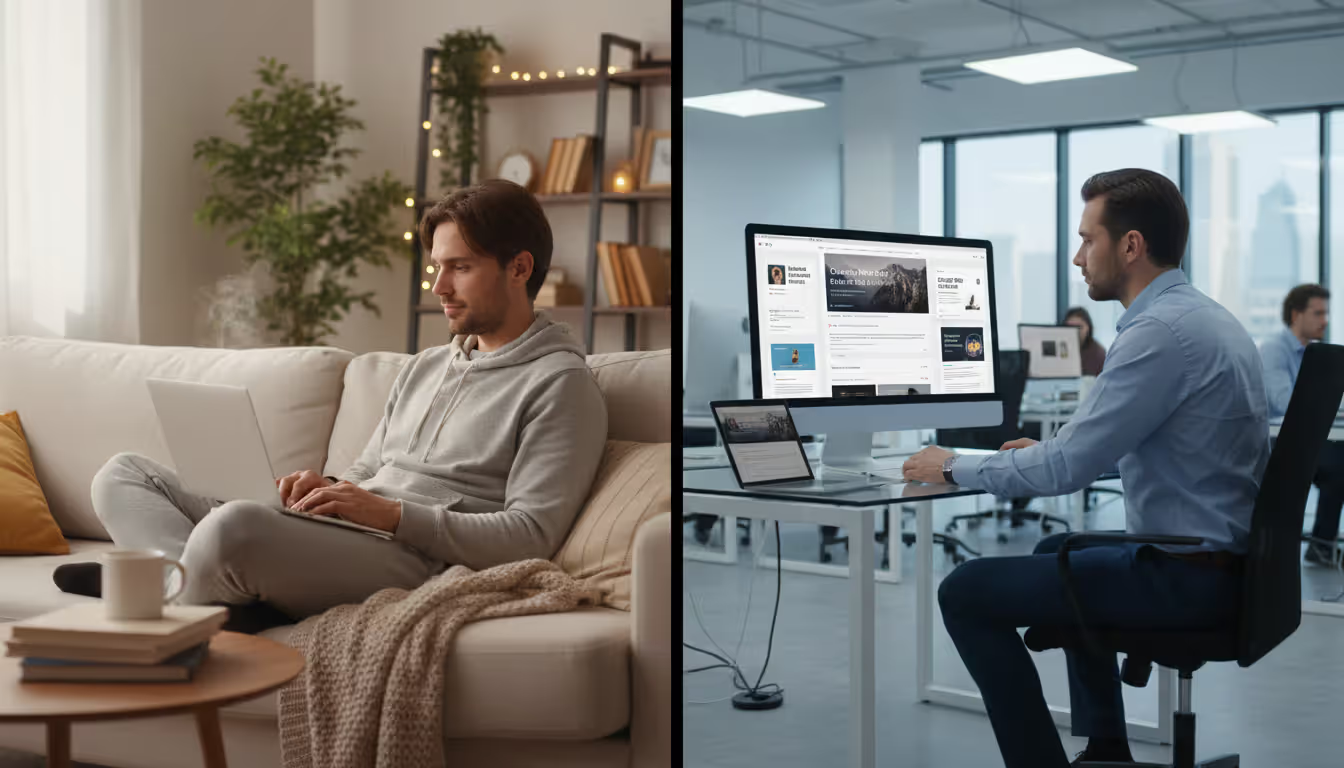
Personal use is straightforward—you're doing something for yourself. Printing a photo for your apartment wall. Making a playlist for your kid's birthday party. Using Quicken to track your grocery budget.
The line blurs the moment business creeps in. Consider an Instagram account. You post vacation photos for friends? Personal. A company reaches out offering $200 for a sponsored post? Now it's commercial. Everything changes at that moment—every photo needs proper licensing.
Blogs create the biggest gray zone. Start a recipe blog for fun, zero ads, zero affiliate links? You're fine. Add Google AdSense even if you make $5 a month? Congratulations, you're running a commercial operation. Courts care about monetization mechanisms, not your actual income.
Author: Marcus Ellwood;
Source: craftydeb.com
How can you tell which category you're in?
Check the revenue connection. Does your use tie to income, even indirectly? Using an image to pull traffic to your ad-covered website counts as commercial, even if visitors never click the ads.
Consider business promotion. Are you building brand recognition? Marketing a product? Supporting business operations? When an accountant drops stock photos into client presentations, that's commercial use—doesn't matter if the images weren't billed separately.
Look at professional context. Does this happen as part of your job? A teacher showing a documentary clip in class probably qualifies for educational fair use. A corporate trainer showing that same clip in a $500-per-person seminar? Commercial.
Examine distribution scope. Personal use stays small and private. Wide distribution signals commercial intent, especially when you're building an audience you might monetize later.
Here's a mistake almost everyone makes: assuming nonprofit status equals non-commercial use. Wrong. A nonprofit selling t-shirts, charging for galas, or competing with for-profit companies? That's commercial activity. Your IRS tax classification means nothing in copyright land.
What Counts as Commercial Use
Real scenarios help clarify the boundaries:
Social media business accounts: Any profile representing a company, hawking products, or partnering with brands operates commercially. Influencer accounts with sponsorships? Commercial. Company pages? Commercial. Accounts funneling people to your Shopify store? Definitely commercial. Using unlicensed images risks infringement claims.
Blogs with advertisements: The moment you flip any monetization switch—display ads, Amazon affiliate links, sponsored posts, selling your own products—your blog becomes commercial. Every single image, video clip, or text quote needs appropriate licensing. Bloggers get burned constantly by starting with personal content, then monetizing without relicensing everything.
Nonprofit organizations: That 501(c)(3) status doesn't grant copyright immunity. Using images in donation appeals, annual reports sent to funders, or campaigns promoting your services? Commercial use. The exception: purely educational or informational materials without any fundraising angle.
Educational materials: Teachers generally get broad fair use protection for classroom teaching. But selling workbooks? Creating online courses for profit? Running a paid tutoring service? You've crossed into commercial territory. Universities selling course readers or licensing educational content operate as commercial entities.
Internal business presentations: Training decks, sales presentations, internal memos within for-profit companies—all commercial use. Doesn't matter if the public never sees them. They support business operations in a profit-seeking enterprise, so commercial licensing applies.
YouTube monetization: Turn on ads? Join the Partner Program? Accept Super Chats? Your channel just became commercial. Every video becomes commercial use of any copyrighted content you've included—background music, stock footage, news clips, whatever. Tons of creators get strikes or demonetization for using content licensed only for personal use.
Freelance portfolios: Designers, writers, and creatives showcasing client work occupy murky territory. Displaying work samples to land new clients serves commercial purposes. Smart freelancers get portfolio rights written into client contracts and only use properly licensed stock content in portfolio pieces.
Author: Marcus Ellwood;
Source: craftydeb.com
Print-on-demand products: Selling stuff through Redbubble, Etsy, or Amazon Merch? Clearly commercial, even if you've sold exactly three items. Using images, designs, or text without commercial licenses exposes you to infringement claims and platform bans.
Commercial Use in Copyright Law
Copyright law treats commercial use as a big red flag during infringement analysis, especially when evaluating fair use claims. Fair use lets you use copyrighted material without permission in specific situations, but commercial purposes heavily tip the scales against you.
Courts evaluate four factors: (1) purpose and character of your use, (2) nature of the copyrighted work, (3) how much you used, and (4) effect on the market. Commercial use hurts your case on factors one and four.
A key consideration in the first fair use factor is whether the use is 'transformative'—whether it adds something new, with a further purpose or different character. Commercial uses that are transformative may still qualify for fair use, but purely commercial uses that simply exploit the original work face an uphill battle
— Marcus Rivera
Transformative use offers your best shot. A documentary using news footage for critical analysis might survive despite commercial distribution. A company slapping that same footage in an ad with zero commentary? Almost certainly loses the fair use argument.
The market effect factor looks at whether you're substituting for the original or killing potential licensing revenue. Commercial uses typically harm the copyright holder's market because you're sitting in a space where they could've licensed the work. Every unauthorized commercial use represents money the rights holder didn't get.
Registration status changes the game. Copyright holders who register works before infringement happens can chase statutory damages up to $150,000 per work for willful infringement, plus attorney's fees. Without registration, they're stuck proving actual damages and profits—way harder. Makes registered works particularly dangerous to use without permission.
Criminal copyright infringement requires commercial motivation. Most infringement stays civil, but willful infringement for commercial gain or private financial benefit can trigger federal prosecution under 18 U.S.C. § 2319. We're talking potential fines and jail time.
DMCA provisions complicate things further. Online platforms must yank infringing content when properly notified. Commercial users face faster takedowns because copyright holders watch commercial channels like hawks compared to personal accounts. Repeat offenders risk permanent platform bans.
Commercial Use License and Rights Explained
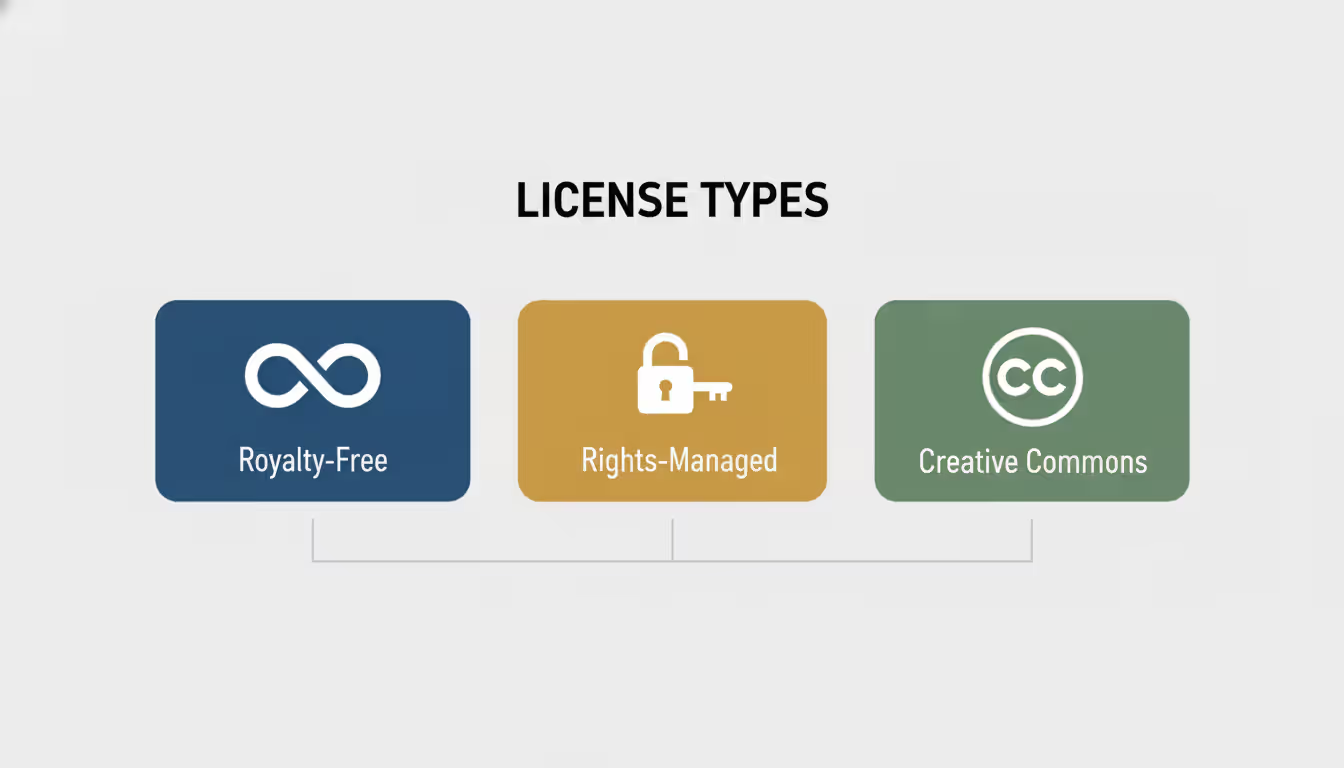
Commercial use licenses give you permission to use copyrighted content for business purposes. Knowing the license types helps you grab appropriate permissions and dodge restrictions.
Royalty-free licenses charge once for unlimited use within set boundaries. "Royalty-free" confuses people—it doesn't mean free. You pay once instead of paying royalties per use. These licenses usually allow commercial use but ban certain distribution methods, modifications, or resale. That royalty-free stock photo might work great in ads but prohibit selling the image itself or sticking it on products you sell.
Author: Marcus Ellwood;
Source: craftydeb.com
Rights-managed licenses grant specific permissions for defined uses. Maybe you license an image for one year in digital marketing across North America. Different uses need separate licenses. Rights-managed costs more but offers exclusivity options and clearer boundaries.
Creative Commons licenses provide standardized permission frameworks. Six main licenses with varying restrictions:
CC BY: Commercial use allowed with credit
CC BY-SA: Commercial use with credit and share-alike terms
CC BY-ND: Commercial use with credit but no modifications
CC BY-NC: Non-commercial only with credit
CC BY-NC-SA: Non-commercial with credit and share-alike
CC BY-NC-ND: Non-commercial with credit and no modifications
The "NC" (non-commercial) tag blocks commercial use completely. Tons of creators misunderstand CC licenses, thinking they're all permissive. Always check which specific version applies.
Extended licenses expand standard permissions. Stock photo sites typically offer standard licenses for normal commercial uses and extended licenses for merchandise, templates, or unlimited print runs. Extended licenses cost way more but prevent violations when standard terms prove too restrictive.
Commercial use rights generally include:
Dropping content into ads and marketing materials
Incorporating content into products or services you sell
Publishing content on commercial websites
Using content in business presentations and proposals
Distributing content as part of commercial software
What you usually can't do:
Resell or redistribute the content by itself
Use content in defamatory or illegal contexts
Imply people depicted endorse your stuff
Exceed specified distribution quantities or territories
Strip watermarks or remove attribution
License agreements override general copyright law. Even if fair use might apply, breaking license terms means breach of contract. You're facing both copyright infringement and contract breach claims.
Perpetual licenses grant forever rights. Term licenses expire. Subscription models from Adobe Stock or Shutterstock grant licenses only while you maintain active subscriptions. Cancel your subscription, and you might need to strip previously downloaded content from commercial projects, depending on specific terms.
Common Commercial Use Restrictions and Compliance
License restrictions vary by provider and content type, but certain limitations pop up constantly.
Attribution requirements force you to credit the creator or rights holder. Creative Commons licenses spell out exact attribution formats. Fail to credit properly, and you've violated the license—even when commercial use was otherwise permitted. Put attribution where viewers can actually find it. Burying credits in microscopic footer text might not cut it.
Prohibited uses typically include:
Trademark applications: Can't register licensed content as a trademark or logo
Defamatory contexts: No using images in ways that trash depicted individuals' reputations
Sensitive subjects: Stock photos often ban use in controversial contexts without model consent
Competitive use: Some licenses prohibit use by the content creator's competitors
Standalone redistribution: Can't sell or give away the licensed content without incorporating it into something bigger
Distribution limits cap how many copies you can produce. Standard licenses might permit 500,000 print impressions—larger runs need extended licenses. Digital distribution often carries no numerical cap but restricts resale or redistribution of source files.
Modification restrictions run the gamut. Some licenses permit unlimited changes. Others prohibit derivatives entirely. "No derivatives" licenses mean use it as-is—no cropping, color tweaking, or combining with other elements.
Geographic restrictions limit where you can use content. A license might cover North America but require separate permissions for European distribution. Global campaigns need worldwide licenses.
Time restrictions matter for rights-managed content. Using an image past the licensed period? That's infringement. Set calendar reminders to track license expirations for ongoing campaigns.
How to stay compliant:
Save all license documentation: Keep purchase receipts, license agreements, download confirmations. Get challenged, and you'll need proof you licensed properly.
Build internal approval processes: Make team members verify licenses before using content. A simple checklist prevents accidental violations.
Track with metadata: Embed license information in file metadata. When designers hand off files, license terms travel with the content.
Audit existing uses: Periodically review websites, marketing materials, and products to confirm all content stays properly licensed. Subscription lapses or license expirations create compliance gaps.
Train your team: Educate employees and contractors on commercial use requirements. Most violations stem from ignorance, not malice.
When uncertain, ask: Contact rights holders for clarification. Most prefer answering questions over pursuing lawsuits.
Budget correctly: Commercial licenses cost more than personal licenses. Factor licensing into project budgets from day one, not mid-project when you discover costs.
Author: Marcus Ellwood;
Source: craftydeb.com
Violations trigger various consequences. Rights holders might demand retroactive license fees, often at premium rates. They can get injunctions stopping your use, forcing expensive reprints or campaign overhauls. Statutory damages and attorney's fees can hit six figures for willful infringement.
Frequently Asked Questions About Commercial Use
Is selling handmade items considered commercial use?
Yep, selling handmade items counts as commercial use of any copyrighted content you've incorporated. Creating jewelry using licensed images? Selling knitted items with copyrighted patterns? Producing crafts featuring trademarked characters? You need commercial licenses. Scale doesn't matter—selling one item at a craft fair or thousands on Etsy both qualify as commercial activity. Tons of crafters mistakenly think small-scale sales fall under personal use. Courts examine the nature of what you're doing, not the volume.
Can I use commercial-use images on my personal blog with ads?
You can, but your blog stopped being "personal" the second you added ads. Any monetization—Google AdSense, affiliate links, sponsored posts, product sales—transforms your blog into commercial territory. You need commercial licenses for all content at that point. This applies retroactively to images you might've used under personal licenses before monetizing. Bloggers constantly get takedown notices when they monetize because previously acceptable personal-use content suddenly becomes improperly licensed.
Does nonprofit use count as commercial use?
Sometimes, yeah. Nonprofit status doesn't automatically equal non-commercial use. Your nonprofit using copyrighted content in fundraising materials, donor communications, or promotional campaigns? That's commercial use. Nonprofits compete for donor dollars and operate in commercial markets despite lacking profit motives. However, purely educational or informational uses by nonprofits might qualify for fair use. A nonprofit teaching literacy uses materials differently than one promoting its services to attract donations. Context determines classification.
What happens if I use non-commercial content for business?
You've violated the license agreement and potentially infringed copyright. Rights holders can demand immediate cessation, require payment for proper commercial licensing (often at premium rates), and pursue damages for unauthorized use. Platforms like Instagram, YouTube, or Etsy may remove your content or suspend your account. Serious cases might involve lawsuits seeking statutory damages, actual damages, lost profits, and attorney's fees. Consequences often dwarf what proper licensing would've cost initially.
Do I need a commercial license for internal company presentations?
Yes, internal business presentations in for-profit companies require commercial licenses. The content supports business operations and employee productivity in a profit-seeking enterprise, making it commercial use regardless of whether clients or the public see it. Training materials, sales presentations, internal communications—all fall under commercial use. Nonprofit organizations and educational institutions might have different requirements, but standard businesses need commercial permissions for all content used in business contexts.
Are YouTube videos with monetization considered commercial use?
Absolutely. Enabling any YouTube monetization feature—ads, channel memberships, Super Chat, YouTube Premium revenue—makes your channel commercial. Every video becomes commercial use of any included content: background music, stock footage, video clips, whatever. Tons of creators get copyright strikes or demonetization notices for using content licensed only for personal use. Planning to monetize? Ensure all content carries appropriate commercial licenses before uploading. YouTube's Content ID system actively hunts for unlicensed commercial use.
Commercial use boundaries determine how you legally interact with copyrighted content in business. The distinction between personal and commercial use dictates whether you need permission, what licenses you must obtain, and what legal risks you're taking.
Three principles keep you compliant: understand your purpose, read license agreements carefully, and secure appropriate permissions before using content. Commercial activity demands commercial licenses, regardless of your scale or revenue. Small businesses and Fortune 500 companies face identical legal requirements.
Investing in proper licensing protects your business from infringement claims, platform penalties, and expensive legal battles. Budget for licensing as a standard business expense, like web hosting or office rent. Proper licenses cost far less than infringement damages.
When uncertainty strikes, contact the rights holder or get legal advice. Copyright law rewards caution and punishes assumptions. Taking time to verify permissions saves money and headaches down the road.
Your commercial success partly depends on respecting others' intellectual property rights. Building a business on properly licensed content creates sustainable foundations. Cutting corners on licensing creates legal vulnerabilities that can undermine everything you've built.
The Sarbanes-Oxley Act transformed corporate accountability by making executives personally responsible for financial reporting accuracy. This comprehensive guide explains who must comply, key requirements under Sections 302 and 404, internal control frameworks, audit standards, penalties for violations, and practical implementation steps
Financial institutions rely on sanctions and PEP screening to prevent money laundering and meet AML compliance obligations. This guide explains how sanctions list screening and politically exposed person checks work, regulatory requirements, implementation challenges, and best practices for building effective programs
Safe harbor codes provide legal protection when businesses meet specific compliance requirements. This comprehensive guide explains how these provisions work across tax law, employment regulations, copyright, and data privacy—plus common mistakes that can eliminate your protection
US companies processing EU residents' data face full GDPR obligations regardless of location. This guide explains when GDPR applies to American businesses, key requirements including consent and data subject rights, compliance steps from data mapping to vendor assessment, and how GDPR differs from US privacy laws
The content on this website is provided for general informational and educational purposes only. It is intended to explain concepts related to business and corporate law, contracts, compliance, disputes, M&A, and taxation for companies.
All information on this website, including articles, guides, and examples, is presented for general educational purposes. Legal outcomes may vary depending on jurisdiction, company structure, and individual circumstances.
This website does not provide legal advice, and the information presented should not be used as a substitute for consultation with qualified corporate attorneys or legal professionals.
The website and its authors are not responsible for any errors or omissions, or for any outcomes resulting from decisions made based on the information provided on this website.